
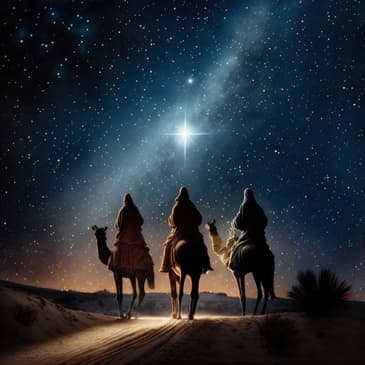

Hope can seem like a fragile thing - very precious but easily broken. When the faithful God gives hope, though, it never disappoints. As Matthew opens his historical account of Jesus' life. he shows how, time and time again, God's promises in the Old Testament are fulfilled in the arrival of Jesus Christ. Join Dave as he explores Matthew 1-2, and discover the true hope that can never be destroyed.
Find out more about Dave and the show at faithfulgod.net.
Show your thanks and support for Dave and help other people hear Stories of a Faithful God by signing up for the monthly prayer letter and by becoming a regular financial supporter here.
To ask a question, make a comment, give encouragement or invite Dave to speak, you can make contact here.
If you have or know kids, be sure to check out Dave's other podcast, Stories of a Faithful God for Kids.
The Christian Standard Bible. Copyright © 2017 by Holman Bible Publishers. Used by permission. Christian Standard Bible®, and CSB® are federally registered trademarks of Holman Bible Publishers, all rights reserved.
G' day and welcome to Stories of a Faithful God.
Speaker AI'm Dave Whittingham.
Speaker AHope is such a wonderful thing, isn't it?
Speaker AIt's a great feeling of joy at what's coming in the future.
Speaker AMoving to a new town for a fresh start, the graduation.
Speaker AThinking about all the doors that could open up now.
Speaker AThe man on bended knee asking his love to marry him.
Speaker ADreaming of their life together.
Speaker AAnd the children they'll hold in their arms.
Speaker AAs wonderful as hope is, it can also feel so fragile.
Speaker AThe pain of shattered hope can be worse than no hope at all when you try to make a fresh start.
Speaker AAnd yet all the old problems resurface when you can't get a job, or the job you get turns out to be dull and lifeless, or even painful, or when the marriage ends up lonely and certainly not what you'd imagined on your wedding day.
Speaker AIn our last series, we looked at the creation of the world.
Speaker AHow it was launched with astounding joy and hope.
Speaker AEverything was good.
Speaker ARelationships between God and humans and animals and the world were perfect.
Speaker AAnd yet it was all shattered because people said, we want to do it all without God.
Speaker AThat sin that attempted break from God led to all the pain and suffering and injustice in the world.
Speaker AA pain of striving for, hoping for independent rule over our own lives.
Speaker AA hope that can never give the joy that it seems to promise.
Speaker AIn the midst of all that, though, a new hope emerged.
Speaker AA hope that wasn't a dream or desire or longing that may or may not come true, but a guaranteed hope.
Speaker AA hope backed up by the faithfulness of the one who promised it.
Speaker AGod himself said he would save his people, he would bless the world.
Speaker AHe would overcome this sin that wreaks so much havoc in today's episode.
Speaker AAs we begin a series in Matthew's Gospel, we're going to see the power of God's faithfulness, His commitment to all those promises he made.
Speaker AWe'll see how the hope he gives is a hope that'll never perish, spoil or fade.
Speaker AAnd so, without further ado, I present to you our next episode of Stories of a Faithful God.
Speaker AIn Genesis, we saw a whole bunch of families as they played their various parts in God's big plan.
Speaker AIn chapter 12, it focused in on one family, the family of Abraham, to whom God gave some startling promises, promises that would lead to the whole world being blessed.
Speaker AThe New Testament begins by reminding us of the history of that family, how all their hope, all their waiting for the fulfilment of God's promises It's all been fulfilled in one man, Jesus Christ.
Speaker AChrist means anointed one.
Speaker AIt indicates the chosen one, a person set aside for a special task.
Speaker AAnd you can work out what this Jesus was chosen for by looking at his family tree.
Speaker ASo Matthew begins this historical account of the life of Jesus with these words in chapter one, verse one, an account of the genealogy of Jesus Christ, the son of David, the son of Abraham.
Speaker AThose names, David and Abraham, should immediately make us think of the promises of God, of the hope he gave through them to Abraham.
Speaker AHe promised a people and land and nation.
Speaker AHe promised that the whole world would be blessed through him.
Speaker AIt's no accident then, that Matthew's gospel that begins with this mention of Abraham will end with the Great Commission where Jesus sends his disciples to the whole world to invite the world to become disciples of Jesus.
Speaker ABecause it's in Jesus that the blessing of God comes to the world.
Speaker ATo King David, living roughly halfway between Abraham and the arrival of Jesus, God promised a forever kingdom.
Speaker AIn 2 Samuel, chapter 7, God promised to bring a king from David's family who will be king forever.
Speaker AHis kingdom will never end.
Speaker AThis forever king will be anointed, which means he'll be the Christ.
Speaker AAnd again, you can jump to the end of Matthew's gospel to see how this promise of a forever king is fulfilled.
Speaker AWhen Jesus is raised to life, never to die again, he truly can be the forever king.
Speaker AAnd that's exactly who God's made him.
Speaker AIn Matthew 28:18, Jesus tells his disciples, all authority has been given to me in heaven and on earth.
Speaker AGo therefore, and make disciples of all nations, baptizing them in the name of the Father and of the Son and of the Holy Spirit, teaching them to observe everything I have commanded you.
Speaker AAnd remember, I am with you always to the end of the age.
Speaker AIn Jesus, all the hopes of the Old Testament, all the promises of God, the true hope for the world, has been fulfilled.
Speaker AAnd Matthew wants to tell us about this Jesus.
Speaker AHe begins with a genealogy showing Jesus family history from Abraham through David to Jesus birth.
Speaker AIt's not a complete family tree.
Speaker AMatthew's not trying to show us every generation here.
Speaker ARather, he's showing us connections, true connections.
Speaker AHe's telling us the story of how God got us to this point.
Speaker AIt's a fuller version of the genealogy of verse one.
Speaker AWhen Matthew said an account of the genealogy of Jesus Christ, the son of David, the son of Abraham, it's not that David was his actual dad and Abraham was his actual grandfather.
Speaker ARather, it's a way to show the important points along the family tree.
Speaker AMatthew structures his genealogy in verse 2 to 16 into three sets of 14 generations.
Speaker AThe first set takes us from Abraham to King David.
Speaker AAnd although it's a list of men of fathers and sons, Matthew very cleverly inserts a few women along the way to make a point.
Speaker ASo verse two says, Abraham fathered Isaac, Isaac fathered Jacob, Jacob fathered Judah, and his brothers Judah fathered Perez and Zerah by Tamar.
Speaker AThe story of the woman Tamar is one of tragedy.
Speaker AShe married Judah's first son, but his first son was so sinful, God put him to death.
Speaker AJudah then gave her to his second son, who was also so sinful, God put him to death.
Speaker AThen Judah promised to give her to his third son when he had grown up, but he never did.
Speaker AIn frustration, Tamar dressed up as a prostitute with her face covered.
Speaker AJudah thought, oooh, a prostitute slept with her and got her pregnant, still not knowing who she was.
Speaker AHe was then told that Tamar was pregnant.
Speaker AAnd in a moment of astounding hypocrisy, he prepared to have her burnt alive for fooling around.
Speaker AThankfully, she managed to prove that he was the father.
Speaker AYou can read the whole story in Genesis 38.
Speaker AI think Matthew's including it here to remind us Abraham's family isn't so great.
Speaker AIt was actually filled with evil and sin, just like the rest of the world.
Speaker ATo be very clear, it's not because Matthew's anti Semitic.
Speaker AMatthew himself is a Jewish, but it's part of him.
Speaker AShowing that the hope for the world promised to Abraham isn't in all of Abraham's family.
Speaker AIt's in Jesus, the only one of the family who's never been sinful.
Speaker AMatthew tells us a few more generations and then mentions another woman, Rahab.
Speaker AVerse 5 says, Salmon fathered Boaz by Rahab.
Speaker ANow, Rahab didn't just pretend to be a prostitute.
Speaker AShe actually was a prostitute.
Speaker AIt was her day job or night job.
Speaker AShe also wasn't a descendant of Abraham.
Speaker AShe was one of the Canaanites.
Speaker AGod sent the Israelites to punish and expel from Canaan.
Speaker AAnd yet she actually proved to be a woman who put her trust in the God of Abraham.
Speaker AShe'd heard the stories of what God had done to Egypt.
Speaker AShe realized that true hope is found in this God.
Speaker AAnd rejecting this God is disastrous.
Speaker AWhich is exactly the message Matthew will be showing us throughout his Gospel.
Speaker AIt doesn't matter if you're not from the family line of Abraham.
Speaker ACome to Jesus and you'll be blessed.
Speaker AYou can read Rahab's story in Joshua chapters two and six.
Speaker AIt's a similar message for the next lady, Ruth, who married Boaz.
Speaker AYou can obviously read her story in the Book of Ruth.
Speaker AAlso, you can go back and listen to episodes 29 and 30 of Stories of a Faithful God, where I covered those events.
Speaker ALike Rahab, Ruth was an outsider from Moab.
Speaker ABut like Rahab, she too found shelter under God's wing.
Speaker AThe second grouping of 14 begins with King David, the great king.
Speaker AThe king who all other kings were compared to.
Speaker ADid they follow God like David or did they reject God?
Speaker AAnd yet even this great, mighty, godly king was really evil at times.
Speaker AMatthew reminds us of that.
Speaker AIn verse six, he says David fathered Solomon by Uriah's wife.
Speaker AIt isn't that Matthew doesn't know the woman's name, Bathsheba.
Speaker ARather, he's focusing our attention on the most important thing about her for this story.
Speaker AShe wasn't David's wife.
Speaker AShe was Uriah's wife.
Speaker AAgain, Uriah wasn't a descendant of Abraham.
Speaker AHe was a Hittite.
Speaker AAnd yet he was an incredibly loyal soldier of David.
Speaker AAnd yet, while Uriah is off at war, David's back at home getting Uriah's wife pregnant.
Speaker AWhen Uriah's faithfulness makes it impossible for David to cover up his crime, he has Uriah murdered and takes Bathsheba as his own wife.
Speaker AYou can read that story in 2 Samuel 11:12.
Speaker AIt isn't what you'd expect from this great godly king.
Speaker AMatthew's teaching us the hope that God promised wasn't to be found in David.
Speaker AIt was going to be in one of his descendants.
Speaker AAnd so the genealogy goes on in search of a fulfilment of this hope.
Speaker AMatthew gives us a list of some of the kings in David's family line.
Speaker ASome of them were pretty good, some were terrible, worshipping false gods and treating God's people horribly.
Speaker AAnd that's why the second set of 14 ends with the disaster of the exile of God's people to Babylon.
Speaker AAfter that point, although there are people who trace their lineage back to David and Abraham, although the family continues, they don't have any more kings, the nation of Judah becomes a political football that gets passed from one superpower to another.
Speaker AThey did have one short period where they broke free and became independent with their own king.
Speaker ABut Matthew's making it really clear that brief interlude was absolutely not the fulfillment of God's promises.
Speaker AHis third set of 14 shows the family line becoming more and more obscure until we get to verse 16, which says, and Jacob fathered Joseph, the husband of Mary, who gave birth to Jesus, who is called the Messiah.
Speaker AActually, Matthew says Christ, not Messiah.
Speaker AChrist is the Greek form of the word.
Speaker AMessiah is the Hebrew word.
Speaker AThere seems to have been a trend in the last 15 years or so to translate Christ as Messiah.
Speaker AAnd I don't really know why, especially when the translators are inconsistent.
Speaker AThe CSB translators used Christ in verse one and Messiah in verse 15.
Speaker ABut anyway, I climb down from that hobby horse now.
Speaker AOur English translations are generally excellent and trustworthy.
Speaker AThat just seems to be a weird quirk that's crept in.
Speaker ABut you see where Matthew's led us, or rather, where God's led us.
Speaker AGod's been shaping history, crafting it and molding it just so he can lead us to this exact moment, all the way from Abraham through David to Jesus.
Speaker AAnd this Jesus is the one he really wants us to focus on, because this Jesus is the anointed one, the Christ, the one in whom the true hope of the world is fulfilled.
Speaker ASo how did Jesus life here on earth begin?
Speaker AIt begins in a miraculous way.
Speaker AThis has been a theme throughout the Old Testament, that when a child has a miraculous birth, you need to watch this space.
Speaker AIt happened for Abraham's son Isaac, and for Moses and Samson and Samuel.
Speaker AIt's always happened, though, by God working through natural means.
Speaker AIn the birth of Jesus, though, God takes it a step further.
Speaker AIn verse 18, Matthew tells us the birth of Jesus Christ came about this way after his mother Mary had been engaged to Joseph.
Speaker AIt was discovered before they came together that she was pregnant from the Holy Spirit.
Speaker AI'm sure around Christmas time you've heard all the jokes about Mary trying to convince people she hasn't been sleeping around God's Holy Spirit put the baby in her.
Speaker AIn real life, though, this is no joke.
Speaker AEven though Joseph and Mary are not officially married yet, they are legally bound together in a way that modern Western engagements don't do.
Speaker ASo imagine Joseph's heartbreak when he's told Mary's pregnant.
Speaker AThere's actually no way for him to verify her story of how she became pregnant.
Speaker ALuke tells us in his Gospel that an angel appeared to Mary and told her what was about to happen.
Speaker ABut for Joseph, what's he meant to do?
Speaker AMost people would not accept Mary's story.
Speaker ASometimes arrogant modern people will say things like, they were just more gullible back then.
Speaker AThis story shows that that simply isn't true.
Speaker AJoseph is much quicker to believe that there's been adultery than he is to believe That a miracle's taken place.
Speaker ABut even though he believes there's been adultery, he doesn't want to do any harm to Mary.
Speaker AMatthew tells us he's a righteous man.
Speaker AInstead of taking her to court, where she'd most likely be condemned to death, he decides to divorce her quietly.
Speaker AHe is a man who's not gullible, but kind of, even in the midst of deep pain.
Speaker AThen God restores Joseph's hope.
Speaker AHe sends an angel, a messenger, to him.
Speaker AIn verse 20, the messenger says, joseph, son of David, don't be afraid to take Mary as your wife, because what's been conceived in her is from the Holy Spirit.
Speaker AShe'll give birth to a son and you are to name him Jesus, because he will save his people from their sins.
Speaker AThe name Jesus means God saves.
Speaker AAnd here, God signalling an astounding fulfillment of hope.
Speaker ASalvation from sin.
Speaker AThis selfish desire in all humans to discard God and put his crown on our own heads.
Speaker AThe sin that we think frees us, but actually enslaves us to sadness and suffering and pain and death and ultimately the judgment of God, the rightful king.
Speaker ASalvation from the curse that none of us have been able to escape since the fall of Adam and Eve.
Speaker AThe evil that was present in Abraham's family just as much as it's present in our family.
Speaker AJesus is coming to save his people from that.
Speaker AThis is what God's been planning for a very long time.
Speaker AThe perfect salvation by the perfect Savior.
Speaker AIn fact, God told his people about it throughout the Old Testament.
Speaker AHe gave hope of a future rescue.
Speaker AMatthew draws us to the words God spoke through the prophet isaiah in the 8th century BC.
Speaker AIn verse 23, Matthew quotes these.
Speaker ASee, the virgin will become pregnant and give birth to a son.
Speaker AAnd they will name him Immanuel, which is translated, God is with us.
Speaker AGod with us can simply mean God is for us.
Speaker AHe's helping us.
Speaker AHe's on our side.
Speaker AAnd so the name could simply mean he's helping us through this child.
Speaker AWhich is certainly true, as we'll come to see, though in Jesus, it actually means more than that.
Speaker AIn Jesus, God the Son is actually physically with us.
Speaker AHe's taken on a human body so that he can physically be present for humanity in order to save us from our sins.
Speaker AGod made that promise hundreds of years before and he's been shaping history to bring it to this point.
Speaker AIt's remarkable that he's doing it through this man, Joseph.
Speaker AJoseph's not some king or great ruler or figure of importance.
Speaker ASure, he's got a great lineage Descended from King David himself in the family of Abraham, but he isn't a world changer or influencer.
Speaker AThat's okay, though, because God's not telling Joseph that Joseph's about to do something amazing.
Speaker AHe's saying that he is about to do something amazing.
Speaker AHe's about to solve the core and fundamental problem of the entire world through the birth of this person, Jesus, which means God saves the one, also known as Emmanuel.
Speaker AGod with us.
Speaker AJesus is born exactly where you'd expect the Christ to be born, in the town of Bethlehem.
Speaker ABethlehem was King David's home city and sits about nine kilometres south of Jerusalem.
Speaker AHe's born under the reign of King Herod.
Speaker AThere are at least three Herods in the Bible, but this is the big one who made the name cool.
Speaker AHe's known to history as Herod the Great.
Speaker AHe has no ancestral link to the line of kings.
Speaker AFrom David, he came to power in a fairly slimy way.
Speaker AVery basically, in 63 BC, the Romans conquered Jerusalem.
Speaker AThey allowed puppet rulers to continue on the throne so that they didn't have to administer the area directly.
Speaker ALater on, there was a Jewish revolt and Herod, who was the son of an important official, went to Rome.
Speaker AHe said, give me some help and I'll fix this revolt for you.
Speaker AThey did help.
Speaker AHe did fix it.
Speaker AHe became king and ruled quite a large area.
Speaker AAs he got towards the end of his life, he became absolutely paranoid about people taking the throne from him.
Speaker AHis rage and suspicion fell on a number of his children and wider family who he had murdered.
Speaker AAnd it's around this time, right near the end of Herod's life, that Jesus is born.
Speaker AOne day, some foreigners from the east arrive in Jerusalem.
Speaker AMatthew tells us that they're magi.
Speaker AMagi are astrologers whose job it was to read the stars and advise rulers.
Speaker AIt's particularly strange that God would inject these guys into the story, because astrology is really evil.
Speaker AAnd yet, once again, this is God highlighting that he'll be using Jesus to save people from all over the world.
Speaker AThese men are not Jews.
Speaker AIn the events that follow, it's these foreign astrologers who treat Jesus appropriately, not the Judeans.
Speaker AThey arrive in Jerusalem, a city which presumably they have never visited before, and they start asking a perfectly innocent question.
Speaker AIn chapter two, verse two, they ask, where is he who has been born king of the Jews?
Speaker AFor we saw his star at its rising and have come to worship him.
Speaker AGods actually worked through the stars to bring these men here.
Speaker ANow, in Jerusalem, every man and his dog knows that King Herod has not just had a baby.
Speaker AIn fact, the number of offspring he has is shrinking, not growing, as he murders them.
Speaker ASo who on earth could they be talking about?
Speaker AWell, word about these strangers spreads and finally it reaches the ears of Herod.
Speaker AMatthew tells us he's disturbed and all Jerusalem with him.
Speaker AIf someone's talking about a king of the Jews and it's not Herod, then that could only mean the Christ, the promised king, the one who could legitimately claim the throne of David.
Speaker AUnlike Herod, who was an interloper, Herod gets all the chief priests and scribes together and asks where the Christ is meant to be born.
Speaker AHe can ask that because God said where it would happen.
Speaker AGod isn't making this up as he goes along.
Speaker AIt's all part of his really careful salvation plan.
Speaker ASo they tell Herod in verse 5 in Bethlehem of Judea, because this is what was written by the prophet.
Speaker AAnd you, Bethlehem, in the land of Judah, are by no means least among the rulers of Judah, because out of you will come a ruler who will shepherd my people, Israel.
Speaker AThat's partly a quote from Micah5.2, but also it alludes to other parts of the Old Testament.
Speaker AMost of Judah's kings would have been born in Jerusalem in the majesty of the palace, but King David wasn't born there.
Speaker AHe had no royal lineage and was born in the backwater town of Bethlehem, somewhere you'd never expect a king to be born.
Speaker AAnd yet, through David, God created a shadow that pointed forward to when the forever king would be born.
Speaker AIn that same backwater town, Herod summons the magi and asks them exactly when the star they saw first appeared.
Speaker AWe're not told their answer yet, but it's going to be significant.
Speaker ALater on.
Speaker AIn verse 8, he sends them to Bethlehem and says to them, go and search carefully for the child.
Speaker AWhen you find him, report back to me so that I too can go and worship him.
Speaker AIf you've been listening carefully to what I've been saying about Herod, you'll realise it's probably not worth trusting those words very much.
Speaker AThe magi seem blissfully unaware of just how deadly he is, though, and they set off for Bethlehem.
Speaker AOn the way, they see the star.
Speaker AIt's the same star that had prompted their journey in the first place.
Speaker ABut my reading of it is that it's now behaving in a new way.
Speaker AIt doesn't seem like the star led them anywhere before, other than to Judea in general, otherwise they wouldn't have had to ask where the new king is now, though the star gets very specific.
Speaker AIn verse nine, we're told it led them until it came and stopped above the place where the child was.
Speaker AWhen they saw the star, they were overwhelmed with joy.
Speaker AThis is God using the star to bring them to exactly the right place.
Speaker AThey go into the house and they see the baby with his mum Mary, and they fall down and worship him.
Speaker AIt's not the sort of worship you give to God.
Speaker AI don't think there's any indication that these guys think Jesus is God.
Speaker ARather, it's the sort of honor you give to a king.
Speaker AThis is, after all, the one born king of the Jews.
Speaker AOf course, for us it has that same sort of double meaning that Immanuel had God with us.
Speaker ASaying they worshipped him doesn't actually mean that they thought he's God.
Speaker ABut the language also works if he is God.
Speaker AThe Magi open up their bags.
Speaker AThey have bought presents fit for a king.
Speaker AGold, frankincense and myrrh.
Speaker AThe last two are different resins taken from exotic trees coming from as far away as southern Arabia.
Speaker AThey were used to make perfumes which were used on all sorts of occasions.
Speaker AWay back when the Queen of Sheba came to visit King Solomon, the son of David, she brought gold and spices and precious stones.
Speaker AThat moment was the high point of the Old Testament, the time of greatest blessing, when the descendants of Abraham really seemed to be a blessing to the world, as God promised Abraham before their sin messed it all up.
Speaker ANow, in Jesus Day, people from afar are visiting a new son of David, and they too bring gifts fit for a king.
Speaker AAnd unlike Solomon, this king won't mess things up through his sin.
Speaker ARather, he's come to save his people from their sin.
Speaker AAfter they've given the gifts.
Speaker AThankfully, God warns them in a dream not to go back to Herod, and they head home by another route.
Speaker AFor people with no Jewish heritage, no access to the scriptures, no history of the promises of God, they've treated Jesus incredibly well.
Speaker AIn fact, they've treated him exactly how you'd hope that Christ would be treated when he arrives.
Speaker AUnfortunately, Herod is not quite so wise.
Speaker AIn another dream, God sends an angel to Joseph.
Speaker AHe gives Joseph the sort of message you can't really sit on for a few weeks.
Speaker AIt's urgent and terrible.
Speaker AIn verse 13, the angel says, get up.
Speaker ATake the child and his mother, flee to Egypt and stay there until I tell you.
Speaker AFor Herod is about to search for the child to kill him.
Speaker AIt's the sort of message where you wake up immediately.
Speaker AShake Mary say, grab what you can, we're leaving in 10 minutes.
Speaker AThey leave that night and escape to Egypt, where they stay until Herod's death.
Speaker AYou might be tempted to think this is a disaster.
Speaker AGod's lost control.
Speaker AHow can the Christ possibly be in danger?
Speaker AActually, though, this is all a part of God's plan, it fits perfectly with what God's been setting up for the last couple of thousand years.
Speaker AVerse 15 says he, Joseph and the family stayed there until Herod's death, so that what was spoken by the Lord through the prophet might be fulfilled.
Speaker AOut of Egypt I called my son.
Speaker AThat's a quote from Hosea 11.
Speaker AOne again, written in the 8th century BC.
Speaker AOriginally, of course, it's talking about the nation of Israel, how God saved them out of slavery in Egypt and brought them to the promised land.
Speaker ABut again, that's a shadow pointing towards the reality in Jesus the Christ.
Speaker ASadly, there's another link to events in Egypt.
Speaker AWhen Herod discovers that the Magi have fled the scene, he's furious.
Speaker AHe's terrified of having a rival for the throne.
Speaker AAnd so he does something that's logical but utterly horrific.
Speaker AIn verse 16, we're told he gave orders to massacre all the boys in and around Bethlehem who were 2 years old and under, in keeping with the time he had learned from the wise men.
Speaker AWhat a brutal calculation.
Speaker ASome historians like to say this never happened, simply because there's no evidence for it outside the Bible.
Speaker ABut that ignores two very important facts.
Speaker AOne, the Bible has consistently been shown to be a very reliable historical witness.
Speaker AAnd two, the evidence outside the Bible we do have about Herod shows that he's more than happy to kill his own sons because he saw them as a threat to his power.
Speaker AIf he's willing to do that to his own children, it makes perfect sense that he'd do it to a bunch of strangers, especially towards the end of his life when his paranoia was at its height.
Speaker AThe event that this recalls from Egypt, of course, is when Pharaoh saw the growing population of Israelites as a threat to his power.
Speaker ATo put the brakes on, he ordered all male Israelite infants thrown into the Nile.
Speaker ABoth that attempted genocide and this massacre under Herod are unspeakably cruel.
Speaker AAnd yet even this evil is not outside the plan of God.
Speaker AIt's not that God's responsible for it.
Speaker AIt's more that even though it's a terrible example of human's declaration of autonomy from God, God uses their evil for his good purposes.
Speaker AThe depth of the evil can be heard in the outcry of the grieving, the prophet Jeremiah, writing around 600 BC, was given a prophecy about this event.
Speaker AMatthew quotes him with these words.
Speaker AIn verse 18, a voice was heard in Ramah, weeping and great mourning.
Speaker ARachel weeping for her children, and she refused to be consoled because they are no more.
Speaker AYou may wonder, what good can God possibly bring from this?
Speaker AWhat hope can he bring when it seems like hope's been destroyed?
Speaker ABack in Egypt, in the book of Exodus, even as the baby boys were being massacred in the river, there was one baby boy who was placed carefully in the river to be kept safe.
Speaker AThe boy, Moses.
Speaker AAnd so, through the tragedy that was happening in Egypt, God raised up the Savior who would lead his people out of Egypt.
Speaker AThe slaughter under Herod brings an even greater hope for God's people.
Speaker AWhen Jeremiah described the horror and grief of this event, he also showed how it was a sign of great hope for Israel.
Speaker AHe told of how God will save his people, bring them home from exile and establish them in peace and safety.
Speaker AAnd now, in Matthew's Gospel, out of this horrible slaughter, hope is about to come.
Speaker ANot too long after these events, Herod dies.
Speaker AEverything described so far has probably happened within two years of his death.
Speaker AAnd just like God promised, he sends an angel to Joseph down in Egypt.
Speaker AIn verse 20, the angel says, get up.
Speaker ATake the child and his mother and go to the land of Israel, because those who intended to kill the child are dead.
Speaker AAnd so Joseph gets his little family and heads back to the land of Israel.
Speaker AOn his way, though, he hears some news that makes him pretty anxious.
Speaker AHe hears that one of Herod's surviving sons, Archelaus, is ruling over Judea in his father's place.
Speaker AJudea is the southern section of the land, based around Jerusalem.
Speaker ABethlehem is in Judea.
Speaker AGod confirms in a dream for Joseph that it's best not to go there.
Speaker AAnd so instead, Joseph keeps heading north up to the region around Lake Galilee.
Speaker AHe settles the family in a small town called Nazareth, which, again, is all a part of God's plan.
Speaker AIn verse 23, Matthew says then he went and settled in a town called Nazareth to fulfil what was spoken through the prophets that he would be called Nazarene.
Speaker AThere's just one small difficulty with that, though.
Speaker AThere's actually no specific prophecy that mentions the Messiah coming from Nazareth.
Speaker AThis is mostly because the town of Nazareth wasn't actually settled until after the Old Testament was completely written.
Speaker ASo what on earth is Matthew talking about?
Speaker AWell, he's actually picking up on a really important Old Testament theme about the Christ.
Speaker AThat is the idea in the prophets that the Christ will be unknown, unrecognised, despised, rejected.
Speaker AEven though he's the king, he'll be treated like a criminal.
Speaker AEven though he's the chosen one of God, he'll be rejected by God and his people.
Speaker ABy the time you get to the New Testament, one of the last places you'd expect the Christ to come from is Nazareth.
Speaker AYou see it in John's gospel when Philip goes to tell Nathanael that he's found the Christ.
Speaker AHe says in John 1:45, we've found the one Moses wrote about in the Law.
Speaker AAnd so did the prophets.
Speaker AJesus, the son of Joseph from Nazareth.
Speaker ANathanael's totally on board with looking for the Christ.
Speaker AHe's on board with the Law and the prophets.
Speaker AWhat really jars, though, is the mention of Nazareth.
Speaker AListen to his response.
Speaker AHe says, can anything good come out of Nazareth?
Speaker AIt's the last place he expects the Christ to come from.
Speaker AIf you put together everything God said about the coming Christ, you see that he's both predictable and unpredictable.
Speaker AYes, he'll be from David's royal line.
Speaker AHe'll be born in David's hometown of Bethlehem.
Speaker AHe'll carry the lineage of the royal throne, but he'll also be unrecognisable.
Speaker AAnd from a place you don't know, he'll arrive to bring hope at a time of great weeping and suffering.
Speaker AHe'll be a human child, but he'll be Emmanuel, God with us.
Speaker AHe'll come to save his people from their sins, even though he's born out of a family steeped in sin.
Speaker AAnd all these things, all these apparent contradictions are fulfilled in Jesus Christ, the son of David, the son of Abraham.
Speaker AAll through the Old Testament, God's been laying the groundwork.
Speaker AA bit of information here, a little piece there, but all of it pointing to one great hope.
Speaker AA hope that'll never perish, spoil or fade.
Speaker AA hope that can't be destroyed by the murderous intentions of an evil despot.
Speaker AA hope that's both for Israelites and for Gentiles, a hope for the whole world.
Speaker AThis hope carries the stamp of an eternal guarantee of the faithful God.
Speaker AYou can see how committed to it he is because he wrote all of history so it would come to this exact moment.
Speaker AMatthew's stumbling over himself to get all the Old Testament references out.
Speaker AHe wants you to know, God wants us to know that this hope that Jesus brings is real and nothing can tear it down.
Speaker AWhen you look at your life for the world around you.
Speaker AWhen things don't seem to have gone according to plan, when the things you hoped for seem lost, remember the hope that only God can give.
Speaker AThe only hope that will never disappoint.
Speaker AThe hope that Jesus brings as he fulfills all the good promises of God.
Speaker AWhat we've looked at today, though, is only the beginning of the story.
Speaker AMatthew's about to tell us about the start of Jesus ministry, how he'll suddenly burst out into people's lives, saving them from sin and giving them eternal hope.
Speaker ABut that's a story for next.
Speaker AThanks everyone for listening.
Speaker AIf you've got kids, don't forget to head over to Stories of a Faithful God for Kids, where we do the same stories but in shorter bite sized chunks and in an appropriate way for kids.
Speaker AAlso, if you want to think about neurodivergence and you want to help friends or family with neurodivergent kids, then head over to Neurodivergence, Family and Faith, another podcast that I do with my friend Kate Morris.
Speaker AYou can find both those podcasts on any listening app and also@faithfulgod.net Keep trusting Jesus.
Speaker ABye for now.