
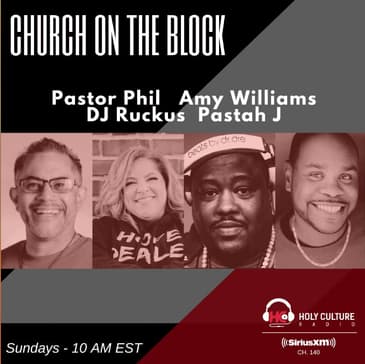
Join Pastor Phil from Church on the Block along with Amy Williams, DJ Ruckus, and Pastor Jay in an engaging discussion about the declining church attendance among young people. Tune in to Sirius XM Channel 140 every Sunday at 9 AM CT/10 AM ET. This episode delves into the reasons why kids are not attending church, explores the generational shift in church engagement, and shares insights and practical solutions for churches to reconnect with the youth. Featuring special guest Dr. Jonathan Banks, this conversation covers challenges, cultural shifts, and the importance of authenticity and technology in church ministry.
Learn more about your ad choices. Visit megaphone.fm/adchoices
[00:00:00] Brauchen wir wirklich noch einen Computer? Alle wahrscheinlich nicht. Aber wenn du Musik mit der Power eines Neuralprozessors neu erfindest oder unterwegs Migrationsmuster mit einem ganztägigen Akku analysierst oder deine Idee mit dem KI-gesteuerten Co-Creator zum Leben erwächst, dann kann ein Co-Pilot Plus PC einen Unterschied machen. Nicht alle brauchen einen leistungsstärkeren KI-Computer. Aber wenn du versuchst, die Welt zu verändern, auch wenn es nur deine eigene ist, haben wir einen für dich entwickelt. Microsoft Co-Pilot Plus PC mit Snapdragon. Die bisher schnellsten und intelligentesten Windows-PCs. Die Akkulaufzeit variiert hier nach Nutzung und Einstellungen.
[00:00:32] Das ist Pastor Phil von Church on the Block und du bist in die
[00:01:02] streets. Right here in Holy Culture Radio Channel 140.
[00:01:06] Every Sunday, 9 a.m. Central Time, 10 a.m. Eastern Time.
[00:01:11] Man, we've been with you and you've been with us for a long time.
[00:01:14] We thank you. Grateful for it.
[00:01:15] I'm here with my main man, Dr. J.
[00:01:18] What's going on?
[00:01:19] What up, Pastor Phil?
[00:01:20] What's going on, everybody?
[00:01:21] You know who it is.
[00:01:23] It's your boy, Pastor J, a.k.a.
[00:01:25] Dr. J.
[00:01:26] Not that boy, guys.
[00:01:27] It's doctor.
[00:01:27] But glad to be with y'all.
[00:01:29] Church on the Block, always glad to be here.
[00:01:31] And I'm super excited about today's conversation because I think it's one we all can dive in.
[00:01:36] Yeah, for sure.
[00:01:38] You know, it is a challenging topic around why ain't these kids going to church?
[00:01:45] That's the topic there.
[00:01:46] Why ain't these kids going to church?
[00:01:48] You know, where they at?
[00:01:49] What are they doing?
[00:01:49] You know, and when you look around, maybe even your own church or when you just look around in general, kids don't have and young people, youth or whatever, don't have like a sense of commitment to a local congregation.
[00:02:08] There's not like one era at one time.
[00:02:11] I go to this church.
[00:02:13] I go to that.
[00:02:13] Whether you was really walking in the Lord or not, you was just about that life on Sunday morning.
[00:02:19] It was something about that level of commitment in your life or that level of relationship in life.
[00:02:29] In other words, it was like I go to school, I go to work, I go to church.
[00:02:33] It was like that was a part of a DNA.
[00:02:36] You know, it was like, and again, you may be in church sleeping your butt off in church, fucking everybody in church, you know, laughing at the funny people in church.
[00:02:45] But you were there.
[00:02:46] And then some folks, you know, literally as they grew up, maybe even with that kind of a soft intro, they came to a deeper commitment to their faith in Christ and began to grow.
[00:02:58] Some folks, you know, took them a little longer time, but it was a pivotal, you know, part of your DNA.
[00:03:04] Now, man, church, let alone talk about God, but like that part of your DNA is not, and it's not, his was so crazy.
[00:03:14] It ain't even like, man, I should be going to church.
[00:03:17] It's just like, I don't go.
[00:03:19] Like, I don't shop at that place.
[00:03:22] It's just, it's like a stain against it, you know?
[00:03:26] Yeah.
[00:03:27] No, like I was, I was talking to somebody.
[00:03:31] I remember who I was talking to, but I was explaining to them, you know, we got a gym at our church for our listeners out there.
[00:03:39] So Pastor Pio knows that, man.
[00:03:40] He was, he'd been here forever.
[00:03:41] But like, I was in the gym with some young, young cats or whatever.
[00:03:47] And when I first came over to Lawndale, we were worshiping in, in the gymnasium.
[00:03:51] Like it's where we had Sunday service.
[00:03:53] And so I was trying to explain to them.
[00:03:54] I'm like, yeah, we have church right here in the gym.
[00:03:56] One of the kids looked at me and was like, so what y'all be doing in there?
[00:04:01] And I was like, what do you mean?
[00:04:02] He was like, yeah, like, so you'd be having church in here.
[00:04:06] What is, what do y'all do?
[00:04:07] Like, what do y'all be doing?
[00:04:08] And I was like, well, you know, people come together.
[00:04:10] We might sing some songs, encourage each other.
[00:04:13] You try to greet each other.
[00:04:14] You know, I'll share some scripture and like talk about it or whatever.
[00:04:19] He like, so what kind of y'all be singing?
[00:04:21] Like, like y'all be doing that, like, like doing sexy red and gorilla.
[00:04:25] Like what?
[00:04:29] Literally no framework.
[00:04:31] Like it wasn't like he was like, I don't go to church.
[00:04:34] He was like, what is that?
[00:04:35] Like, what are y'all doing there?
[00:04:38] Like, what is that?
[00:04:38] He had zero framework.
[00:04:40] And that's what made me realize, like, we're talking about kids not going to church.
[00:04:44] And I'm like, yo, this, the conversation is like, they don't even know what church is.
[00:04:48] Like they didn't know zero framework.
[00:04:51] Like no foundation, no point of reference, nothing.
[00:04:55] Just like, yeah.
[00:04:57] And I was like, oh, this is different.
[00:04:59] Like our church was founded on like being a church that for people who didn't like church
[00:05:04] or who needed a different expression.
[00:05:06] I'm like, now we've got to be a church that like introduces what churches do or what, like
[00:05:12] why people do this.
[00:05:14] So it's kind of a cool blank slate, but it was also a reframing for me.
[00:05:18] Like, wow.
[00:05:19] Right.
[00:05:20] I mean, the thing is, is that if that young man is not even having that ideology, then
[00:05:28] where did it drop off?
[00:05:30] Was it his mama?
[00:05:32] Was it his grandmama?
[00:05:33] Because you don't got young grandmama.
[00:05:35] So it could be, you know, a layered thing.
[00:05:38] Like somebody in that space stopped going.
[00:05:41] Somebody in that space maybe abused, hurt.
[00:05:45] Something happened.
[00:05:46] I ain't going no more.
[00:05:47] And it just continued to trickle down to be like, man, Sunday, you talk about the rest.
[00:05:52] Sunday is a real rest day.
[00:05:55] Mother's getting up at noon.
[00:05:57] Ain't nobody even thought about, I got to get ready to go to church, man.
[00:06:00] I got to get my stuff together.
[00:06:02] It's not even, but he don't even have a, like a CME framework.
[00:06:07] He don't have like, we go on Christmas, Mother's Easter, nothing.
[00:06:10] He has zero.
[00:06:12] And I was just blown away.
[00:06:13] Like nobody's ever taking you to a church, like as a kid or like little, little baby or nothing.
[00:06:20] You know, you ain't even been like christened or nothing.
[00:06:23] Like, you know what I'm saying?
[00:06:24] Right, right.
[00:06:25] He has zero framework.
[00:06:26] And he just let me know, like we are, I don't know where the drop off is.
[00:06:30] I'm not exactly sure, you know, where that disconnect is.
[00:06:34] But I mean, we can all see that like church attendance and engagement in church from generation to generation decreases.
[00:06:41] Right.
[00:06:41] Right.
[00:06:43] And I just think we've gotten to a point to where in the African-American community, especially where the church used to be that like cornerstone central institution for the black family.
[00:06:55] Yeah.
[00:06:57] It's, I'm not, I will never say that it's not anymore.
[00:07:00] I would just say that there are so many other institutions now that black people kind of cling to or connect to or whatever, that the church is just another institution.
[00:07:11] It's not, it's not the central institution anymore.
[00:07:15] Not central.
[00:07:15] Right.
[00:07:16] Yeah.
[00:07:17] I mean, the reality of, of, I mean, he knew the gym though.
[00:07:22] He knew somewhere in that space.
[00:07:24] Right.
[00:07:24] I could come there and I can, I can get down.
[00:07:27] I can, I can, I can go there and, and, and have some sort of, uh, uh, insight towards, um, what it is that, uh, that I'm, uh, uh, at peace with in this space.
[00:07:42] And, and, and, and, you know, uh, even in the stuff, how, how, uh, Lawndale Christian community church was started was in a gym, in a, in a, in a football place, in a classroom.
[00:07:52] That's right.
[00:07:54] That's right.
[00:07:55] And I mean, but what excited me about it was he was genuinely asking.
[00:08:00] It wasn't like he was like, yeah.
[00:08:02] That's trying to ball talk.
[00:08:04] Like when I said we had a church, he's like, well, what's that?
[00:08:06] He was genuinely asking, you know what I mean?
[00:08:09] So I could like invite him, like, come check it out.
[00:08:11] You know what I'm saying?
[00:08:12] Like he wanted to, but the fact that he has zero framework was just surprising for me.
[00:08:16] Right.
[00:08:17] And, uh, I feel like I'm thankful that we got a gym that reflects the love of Christ so that he knows that this is a safe place to the point to where it intrigues him.
[00:08:25] Like he, he's genuinely, genuinely asking a question to which I just say, oh, well, the reason we do this is because of the Jesus guy.
[00:08:33] Let me tell you about him.
[00:08:34] You know what I mean?
[00:08:35] So, uh, I think there's a lot of kids who are being introduced to like God and to like faith and Jesus and all of that.
[00:08:46] But I don't know if it's necessarily translating into church attendance, which is interesting.
[00:08:53] That's a great insight.
[00:08:54] That's a great insight with that, man.
[00:08:56] And I think when you look, when you look online and you look in different parts of, uh, the data that's out there, cause this is not, this is a real epidemic.
[00:09:04] This is churches that are really, uh, not seeing, uh, any young people, young adults, uh, either they came through and they left and they never came back and they, they give a nod to it.
[00:09:16] Or even if they come back through, there's not a commitment to be involved and engage in the church.
[00:09:22] You know, um, sometimes people don't even have an understanding.
[00:09:25] I got my degree in engineering.
[00:09:26] What can I do with the church?
[00:09:27] How can I help the church?
[00:09:28] Exactly.
[00:09:30] But you can do program management because your behind knows how to start a bridge and build a bridge and get over to the other side.
[00:09:37] So you can do, let's figure out these programs.
[00:09:40] We're trying to get and manage them and that kind of thing.
[00:09:41] But church is thinking creatively to put people in those spaces, man.
[00:09:45] So, so one of the, one of the, like the number one point of what, uh, this research was down here by ministry brands.
[00:09:53] It said, uh, you know, 10 reasons why, you know, common reason why young people don't go to church was a lack of relevance.
[00:10:00] Now I don't necessarily know if that's brand new, like a science to me.
[00:10:03] I think, I think Lonnie was starting 45 years ago.
[00:10:07] So whatever's going on in the seventies at that time was a lot of uprising and stuff going on.
[00:10:12] Folks was like, yep, church, you know, you know what I'm saying?
[00:10:14] So you have, uh, you know, black Panther movement still, still around a little bit.
[00:10:19] Hip hop kicking in, you know, it was going hard.
[00:10:21] You got, he got, uh, um, you know, stuff happening with, uh, with folks, uh, being able to have a way in which folks could really step.
[00:10:30] Step in a space that was both Afrocentric in that era.
[00:10:36] Right.
[00:10:37] Uh, you know, so you had, you, it's not like nothing new in the sun when it talks about, um, lack of relevance, you know, the, but the disconnection, um, is still there.
[00:10:47] It, it, it, it ebbs and flows with each generation.
[00:10:51] You know what I'm saying?
[00:10:52] And that's, that's one of them things.
[00:10:53] It's almost like relevance is a moving target.
[00:10:56] You know what I'm saying?
[00:10:57] Because church, what was relevant to those kids that started Lawndale in 1978 is ancient and antiquated in 2024.
[00:11:06] So once you finally get relevant and you working with people, you have to remake yourself again, right?
[00:11:12] Like the church has to be willing to consistently remake itself if it's going to be relevant and also be on the cutting edge of what's being talked about in society, what people are actually concerned about.
[00:11:23] And I think if we honest with ourselves, like we know that like statistics also tell us that churches are usually 10 to 15 years behind the trade, what's happening in society.
[00:11:36] So it's really a perfect storm.
[00:11:37] You got young people who are on the cutting edge of what's happening and like one, one that that's what's relevant.
[00:11:44] And then they're already disconnected from the church because they're on this cutting edge.
[00:11:49] And then the church who wants to be relevant to that group is already 10 to 15 years behind because it just got relevant to that group that was 15 years ago.
[00:11:58] So, you know, man, there's really like a 30-year gap between them.
[00:12:00] So it's, it's, it's a perfect storm, man.
[00:12:03] Like that's where you got to be willing to listen to young people too, man.
[00:12:06] That's true.
[00:12:07] That's, you know, the second run on the, um, in this same article, uh, I think it speaks to it.
[00:12:12] It talks about doubt and questioning, like face to young people to be able to like question what we team, what we've taken to be truth and what we believe and what we've held to be solid for them to come in and deconstruct all of that.
[00:12:26] Like, because it's not truth for them, you know?
[00:12:29] Right.
[00:12:29] Um, and a lot of churches are scared of it.
[00:12:31] Uh, yes.
[00:12:33] Well, it pushes young people away cause they can't ask no questions.
[00:12:36] Cause then you looked at like, what do you mean?
[00:12:38] You know, no, this is how it is.
[00:12:40] We, you know.
[00:12:42] Yeah.
[00:12:42] I mean, to me in that, in that aspect, there needs to be a, an honest conversation with a pastor and church leaders with the text, with the text to be honest in the text.
[00:12:53] Uh, is in, I think it's some, and Luke 12 or four or 13, where he's like, there was a, he talks about the, those in Galilee that basically got trampled on something that died, uh, by this, um, by this avalanche or something.
[00:13:10] Um, what, why did that, do they send it?
[00:13:13] Did they do something wrong?
[00:13:15] No.
[00:13:16] He's even bringing up issues that, why did they, why did this happen to people?
[00:13:19] Like, like, how do bad things happen to good people?
[00:13:22] Christ wasn't avoiding that.
[00:13:24] Cause we gotta be, we gotta be real with the text that, that there are stuff in the text that we could address.
[00:13:29] And, and the way he dresses it is relevant to the community that he's there now.
[00:13:33] And we have to be real with, you know, I don't know.
[00:13:37] I really don't.
[00:13:38] Yeah.
[00:13:39] Well, that means so long.
[00:13:41] So far with young people, you know, I actually don't even know.
[00:13:44] You know what I mean?
[00:13:45] Why don't we research it together?
[00:13:47] Why don't we ask?
[00:13:48] Why don't we, you know, look at theologians, look at them together.
[00:13:51] You know?
[00:13:52] Right.
[00:13:52] Um, not pretending like we got on.
[00:13:56] Yeah.
[00:13:56] Cause, cause the reality is, you know, we could say a great breakdown through the original language and everything and say, this is what this means.
[00:14:05] And get a whole new revelation.
[00:14:07] And say, we've gone through some stuff and be like, yo, it meant like that for me when I was, you know, really hyper in my faith with the Lord.
[00:14:14] But now it don't mean that.
[00:14:15] The same.
[00:14:16] Yes.
[00:14:17] Yes.
[00:14:18] How little life, little life lived.
[00:14:22] Exactly.
[00:14:22] Life has kicked in.
[00:14:23] And now, and now I'm like, oh, uh, money don't fall off trees like that.
[00:14:29] That's just don't, that don't work that way.
[00:14:31] I don't understand.
[00:14:31] Yeah.
[00:14:33] No.
[00:14:33] Say, okay, baby.
[00:14:34] That's fine.
[00:14:35] Just keep living.
[00:14:36] We'll see.
[00:14:37] Right.
[00:14:37] True.
[00:14:37] True.
[00:14:38] True.
[00:14:39] You know, I would agree to like this whole list.
[00:14:44] It's not, it's not a whole lot of new stuff.
[00:14:46] Oh yeah.
[00:14:47] You got number three is busy lifestyles.
[00:14:50] Number four is hypocrisy, which everybody knows that churches deal with people saying one thing and doing something different.
[00:14:57] Right.
[00:14:58] Number five on here is cultural shifts, which we know is a real one.
[00:15:02] All right, man.
[00:15:03] All right.
[00:15:05] Soon as soon as something happened to Diddy.
[00:15:07] I hold on.
[00:15:08] Soon as something happened to Jesse Smollett.
[00:15:11] Cultural shifts.
[00:15:12] Yes.
[00:15:13] Yes.
[00:15:13] Then you got R. Kelly, cultural shift.
[00:15:16] You got Little Dirk, cultural shift.
[00:15:18] Yeah.
[00:15:20] Right.
[00:15:20] One after the other.
[00:15:22] Billie Eilish, cultural shift.
[00:15:24] And here the church is arguing about the color of the carpet.
[00:15:27] You know what I'm saying?
[00:15:27] I know.
[00:15:28] Right.
[00:15:29] Right.
[00:15:29] Right.
[00:15:29] And why did Jerry take the soundboard home last night?
[00:15:33] Where did Cabley that?
[00:15:35] He's supposed to use the tablet for the soundboard.
[00:15:39] What?
[00:15:40] So yeah.
[00:15:41] Yeah.
[00:15:41] Like all of these are genuine, but none of them are like surprising.
[00:15:46] Number six is lack of community.
[00:15:48] Yeah.
[00:15:49] Number seven is personal growth.
[00:15:50] And I think this one is a big one because especially for people who grow up in church
[00:15:56] as you and then they're, they're like going away to college or they grow up and maybe they're
[00:16:01] an athlete or they have different experiences and they get this personal growth.
[00:16:05] And then when they come back, the church is still 10, 15 years behind and they done grown
[00:16:10] and moved on to something different.
[00:16:12] Yeah.
[00:16:13] And they just don't feel the same anymore.
[00:16:14] So that's a big one too, man.
[00:16:16] Yeah.
[00:16:16] Yeah.
[00:16:17] That's true.
[00:16:17] That's true.
[00:16:18] That's true.
[00:16:18] I think this other one, it talks about, um, the fact of negative past experiences, you
[00:16:25] know, uh, reality of trauma and the lives of our young people.
[00:16:30] And oftentimes I think the lack of being aware of and committed to, um, embrace young people's
[00:16:38] trauma versus just writing it off because they just, they're young.
[00:16:41] They don't understand.
[00:16:43] They're young.
[00:16:44] Yeah.
[00:16:44] We don't come back with some more, man.
[00:16:45] Church on the block.
[00:16:46] Real talk about hip hop, the church in the streets.
[00:16:48] Stay right there with us.
[00:16:58] Yo, we are back on the show, man.
[00:16:59] Church on the block.
[00:17:00] Real talk about hip hop, the church in the streets.
[00:17:03] Holy culture rated 140 every Sunday.
[00:17:06] Now we're talking about where the heck are these kids at?
[00:17:09] And that's really where the heck are the young people going?
[00:17:12] Um, and why, you know, we, um, we have all served in this group of great leaders and hosts,
[00:17:19] um, young people.
[00:17:20] And we've all recognized the challenge.
[00:17:22] Each generation that you serve young people is different.
[00:17:24] One generation, they vape one generation.
[00:17:26] They do rock and roll one generation.
[00:17:28] They got a blend of music.
[00:17:29] One generation.
[00:17:30] They skip class a lot.
[00:17:31] One generation.
[00:17:32] They all thugs.
[00:17:33] And there's a different array of different challenges every generation, as it should be because of the different changes of life and of culture.
[00:17:41] But the mass exit of church, man, what are we talking about here?
[00:17:47] We got our great friend, Reverend Dr. Jonathan Banks.
[00:17:52] He's been doing youth ministry probably, man, 30 plus years.
[00:17:56] He's written some great books.
[00:17:58] He's a great leader in the youth world, youth ministry world, training youth leaders, training pastors.
[00:18:05] And as a part of the Echo Movement, Echo Project, training youth leaders.
[00:18:09] So, Jonathan, so tell us, you know, from your own research and understanding, even from the Urban Outreach Foundation, what is your approach?
[00:18:19] What has the approach been?
[00:18:20] And why are these kids, you know, leaving the church?
[00:18:24] Where are the kids at?
[00:18:25] I appreciate it, Pastor Phil.
[00:18:27] Blessings to all.
[00:18:30] Not to be challenging, but I'm going to flip your question on you a little bit.
[00:18:37] You asked me why are kids leaving the church?
[00:18:40] I firmly believe it's because they were never in the church in their heart.
[00:18:46] We're all very familiar with Proverbs 22.6.
[00:18:50] The King James Version says, if you train up a child in the way that they should go, it says the process he should go.
[00:18:56] When they're older, they won't depart from it.
[00:18:58] Other versions say, start the child off right, and then they'll go in the right direction.
[00:19:03] You know, you've heard the old saying, things don't go wrong, they start wrong.
[00:19:09] And so I don't believe that our discipleship approach, I don't believe that our spiritual formation approach, and I don't believe that our parenting approach has been particularly effective.
[00:19:20] And this is not throwing shade or stones at anybody.
[00:19:22] I think that we haven't equipped our parents effectively.
[00:19:25] We have not resourced and equipped our youth leaders effectively, and therefore they're not leaving the church because they were never really connected in the first place.
[00:19:37] Yeah, that's a good word.
[00:19:38] That's a good word.
[00:19:38] You know, I heard an old DJ on the radio the other day, Mike Love or whatever, and he was talking to my man.
[00:19:44] Back in the day, if somebody said, hey, what did you say?
[00:19:47] And you turned around and said, what?
[00:19:47] That was a sign of disrespect, right?
[00:19:51] There was a whole reality that you just saying what, even though you're asking a question as a silly was, see, my grandson, he said, what did I say?
[00:19:58] How do we respond?
[00:20:00] There was an era of parents teaching directly and directly a way to live, mannerisms, life, respect, and ethics in the word of God, right?
[00:20:10] So in light of, I mean, maybe I am throwing shade, but in the sense that everything starts at the house, man.
[00:20:19] Everything starts at the house, you know, in light of that, to me, deteriorating in some regards or the church not even being a champion, or maybe they are, but just the different caveats of that.
[00:20:33] So, I mean, I'm saying that to you because I'm agreeing, but is that reality that home never started with the church in the life of their own children in order for that to be the case?
[00:20:46] Well, I can go there with you.
[00:20:49] I think I would also add to that, that prior generations, the only answer to why in our households was because I said so.
[00:21:00] And that was likely because of a lot of generational trauma, because of the survival mechanisms that were consistently kicking in.
[00:21:10] And you know, we knew that compliance was the only way to survive.
[00:21:16] The streets, you know, corporate America, unless you complied, unless you conformed, then you weren't going to make it.
[00:21:28] Nowadays, if we don't help them own their own why, they will never buy in.
[00:21:36] So, we can't adopt the methods of prior generations when we would ask our parents why, they would say because I said so.
[00:21:47] And nowadays, we've got to go deep, deep, deep into why.
[00:21:52] Because if you have not shared your why and activated the why in emerging generations, then you have not trained.
[00:22:01] All you have done is told.
[00:22:02] And we cannot lay hold of the promises of God.
[00:22:05] It doesn't say tell up a child in the way they should go.
[00:22:08] It says train.
[00:22:10] True, true, true, true.
[00:22:13] There's some other hosts here who have worked with young people who have seen this movement of absence in church.
[00:22:21] I mean, I was in church and there was a song, man.
[00:22:25] I don't know if it was at Laundale, y'all played it or, man, it was a throwback song.
[00:22:30] I was like, man, it's so sad.
[00:22:32] Just in that, that the root of those kind of songs seem to be not passed down, you know, just the depth of it.
[00:22:40] And I get it.
[00:22:41] Music changes and evolves.
[00:22:42] I'm not going to be rocking Mahalia bumping down the street.
[00:22:45] But there is some things that are foundational.
[00:22:50] And I think that, you know, the essence of the communities that have been most marginalized, church has always been foundational.
[00:22:58] But like you say, if church hasn't been with, has been more at, then it creates, you know, a combativeness in the midst of that too, you know.
[00:23:09] Yeah, I think that for our efforts today, I am 100% with meeting young people where they are, whether that is meeting them in their culture and style of music, whether it's meeting them in the arts, meeting them and helping them in their career.
[00:23:30] That makes so much sense.
[00:23:32] But the real key to relevance is authenticity.
[00:23:38] Because you could be a 93-year-old grandma who only listens to Mahalia Jackson.
[00:23:44] If you are genuinely and authentically yourself, and when you reach out to youth, they see, sense, and feel that, you're going to be incredibly effective.
[00:23:55] Even if you don't know who No Big Deal is, or Anike, or WhatUpRG, you don't need to know these artists to connect to people on a human level.
[00:24:07] Yes, it helps.
[00:24:09] It enhances their spiritual walk because those things connect with them at a core level.
[00:24:14] But authenticity, that is the total key to relevance.
[00:24:21] True, true.
[00:24:21] It used to be a time, right, where it was about positional authority, you know, because I am an adult, period.
[00:24:29] You're an alcoholic on the corner, but you're an adult.
[00:24:32] You're Mr. Green.
[00:24:34] And now it's relational authority.
[00:24:36] Not even now.
[00:24:36] It's been that way for a good while, right?
[00:24:39] And oftentimes, if that, you know, we always used to say, I don't know, this adage, if you know you've heard it before.
[00:24:45] It was, you know, rules without relationship equals rebellion, right?
[00:24:50] Whereas relationship plus rules equals redemption.
[00:24:54] And in the midst of that reality, it takes a minute, you know, for folks to slow down their own judgments to me about young people before they actually engage in a way to build into a life of a young person.
[00:25:13] But, you know, I think that, I mean, as we talk about this in light of that, what do you think is the issue, like, well, not the issue so much, but what do you think is the church's responsibility around that?
[00:25:25] Well, sure.
[00:25:26] I think that we place higher demands on young people than we do on adults.
[00:25:33] And that's crazy.
[00:25:35] We place unrealistic expectations of perfection and consistency when it is not modeled and when it's not included in our mentoring and our discipling.
[00:25:50] And, I mean, we could go down the laundry list of old adages, old cliche sayings.
[00:25:56] You can't be what you can't see.
[00:25:58] But if you don't see consistent spiritual discipline, if you don't see consistent love and forgiveness and genuine care and concern for somebody, why would you model that?
[00:26:13] Why would you value that?
[00:26:14] Whether you're a grown person or, you know, you're a teen or a young person.
[00:26:19] You know, we decide as a society, whether it is a spiritual society, church society or basic society, what the norms are and what will be accepted.
[00:26:33] And when we lower those standards of decency and of caring and of compassion, then we can't be surprised when it's not in our young people.
[00:26:46] My pastor, Bishop Horace Smith, quoted John Maxwell one time in a sermon, and he completely destroyed my parenting philosophy.
[00:26:54] I happen, my wife and I have two sons, 23 and 22.
[00:26:59] And I think in the back of my mind, I thought I was going to train them to be a better man than I was.
[00:27:05] My pastor quoted John Maxwell.
[00:27:07] He said, we teach what we know, but we reproduce who we are.
[00:27:10] And man, I was in a depression for like two weeks because I really thought that I could teach my sons to be better than I was.
[00:27:20] We think we can disciple our way or not really disciple, but that we can train our way out of our problems.
[00:27:28] That's not going to work.
[00:27:29] We can disciple our way out of the problems, but it will be through modeling and relational discipleship.
[00:27:35] It won't be didactic.
[00:27:37] I taught you.
[00:27:38] Now, you know, you know, Paul said for me to write these things to you again, it doesn't mess with me.
[00:27:44] It's not grievous.
[00:27:45] So repetition, continual encouragement, proximity.
[00:27:51] Those are recipes for success every single time when mixed with authenticity and genuine care and concern.
[00:28:01] So say that quote again, though.
[00:28:03] Say that quote again.
[00:28:04] I like that, what you just said, that Maxwell piece.
[00:28:07] Say that.
[00:28:08] I love that.
[00:28:08] And then we'll go to DJ.
[00:28:09] I'm going to say it again because it's triggering that feeling of inadequacy.
[00:28:13] I'm still going to quote it for you again, Pastor Phil.
[00:28:15] We teach what we know, but we reproduce who we are.
[00:28:23] And it's like a gut punch because, you know, it's every parent, every youth leader's nightmare that we are going to see cycles of brokenness and generational trauma.
[00:28:38] It's like that is our hope.
[00:28:39] Like what is our panacea?
[00:28:41] When we see our young people free from the chains that bound us, we just want to give them a fresh start, a clean start.
[00:28:48] That's our heart for them.
[00:28:49] But we have to realize that we can't train our way out of this thing.
[00:28:54] We've got to actually be transformed ourselves and then we will be a part of the transformation of emerging generations.
[00:29:01] Wow.
[00:29:03] Wow.
[00:29:03] What are we going to say, DJ Ruckus?
[00:29:06] Well, I was just going to say, Jonathan, you know, I thank you for what you're saying because I want to say a couple of years ago, my son, he said to me,
[00:29:18] he said that it wasn't until he got a little older when he realized he can have a relationship with God.
[00:29:27] And so listening to what you're saying now, you know, it helps me process what was really going on for us.
[00:29:34] And so I come from that generation of, you know, parents dropping their kids off the church and expecting the youth group to disciple their kids.
[00:29:42] And so that's kind of what we did.
[00:29:45] The ball got dropped.
[00:29:46] We knew that.
[00:29:48] And I guess I was in a phase kind of like probably like most parents.
[00:29:53] We don't know how to disciple our own kids.
[00:29:56] You know, some of us were not discipled.
[00:29:58] I wasn't discipled, really.
[00:29:59] I was dropped off at the youth group church and expected, hey, they're going to teach you all about God and you're going to get it.
[00:30:07] And so I think that is probably one of our biggest flaws in the church system is one.
[00:30:13] We need to learn how we need to know how to be discipled so that we can disciple our own kids.
[00:30:19] I would add to that.
[00:30:20] I really appreciate sharing.
[00:30:22] Yeah, I would add quickly that one of the things that is a part of that relational discipleship and a part of that really heart connection that we strive for with emerging generations, biological kids, kids that are just in your family, kids on a block, wherever they are.
[00:30:39] We have to allow them to walk alongside us when we're going through our own valleys.
[00:30:47] He's not just the victorious God.
[00:30:49] He's the God of the valley, not just the God of triumph, but the God of tragedy.
[00:30:53] And he's close to those that are brokenhearted.
[00:30:56] We don't teach that.
[00:30:57] We teach that as long as you follow God, everything's going to be, you know, ice cream and cupcakes.
[00:31:03] Man, that's not the faith walk that I know.
[00:31:05] And when we properly equip emerging generations with spiritually realistic expectations, that even though it might not be good, it can work for your good.
[00:31:16] That's when we set them up for ultimate success, because then he's God all the time and he's not punishing me.
[00:31:24] He's creating me.
[00:31:28] You know, my daughter was teaching me that the other day.
[00:31:34] We have a son that's two grandsons that are autistic and I couldn't be at the house so much the other day because I had to work on a Saturday that they were over.
[00:31:44] We were watching them.
[00:31:45] I love my grandsons, my grandkids.
[00:31:48] I love messing with them and they love hanging out with me.
[00:31:50] And but so she said when she picked him up, he was depressed.
[00:31:53] He was just, I'm mad, frustrated.
[00:31:55] You know, he learned to use his words because Bole, who would they call me, wasn't there.
[00:32:02] Like, and she's like, man, I'm going to pick him up on Sunday.
[00:32:06] Everybody knew I couldn't really be there as much.
[00:32:07] So it wasn't a surprise per se, but it was like, she said, dad, we got to teach him disappointment.
[00:32:13] Things aren't always going to be like they, even with autism, they're not always going to be perfect.
[00:32:19] And she's like, his standards for us is incredible, like sky high.
[00:32:23] So we got to be able to let him know that we're still here.
[00:32:27] We still love you.
[00:32:28] You haven't made a mistake.
[00:32:30] We have other responsibilities, embarrassing like that.
[00:32:32] And you're right.
[00:32:34] Being able to have a reality that this guy that we serve welcomes all of us in all of those spaces like that.
[00:32:41] You know, I don't know if y'all watch the, what's that emotion show with the cartoon that all the emotions, what's it called?
[00:32:48] Inside Out.
[00:32:51] Inside Out.
[00:32:51] Inside Out.
[00:32:52] The last one, I just watched my granddaughter.
[00:32:54] I'm like, oh, this is interesting.
[00:32:56] The girl was segregated with her emotion.
[00:32:58] They segregated the emotions back and forth.
[00:33:00] I was like, y'all, that's crazy.
[00:33:02] But then when they let all the emotions in, it was like, yo, even your anxiousness is welcome.
[00:33:08] All of this is welcome to you.
[00:33:09] I'm like, oh man, that was cold.
[00:33:11] But like you say, why does Disney got to teach us that?
[00:33:16] That should be a part of our DNA, you know, as a body of Christ and the church and that space like that.
[00:33:22] Man, Jonathan, I thank you for your time.
[00:33:24] And I thank you for your wisdom and your friendship.
[00:33:26] We want to have you back on with us to talk about more about what you do and how you do what you do and ways that we can support as well as get people plugged in.
[00:33:34] Give us a shout out, you know, for the Urban Outreach Foundation and where people can plug into some free training.
[00:33:41] Absolutely.
[00:33:41] We welcome all to UrbanOutreachFoundation.com.
[00:33:46] You can also find us on the Apple Play Store, the Google Play Store, the App Store.
[00:33:52] We have an app called Urban Academy, and there's a bunch of free training.
[00:33:57] There's some paid training, but we are a ministry.
[00:33:59] And if it's a stretch that is too much for your organization, always reach out.
[00:34:04] We make it happen.
[00:34:05] We make it work for teams.
[00:34:06] We want to see teams equipped.
[00:34:08] We want to see churches and nonprofits resourced.
[00:34:12] We want to win this generation for Christ and make sure that our youth leaders and pastors have what they need to thrive.
[00:34:18] So blessings to all and thanks so much.
[00:34:20] Yeah.
[00:34:21] Dr. Jonathan Banks.
[00:34:22] I appreciate you, man.
[00:34:24] Love you, bro.
[00:34:24] Thanks.
[00:34:25] Peace.
[00:34:26] All right.
[00:34:26] We'll be right back.
[00:34:29] My pain is so deep.
[00:34:31] That make it hard to sleep.
[00:34:33] If you see God and you happen to sleep.
[00:34:35] Children is crazy in these streets.
[00:34:37] If you see God and you happen to sleep.
[00:34:39] Children is crazy in these streets.
[00:34:41] Welcome back.
[00:34:42] Church on the Block.
[00:34:43] Real talk about hip hop, the church and the street.
[00:34:46] Yeah.
[00:34:46] We had a great interview with Reverend Dr. Jonathan Banks, the vegetarian, on the microphone.
[00:34:54] The vegetarian.
[00:34:56] But great insight.
[00:34:57] And, you know, he's out there in the field, man, with conversations with churches and pastors and leaders and trying to provoke thought around how practically they can really engage their young people.
[00:35:08] There's a whole organization that's doing some trying to, you know, 10 by 10, right?
[00:35:13] Trying to reach, I think, 10 million young people by in 10 years or something along those lines.
[00:35:17] So there are some things behind the scenes around the side of the church and alongside the, you know, underneath the church and things that organizations are really trying to do to bring an awareness of faith back to our young people, you know?
[00:35:30] And I appreciate his work.
[00:35:32] And we're going to bring him back some more to talk, to talk some more, especially about 10 by 10.
[00:35:36] Yeah.
[00:35:37] You know, the, go ahead.
[00:35:39] Go ahead, Jay.
[00:35:40] No, I just wanted to affirm, too, like, sometimes you have people out here talking, giving good thoughts and all that stuff.
[00:35:46] But Jonathan is a real good dude, too.
[00:35:48] Like, his heart is genuine.
[00:35:49] And he's really for the church and really for young people thriving and coming in on the Lord and really walking.
[00:35:56] So I just appreciate him being on the show because he's not just somebody with, like, head knowledge, but he's a man of integrity, too.
[00:36:01] So I'd always like to shout out.
[00:36:03] Yeah.
[00:36:04] Yeah.
[00:36:04] And he's funny and he's doing a lot of work.
[00:36:06] If you go on the Urban Outreach Foundation, there are lessons you can take for free.
[00:36:12] You know, I did one, four lessons, just a video of things to help your youth ministry.
[00:36:20] And then there's something you can pay for and go deeper with.
[00:36:22] So check that out.
[00:36:23] Check it out.
[00:36:24] You know, as we were talking about, you know, the 10 most common things that happen, why young people don't go to church, we want to kind of focus a little bit now, like, on things we have done, things we're trying to do, things we'd like to do around bringing young people back to church.
[00:36:41] One of the things that was interesting also, as far as the 10 most, why kids don't go to church, like 10 things, why don't go to church, right?
[00:36:50] It's this 10th one, really.
[00:36:51] And it's really for everybody.
[00:36:53] The 10th one is, right, that online services, right, that there is an online, that there are online alternatives.
[00:37:00] And I get it.
[00:37:02] Perhaps maybe if we, there are some people who've jumped on it by way of TV churches, right?
[00:37:10] But that costs a lot of money.
[00:37:11] And so folks were doing some stuff on YouTube, but maybe folks weren't really paying attention to it because they go to church on Sunday.
[00:37:17] But now everybody's.
[00:37:19] I wonder if there was a jump on that earlier on and lame or as strong as it might have been, if folks would have been like, oh, now I really want to go back to church.
[00:37:29] I can do this.
[00:37:31] You know, if it was before all of that.
[00:37:32] But the point is, is that in your own ministry, there needs to be some way where you're engaging technology with young people, right?
[00:37:41] Whether it's a podcast, whether it is an app on your phone and you got some funky, crazy stuff on the app, or you're doing something where young people are seeing themselves on some kind of online deal.
[00:37:55] Their voice, right?
[00:37:58] That their, that their, their voice matters in those spaces like that.
[00:38:03] Right.
[00:38:03] But it's just a reality that, I mean, the creativity of what young people are doing on the phone is, is right there with them.
[00:38:12] Right.
[00:38:12] So being able to say, hey, every, every Monday at 3 p.m.
[00:38:17] I know pretty much kids may be out of school by the time.
[00:38:18] It's going to be this one minute holler at your boy message.
[00:38:22] Right.
[00:38:22] And it's like, boom, and it's a little quick illustration or really quick something to encourage their day.
[00:38:29] And again, it doesn't mean that that's the most hottest and newest insight, but it could be something that could spark a young cat that you talked about today who is not in, no, no, not about a church.
[00:38:40] Hip hop, Christian hip hop, hip hop artists who run for the Lord, right?
[00:38:44] There's, there's some funky artists that are coming through.
[00:38:46] They got some unique sounds, some trap kind of sounds.
[00:38:49] You know, we had an interview with Reconcile.
[00:38:51] We got a whole style of, of things is a center bound Bible says, great, super bouncing, super bouncing through arts, super bouncing through arts, super bouncing through technology.
[00:39:02] We have to be around different spaces that young people are in, in a technological way.
[00:39:10] Right.
[00:39:10] And matter of fact, it might even be like, we're going to have a youth tech club or whatever at the church.
[00:39:16] A youth tech team.
[00:39:17] Right.
[00:39:18] Yeah.
[00:39:19] And we're going to bring them out.
[00:39:20] We're going to meet.
[00:39:21] We have some pizza.
[00:39:22] We're going to have, matter of fact, we could do a, some tech people do what they call these hackathons.
[00:39:26] And it'll be a 24 hour nonstop.
[00:39:29] We're going to solve this one problem.
[00:39:31] It could be like, how do we get on everybody's, how do we get on every young person's phone in our community?
[00:39:37] And each, all these young people create something and the ideas, you got the tech people there and they may create one hot app that they stick all over the school, stick all over the bus stop.
[00:39:47] They boom.
[00:39:48] And it's young people saying, Hey man, that church sucks, Joe, but I'd be up in this joint, not because of the people, but because of the Christ and blah, blah, blah, blah, blah.
[00:39:57] And whatever it might be.
[00:39:59] And, and, and, and, and then they do some, some silly stuff that may be closer to edge or where the church may not want to always be, but it's like, yo, that was funny.
[00:40:11] And I'm going to go check this church out.
[00:40:12] So, I mean, that's just my thought around that.
[00:40:14] When it talked about, you know, the 10 most common reasons why young people go to church, these online alternatives, right?
[00:40:19] The platform that is out that way and the different advancements of stuff, right?
[00:40:24] To, to say, okay, I don't need to be a church, but the problem is, is that you lose connection.
[00:40:29] So the, the, the, the, the social awkwardness that young people may be feeling now through some mental health challenges from COVID and everything else cause cats to feel this socially awkwardness, right?
[00:40:42] That create a disconnect between, um, um, their friends and everybody else that way, you know?
[00:40:48] What's interesting, I thought about this article was like number 10 was all about what you just talked about, like this online stuff.
[00:40:57] But number nine is accessibility.
[00:41:00] Right.
[00:41:01] Due to like people having like physical, emotional, or social barriers that keep them from anticipating the church.
[00:41:08] And so like, you got number nine, which is like, because people are more socially awkward and dealing with like social barriers and don't, you know, like people get mad at me.
[00:41:20] I'm still a little old school.
[00:41:21] Like I'm a young, I'm a younger pastor, but I still, I'm when I'm turning your neighbor and say something to your neighbor type pastors.
[00:41:27] Right.
[00:41:28] Right.
[00:41:28] It's days.
[00:41:29] I don't even know these people, you know, it's so awkward when I, when I, you know, when they got to turn and talk to somebody.
[00:41:36] And so, um, churches and I'm, and I'm working on this even in our, in our church, right.
[00:41:42] Is like, how do we make space for the fact that people operate differently in society now?
[00:41:49] Like we, these kids grew up in a time where social distancing was normal.
[00:41:54] Like you were supposed to stay away from one another or like they didn't get a chance.
[00:41:58] So like neither one of my kids got to go any kind of like a graduation thing when they graduated from high school or eighth grade.
[00:42:05] Like because it was during COVID.
[00:42:07] And they would have prom.
[00:42:08] Like they don't, they just don't, they didn't have any of that social interaction stuff that we just think is normal.
[00:42:13] And they don't expect them just to come back to church and everything just be normal.
[00:42:16] And so I'm even trying to be more careful about like me as a super extrovert, loves to talk to people, love to be with people, all that.
[00:42:24] That that's just not the reality of, of a lot of folks nowadays.
[00:42:28] There's a lot of social anxiety.
[00:42:29] So it's not even just a like physical accessibility, like for people like in wheelchairs or with limited mobility or like, you know, some of the like more emotional stuff or, or mental stuff.
[00:42:42] Like even folks who have cognitive differences or, or, or, or learning disabilities.
[00:42:48] None of that.
[00:42:49] It's even just people like, yo, I'm an introvert and I don't want to turn to my neighbor or like, you know, it's kind of overwhelming to walk into a room with 300 people and you have to speak, you know?
[00:43:01] So how do we still make church accessible to them?
[00:43:03] And so I'm thankful for this in that way, because I think a lot of our young adults are trying to process like what it means to be a part of a society where you're supposed to be relational and social.
[00:43:16] When you have a whole lot of social anxiety, cause you didn't have that coming up in your formative years and the church got to figure out what to do with it.
[00:43:22] So I think a solution is to listen to these young people and let them share with you, like what causing them anxiety, what things in the service can work, what things don't listen, man.
[00:43:34] We got to listen more because they're just different, man.
[00:43:39] What they experienced was different than what we experienced when we was in high school, you know, early college.
[00:43:45] And how they're, how cats are perceiving these experiences, right?
[00:43:48] Some, some regards we just knew it's going to be a church.
[00:43:52] We're going to see that.
[00:43:52] We just knew so-and-so going to grab your cheeks.
[00:43:55] Oh, look at little so-and-so you grown, you getting big.
[00:43:58] Look, you saw me last week.
[00:44:00] I'm still the same height.
[00:44:01] We just dealt with it.
[00:44:02] We just some kind of way didn't take it.
[00:44:06] So we may have talked about them later on and laughed.
[00:44:09] It was almost like how I perceive this is how my life is and how my family goes.
[00:44:14] And I didn't perceive it as a way of, of anything.
[00:44:17] Right.
[00:44:17] And in such a way where, um, um, that folks trying to hurt me or harm me or, or right.
[00:44:25] That this is, this is how it is.
[00:44:27] I mean, young people, uh, you know, from being raised by a certain way have a feeling that,
[00:44:34] you know, high school is an option.
[00:44:35] I'm not going to go to school today.
[00:44:37] Why?
[00:44:37] I'm just tired.
[00:44:38] What do you mean you just tired?
[00:44:39] Like what'd you be like, you got to pay this rent.
[00:44:42] Is that going to happen when you, when you go to work?
[00:44:45] So it's, it is that.
[00:44:47] Yes.
[00:44:48] That's the problem.
[00:44:50] Yeah.
[00:44:51] That's the problem.
[00:44:52] That's how we're going to work.
[00:44:54] So, uh, I just feel like, I feel like that's why I'm like, this really is who this generation
[00:45:02] is.
[00:45:02] And there are lots of reasons why we just got to stop being like, I can't believe they're
[00:45:07] like that.
[00:45:08] That's not how we were.
[00:45:09] We would have never gotten away with that.
[00:45:10] It's like, yeah, you're right.
[00:45:13] But this is the generation we have now.
[00:45:15] And they literally have to be anchored and, and encouraged and, and, and know that God
[00:45:21] loves them, who they are and all that.
[00:45:23] So that's the church's responsibility to meet them where they are and not to be a frustrated
[00:45:27] upset because they're not where we were at that age.
[00:45:31] And so, um, I think one of the things that, that, you know, I'm trying to do as a lead
[00:45:38] pastor where I'm at is, is come closer to the young adults and, and, and youth in the
[00:45:46] church, instead of just like being frustrated and saying, I don't know what to do with them.
[00:45:50] Like I'm coming closer.
[00:45:52] You know, I want to be around like our young adult ministry.
[00:45:55] Like I'm leading it.
[00:45:56] Like I'm leading our young adults.
[00:45:58] I want to know what the young adults are thinking and what's frustrating about them, why they
[00:46:02] leave and why they, you know, um, I'm teaching the high school Bible study, right?
[00:46:07] Like, like, um, um, Sunday mornings because I want to know what they're thinking and what's
[00:46:12] frustrating and all that.
[00:46:13] So that when we're making decisions in like boardrooms later on, I have like real life experience
[00:46:19] with the young people who are going to be impacted with that.
[00:46:22] So even if they're like, if I'm inviting them to be a part of that meeting and they don't
[00:46:25] want to come, I can still bring their voice because of the relationships I have.
[00:46:28] So yeah.
[00:46:29] Yeah.
[00:46:29] I mean closer.
[00:46:31] Yeah.
[00:46:32] I mean, the reality of, of a church, one of the key things I think that will be different
[00:46:39] as we talk about how to bring young people back is being aware of, um, of who you are
[00:46:46] and what you're about.
[00:46:47] Like I know I'm 60, so I'm not going to be listening to, or not always in tune with, uh,
[00:46:52] the newest song by the baby or, or, you know, my little baby or by little, almost a baby
[00:46:58] or all the different MCs that I've given little.
[00:47:01] So on their name, right.
[00:47:03] Even MCs who love the Lord, I'm not always going to be, but, um, some of the young people
[00:47:08] will be.
[00:47:08] So I definitely would be like, yo man, tell me about the newest song y'all listen to.
[00:47:11] I'm gonna have a conversation about it.
[00:47:12] So, um, it's just one of them kind of thing, knowing what your capacity is, like, don't
[00:47:18] try to take that old capacity that was this way and try to bring it into the new.
[00:47:23] Cause it ain't going to fit on that.
[00:47:25] I don't know.
[00:47:26] I don't understand.
[00:47:27] I can't figure this out and begin to welcome that level of authenticity.
[00:47:33] Um, that creates, wow.
[00:47:35] I'm glad he didn't front and pretend like he didn't know it.
[00:47:38] Or I'm glad he was getting stuffed in down my throat.
[00:47:41] Like I got to follow it in that way, because then you find who are in their growth of understanding
[00:47:47] God and faith.
[00:47:48] They will then mold their understanding of God by your actions, by your actions.
[00:47:53] The God must be like this too.
[00:47:54] That's why, um, you know, when you talk about spiritual growth, when it was talking about
[00:47:59] personal growth, people would just want, let me just have a spiritual experience.
[00:48:02] But you know, it ain't nothing new under any generation.
[00:48:05] It ain't nothing new under the sun with any generation.
[00:48:07] It is, it is, it is being able to perceive it.
[00:48:10] Right.
[00:48:11] Um, you know, and, and being able to meet people where they are and in that particular stage
[00:48:16] in the evolution of life and walk with them.
[00:48:17] Cause guess what?
[00:48:18] Everything's going to circle back around.
[00:48:20] It's going to circle back around.
[00:48:23] Absolutely.
[00:48:24] Absolutely.
[00:48:25] If there would have been podcasts in 1970, whatever, that had been saying, same thing
[00:48:31] as we saying now, young people look different.
[00:48:33] They don't know.
[00:48:35] That's not how we did it.
[00:48:36] Blah, blah, blah.
[00:48:38] The cycle continues.
[00:48:39] The Bible is very clear.
[00:48:40] There's nothing new under the sun and Ecclesiastes, but it's the contextual differences now.
[00:48:45] So we have to listen to what the young people of our generation are showing us.
[00:48:50] Just like somebody had to listen when we were younger to what, how we were pushing the envelopes.
[00:48:57] None of that changes.
[00:48:58] I just, I don't want the church to, here's my fear.
[00:49:03] I feel like because this generation literally is disengaging, it's different between, I don't
[00:49:10] want to go to church and like disengaging from like relationship and like social interaction.
[00:49:18] Like this, they're like recluse.
[00:49:21] They're like being recluse.
[00:49:22] Like we got to go get up.
[00:49:23] I was just having this conversation that like church is not going to be about inviting young
[00:49:28] people to come to your worship service or your Bible study anymore.
[00:49:32] It is going to be you finding out where they are, internet, events, whatever, and going
[00:49:40] there for the purpose of building relationships.
[00:49:43] That's all it's going to be.
[00:49:44] It's no more, if you build it, they will come.
[00:49:47] Those days are over.
[00:49:48] I mean, I feel both have been a part of those youth pastor days.
[00:49:50] Yeah.
[00:49:51] If you build it, they will come.
[00:49:53] Right.
[00:49:54] Nowadays, you can build all you want.
[00:49:57] Right.
[00:49:57] If you ain't went to go see them and they don't trust you and really built, they ain't come.
[00:50:02] And then sometimes they don't even like, they don't even engage in their own stuff.
[00:50:06] Like we had a DJ, DJ in a sweet 16 party playing all of their songs that they will be jamming
[00:50:17] to.
[00:50:17] They was all sitting on the phone, all of them on the phone at the birthday party and nobody
[00:50:23] was bugging.
[00:50:23] Ha ha ha laughing.
[00:50:24] That was funny.
[00:50:25] Oh, you see this?
[00:50:26] And that was it.
[00:50:27] Then when they wanted to take a picture with the birthday girl at the, at the queen throne,
[00:50:31] then they all want to turn up with the music, blah, blah, blah.
[00:50:33] Cause they want to take pictures.
[00:50:35] Let me see myself in this crazy way, blah, blah, blah.
[00:50:38] And then.
[00:50:40] Yeah.
[00:50:41] Back on the same thing.
[00:50:42] So even in their own thing that they're going to come to, they're not going to, it's not going
[00:50:46] to look like he would think it would be in their own thing, man.
[00:50:49] Whatever you do in the lives of young people, man, trying to, uh, not one, be discouraged.
[00:50:54] Don't be discouraged because your behind was as ratchet and crazy as they were at their
[00:50:58] time to, um, man, they create the image of God love on them in that same space right way.
[00:51:05] And then walk with them, walk with them.
[00:51:06] There's nothing better than just being able to say, I don't know what you think.
[00:51:10] Let's go get some food.
[00:51:11] What's your football game and discover the particular things that way they are.
[00:51:15] And then that will speak way longer and louder than a sermon will, you know?
[00:51:18] And as you begin to cultivate that is how it creates a, a, a community of belonging.
[00:51:23] And that's what we have to be back with our church.
[00:51:25] We have to create spaces of belonging.
[00:51:26] We're cask when you, anybody says, Hey man, this is a safe space.
[00:51:30] It ain't safe.
[00:51:30] They didn't already told you it ain't safe.
[00:51:32] Cause they had to say, walk in the room and be like, I'm a man.
[00:51:35] What?
[00:51:36] We know this.
[00:51:37] Just walk into the room, you know, as the gender, I'm in.
[00:51:41] Right.
[00:51:41] So if you just create spaces and train your staff and your team, Hey man, the water spilt
[00:51:48] anybody bugging, you know, we'll pick it up tomorrow.
[00:51:50] But all of a sudden people start bugging over whatever water spilt looks like metaphorically.
[00:51:54] Then all of a sudden it becomes unsafe space.
[00:51:57] We just train people in a space where, Hey, this is going to happen.
[00:52:00] This is going to happen.
[00:52:00] Somebody may get up and shout and scream out the door, but like, man, Hey, catch and pray
[00:52:04] for him.
[00:52:04] Tell him we're okay.
[00:52:05] And then keep it moving.
[00:52:06] Like don't allow, um, whatever is happening in the life of young people to come at you
[00:52:11] in such a way to shake up the whole dynamic of, uh, of, uh, of the ministry of the church
[00:52:18] of whatever.
[00:52:19] Cause they just want a level, uh, a space where there can be some level authenticity in that
[00:52:23] space, man.
[00:52:24] So we're going to be back with you, man.
[00:52:27] Uh, uh, uh, next week as we talk about some deep things around Christmas and, and all the
[00:52:34] challenges that are, but we'll first talk about some fun, crazy stuff that happened at
[00:52:38] Christmas, but we want to hear, uh, some stories that happened during that time, man.
[00:52:43] It was church on the block.
[00:52:44] Pastor Jay, pastor Phil.
[00:52:47] We'll holler at y'all next week.
[00:52:48] Peace.
[00:52:49] Peace out y'all.
[00:52:50] Thank you for listening to church on the block.
[00:52:52] Real talk about hip hop, the church and the streets.
[00:52:54] We're back here.
[00:52:55] Same time, same day.
[00:52:57] Next week.
[00:52:58] Come with us.