
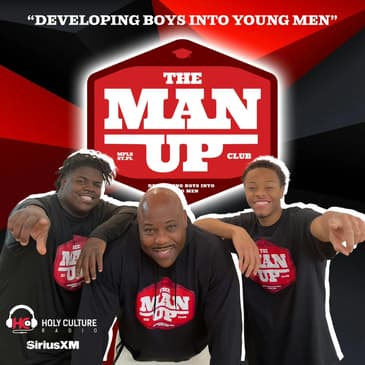
The Man Up Club Presents hosted by Celena Lena aka Sis from the duo Sis N Lil Bro, talk with two young guests about what it means to be one's authentic self, the effects of social media and what it really means to code switch. The conversation is real and authentic as these young people share different perspectives on a topic that is important to us all in today's world.
Learn more about your ad choices. Visit megaphone.fm/adchoices
[00:00:01] This complex financing talk is very exciting. Do I get my depot ever?
[00:00:06] But you already have a depot.
[00:00:08] No.
[00:00:09] Yes, you have the Vodafone Gigadepot.
[00:00:11] That's right! And I have myself in the hand how big my depot is.
[00:00:15] Now with the Vodafone Gigadepot and the data volume of the next month. Go on in the 5G network of Vodafone.
[00:00:23] Vodafone. Together we can.
[00:00:25] What up y'all? Welcome to the Man Up Club presents and we are back with another episode.
[00:00:39] Okay. Today we're talking about identity and navigating self in a highly influential world.
[00:00:46] I am your host today. My name is Selena Lina, aka Sis from Sis and Lil Bro.
[00:00:50] I also am the youth and program director of the Man Up Club where we serve young African-American males between the ages of 13 and 24.
[00:00:59] Today I have two very, very special guests on the show. One of them is 23 and the other one is 24.
[00:01:07] Y'all say what's up.
[00:01:08] What's up, Yurt.
[00:01:09] What's going on, man?
[00:01:10] What's up, Yurt.
[00:01:11] So the one who said Yurt, that is Daman and then the other one is Chrome. That's what we call him, you know, his government. You want to put your government out there or no?
[00:01:20] No, don't do that.
[00:01:20] Okay.
[00:01:23] Okay. So thank you guys for coming today. How y'all feeling?
[00:01:27] I'm feeling good, feeling great. You know, I woke up today so I'm thankful.
[00:01:31] For real, I did wake up. I'm not dead.
[00:01:33] Yeah.
[00:01:33] Okay. Okay.
[00:01:34] God still believe in me.
[00:01:35] So what do you say? We jump right into it. How y'all feel about that?
[00:01:38] Let's go. Let's do it.
[00:01:39] All right. First question. What does the concept of identity mean to you personally?
[00:01:48] You want to take that off?
[00:01:49] Yeah, I'll take it off first. So the concept of identity to me, just like, who are you as an individual amongst of a sea of billions of people?
[00:01:58] So it's like, what are you into? What do you like to do? What are your interests? What are your passions?
[00:02:03] Because all those things really make up who you are as a person.
[00:02:06] What do you care about? Things like that.
[00:02:09] So like, yeah, that's the way I would summarize it. But how would you summarize that, Kron?
[00:02:16] Identity is just who you are. Like, what do you do that's different from everybody else?
[00:02:22] You can't have an identity wearing the same clothes as somebody else because it's not you. You know what I mean?
[00:02:28] You said wearing the same clothes as somebody else?
[00:02:30] Yeah. As an example, like you got to stand out. You got to be different.
[00:02:34] I feel that. So identity refers to the qualities, beliefs, personality, looks and expressions that make a person or a group.
[00:02:44] It encompasses how individuals see themselves and how they are perceived by others.
[00:02:49] And identity can include aspects like gender, nationality, culture, religion and personal interests among others.
[00:02:58] So here's the first. Actually, not the first. The second question.
[00:03:02] Can identity change over time or is it something that's fixed?
[00:03:07] And you can take that as a personal question. Can your identity, does it change over time or is it something that is fixed?
[00:03:14] Oh, yeah. I think it for sure can change over time because we're always evolving throughout life and our interests are always going to change.
[00:03:21] Things that we used to do don't like might not hit the same later in life or earlier in life or whatever.
[00:03:27] But I think it's like at the core, most of your identity stays the same.
[00:03:33] It's just I would say.
[00:03:36] The fulfillment that you get out of doing things and like certain passions that you have, they might change.
[00:03:42] But I think at the core, your identity will still be the same.
[00:03:46] It's just the way you go about having that identity would evolve, you know?
[00:03:50] Yeah, yeah. Exactly what he said.
[00:03:51] Like you always change. There's always time for change as humans.
[00:03:55] You're supposed to change in human. You're not supposed to stay the same the whole time.
[00:04:00] You just change is good. Some people say that change is not good.
[00:04:04] A lot of people don't change and they stay the same.
[00:04:06] And you can see that in their life.
[00:04:08] But the people who do change, they just keep going up.
[00:04:11] They elevate. And that's the most important thing. Evolution.
[00:04:14] Okay. So both of y'all are saying and correct me if I'm wrong, but both of y'all are saying that change is good and your identity changes over time.
[00:04:25] But Daman, you said that at the core, it doesn't change.
[00:04:29] So, I mean, take yourself, for example.
[00:04:32] What do you think is a part of your identity that the world didn't put on you, but you were just that way since you came out your mom's womb?
[00:04:40] Um, for me, it's just operating always under the guise of like love and respect for everybody.
[00:04:46] It's like that's never changed, but it's just the ways that I would go about that and the people that I would surround myself with in certain situations has changed.
[00:04:56] But like my core values haven't changed as a person over time. You feel me?
[00:05:01] So you said, okay, obviously you're a loving, caring person and you said that's the core of who you are.
[00:05:06] Yeah.
[00:05:07] But do you think that if you would have grew up and let's just say you were abused, do you think that you would be as loving and as caring as you are now?
[00:05:17] Um, I would think, yeah.
[00:05:19] Like I've, I wouldn't call it abuse, but I've, I've grown up in situations that weren't ideal or like could have been handled a little bit differently as far as like the way I was raised.
[00:05:30] So it's like when you have some that's placed inside you, because I'm of the belief that God puts different attributes into everybody.
[00:05:40] And I do believe that operating under love and respect and, you know, tolerance and, um, just general, uh, just gratitude and gift giving and things like that.
[00:05:52] That's something that's part of my core and that'll never change, you know, um, no matter what situations I've been through, no matter who treats me, what way that, that won't change about me at all.
[00:06:02] What about you, Chrome?
[00:06:03] Who, what's at the core of your identity?
[00:06:09] Um, for sure, probably just, just keeping it cool, keeping it cool with everybody, try to relate to everybody and not try, but just find things in people's life that I can relate to.
[00:06:20] Or even if I don't know it, then I'll, I'll, I'll, I'll research it and try to connect with you on that, on that level.
[00:06:27] I just got love for everybody.
[00:06:30] We'll get into a little bit of demographics too, when it comes to identity, exploring culture and society and perspective.
[00:06:37] So obviously both of you are young black men.
[00:06:40] Yeah.
[00:06:41] Um, how does, first of all, what do you think that the world thinks about that aspect of you?
[00:06:51] Like, what is the perception that you have about how you think other people see you as a young black male, not knowing your name, not knowing who you are and things like that?
[00:07:02] Yeah.
[00:07:02] People always think I'm a, I'm, um, I'm from the streets.
[00:07:06] They always think, uh, they just think I automatically think I smoke weed or I'm finna steal something.
[00:07:13] That's just what people see when they first see me.
[00:07:15] But when they actually get to know me, then I, you know what I'm saying?
[00:07:18] They start giving me the real, they start knowing who I am.
[00:07:20] So, and, oh dude, this guy's not really like that.
[00:07:25] So, yeah.
[00:07:26] Lamon, real quick?
[00:07:27] It's the same thing for me.
[00:07:28] It's like, people always perceive me as a threat in some way, shape or form.
[00:07:31] What?
[00:07:32] Like, either I'm angry.
[00:07:34] Mind you, I do have RBF, kinda.
[00:07:36] Like, when I'm resting, my face is like, I look angry.
[00:07:39] But I'm really not.
[00:07:41] But people, like, same as Chrome, people always think, like, I'm gonna steal something, I'm gonna hurt you, I'm gonna talk crazy.
[00:07:47] But it's not even like that at all.
[00:07:50] And it's crazy that people would perceive me like that.
[00:07:53] And like you said, once people get to know me, they know that I'm the exact opposite.
[00:07:58] We're gonna dive deeper into that in just a little bit.
[00:08:07] Oh.
[00:08:08] Oh, I thought you said it was one minute.
[00:08:10] Okay.
[00:08:12] Okay, I'm so sorry.
[00:08:13] Okay, so, continuing on.
[00:08:17] Chrome, you said people perceive you as somebody who, you know, smokes weed all the time, go steal something.
[00:08:23] Is there a certain group of people that think that way about you?
[00:08:26] Or like, what's an example or experience that you have?
[00:08:29] Like, what makes you say that?
[00:08:30] Um, everybody, everybody, everybody I come across, white people, black people, Mexicans, Asians, um, it's every group of people.
[00:08:37] It's just, they just automatically assume that.
[00:08:40] For some reason, I don't know.
[00:08:42] You know.
[00:08:42] You have no clue what, do you think it could be your appearance?
[00:08:44] I mean, it's a look, the look they give me, it's a, you know, what they start off with the conversation or they'll probably like propose an ideology and I go against their ideology and they wouldn't expect me to go against it.
[00:08:56] Is it because of the face tat at a cross?
[00:08:59] Like, uh, I don't know.
[00:09:00] I mean, probably just the way I dress, the way I look.
[00:09:04] Um, it could be the cross.
[00:09:05] I mean, I don't know.
[00:09:06] More, more people who are Christian, they see the cross and they give me a hug for it.
[00:09:10] So, you know what I'm saying?
[00:09:11] I had a grandma.
[00:09:12] She like put her finger on my face and like was like, oh, dude, look at it.
[00:09:16] You got a cross on his face.
[00:09:16] You got a cross on his face.
[00:09:18] So that was cool.
[00:09:19] You know what I'm saying?
[00:09:20] Yeah.
[00:09:21] What about you, Demai?
[00:09:22] Like, why are you saying that most people perceive you as a negative person?
[00:09:27] Um, well, for me personally, it's just, I know that that is a lot of the perception that is pushed by media.
[00:09:36] Like as far as news, um, things that are reported on just like, I don't really watch the news like that.
[00:09:42] But a lot of what's reported on when it comes to people of color is negativity to where it's like, oh, you know, shooting over North side or, um, uh, person robs this place.
[00:09:53] Da, da, da, da, da.
[00:09:54] So it's like that narrative is kind of being pushed out to the world anyway.
[00:09:58] So when people interact or like even see black people, um, out in public, that's, that's how they think that we all are.
[00:10:05] And it's unfortunate because like a small percentage of people are like that.
[00:10:10] And there's reasons that they're, that they're like that too.
[00:10:13] It's like some people got no other option than to live like that.
[00:10:15] It's like, they don't even want to do it for real, but a lot of people can't think on that deeper level.
[00:10:20] And so they just assume that we're all just criminals, thugs, like we're all just rowdy, angry all the time.
[00:10:26] And, um, it just comes from perception that's pushed about us a lot of the time, I believe.
[00:10:31] Okay.
[00:10:32] So here's the thing.
[00:10:33] Obviously there's different types of people.
[00:10:37] Okay.
[00:10:38] What you're talking about, you know, when, when you say people are thinking about black people as thugs and all this, do you think that they, do you think that they think that way about a black man in a suit and tie driving a Benz?
[00:10:52] Like, you understand what I'm saying?
[00:10:53] Like there's different types of black people.
[00:10:54] There's different types of white people.
[00:10:55] There's different types of Asian people.
[00:10:57] So it's like, are we talking about a certain type?
[00:11:01] Because if we're even just talking, just looking at both of you side by side, y'all obviously have different appearances.
[00:11:06] You know what I'm saying?
[00:11:06] Chrome has dreads.
[00:11:07] You don't.
[00:11:08] Right.
[00:11:09] Right.
[00:11:09] Um, you, he has a face tat.
[00:11:12] You don't.
[00:11:13] Right.
[00:11:13] You know what I'm saying?
[00:11:14] So it's like, how, what do, what do y'all think about that?
[00:11:17] I think it kind of extends to even if like, for example, if you're driving, right, I've heard people out loud say,
[00:11:25] it's like, oh, they'll see a black man in a nice car dressed nice, whatever.
[00:11:28] But there we like, oh, you know, I bet he sells drugs.
[00:11:31] What?
[00:11:32] You know what I mean?
[00:11:33] So it kind of extends across.
[00:11:35] Because even if you're successful, like people think you got it some grimy way and they don't really believe that you've got success in a legit way.
[00:11:43] And you're actually successful as a person of color.
[00:11:45] Um, that probably has changed over time because like socially with the internet and everything, um, culture is shared and people are starting to see like people of color can actually do something and like be great.
[00:11:58] Right.
[00:11:58] So that has changed over time.
[00:12:00] But I've heard a lot of that in my past too, to where it's like, even if you're successful, it don't matter.
[00:12:03] People are always going to think some type of way about you as a person of color or as specifically a black man, you know?
[00:12:09] Yeah.
[00:12:10] Were you going to say something?
[00:12:11] Yeah.
[00:12:11] It's about how do you hold yourself to your speech and how you walk?
[00:12:17] You, the, the certain type of person, like a businessman, a white businessman and a black businessman, they're going to understand each other.
[00:12:23] Um, just a normal person and a black businessman, the normal person might have a couple of thoughts about him, but once they see how he's walking, how he's talking, how he's moving, they might change their idea about him.
[00:12:34] Hmm.
[00:12:34] Sure.
[00:12:36] You know, okay.
[00:12:37] Two things.
[00:12:38] I want to go back on what DeMond had said.
[00:12:40] He said, he said, personal color.
[00:12:42] We're talking about identity.
[00:12:44] I've heard a lot of things.
[00:12:45] I know some black people who don't like to be referred to as personal color or people of color.
[00:12:51] They don't like that term because it takes them back.
[00:12:53] Like, oh, people of color over here.
[00:12:55] Then I've met black people who want to be referred to as black people.
[00:13:00] Um, there's some people who just want to be considered, you know, brown people.
[00:13:06] And then there's some people that don't even want to be labeled any of those.
[00:13:12] Right.
[00:13:12] Um, and then there's even, I've even been exposed to white people who don't, who shy away from saying black people because they feel wrong saying it.
[00:13:24] Right.
[00:13:24] Right.
[00:13:25] It's, it's a, it's an interesting topic.
[00:13:26] So we'll dive deeper into that.
[00:13:28] Absolutely.
[00:13:29] The Man Up Club presents podcasts with DeMond and Chrome.
[00:13:32] Okay.
[00:13:32] We're talking about identity.
[00:13:34] We're talking about navigating self in a highly influential world.
[00:13:37] And we kind of got into some, some discussion about what we refer to ourselves as when it comes to us being, you know, people of color, black people.
[00:13:47] So we're going to dive deep into that.
[00:13:48] But real quick about the Man Up Club, if you do not know what it is, it is a nonprofit organization.
[00:13:53] It's a mentor leadership organization located in the Twin Cities, Minnesota.
[00:13:58] And we serve young black males between the ages of 13 and 24.
[00:14:01] We teach them life skills, social skills, academic discipline, and civic responsibility.
[00:14:06] Let's get back into the conversation.
[00:14:08] So this is for both of you guys.
[00:14:12] What do you refer to yourself as?
[00:14:14] You'd be like, I'm black or, you know, I'm a person of color, all, all, all the above.
[00:14:19] Like what?
[00:14:20] I'm black all dizzy.
[00:14:21] Okay.
[00:14:22] I love, I love, I love calling myself black.
[00:14:25] I love being black.
[00:14:27] I love black culture.
[00:14:29] Everything like that.
[00:14:30] As far as the identity politics go, I think it kind of varies person to person because people like,
[00:14:36] to be like inclusive of everything.
[00:14:38] Like when I said person of color earlier, I'm kind of encompassing all people of color
[00:14:42] because some like views and perceptions kind of go across all the races as far as like Hispanic,
[00:14:51] Asian, even white people sometimes.
[00:14:54] But me, I'm black.
[00:14:56] I'm black all day.
[00:14:57] So I'm going to claim that every time.
[00:14:59] For sure.
[00:15:00] I'm strictly American.
[00:15:02] I'm born in America.
[00:15:03] I am American.
[00:15:04] That's it.
[00:15:04] I got you.
[00:15:05] I got you.
[00:15:06] Does the term black offend you, Chrome?
[00:15:10] Um, not really.
[00:15:12] What about the term person of color?
[00:15:14] Person of color?
[00:15:15] Not really either.
[00:15:16] So if somebody was like, oh, you know, he a person of color referring to you, like you
[00:15:20] wouldn't be offended by it.
[00:15:21] No, I know what you're talking about.
[00:15:22] I mean, I wouldn't say that for myself, but just to keep the conversation short and keep
[00:15:26] things rolling, I'll go with what you're saying.
[00:15:28] I'm not going to get offended by it.
[00:15:30] It's not something I identify with.
[00:15:32] I just like to be American.
[00:15:33] So I'll tell you, look, don't call me that.
[00:15:36] I'm American.
[00:15:37] We all Americans just like everybody else because they could put you in a, I don't want to be
[00:15:41] with the blacks.
[00:15:42] I don't want to be with the whites.
[00:15:43] I just want to be American.
[00:15:44] That's it.
[00:15:52] Categories.
[00:15:52] No, not unless it's just American.
[00:15:55] Like we have a barbecue with white folks, Mexican folks, Asian folks, but we all American.
[00:16:00] Right.
[00:16:01] That's just American.
[00:16:02] You know what I mean?
[00:16:02] We all American.
[00:16:03] We live in America.
[00:16:04] We are Americans.
[00:16:05] The white black thing or the social class thing, it just, it gets clouded and it's too
[00:16:12] much.
[00:16:13] So I just like American.
[00:16:15] That's it.
[00:16:15] Would you say, and see, I'm interested.
[00:16:17] I ask these questions because I'm interested because you can't, you can't lie.
[00:16:21] That's interesting.
[00:16:22] Right.
[00:16:22] Like, okay.
[00:16:23] So, um, do you embrace your black culture?
[00:16:31] What do you mean by that?
[00:16:32] What's black culture?
[00:16:34] When I ask, I mean, when I, when I say black culture, I mean, um, okay, I'll use me for
[00:16:40] example.
[00:16:40] So I'm half black, half Filipina.
[00:16:44] There's a clear distinction between both.
[00:16:45] Like I'm proud of both sides of who I am as far as like those cultural identities, like
[00:16:51] on my black side.
[00:16:52] I love that, you know, I get inspired and empowered when I think about, um, leaders who came before
[00:17:00] us to fight to where we are today.
[00:17:02] You know, for example, MLK, um, Harriet Tubman, things like that.
[00:17:07] I like celebrating, uh, people who paved the way for freedom in this country.
[00:17:12] Even just like the way that we act, like, I'm not saying this is all black people, but you
[00:17:17] know, I like how, you know, if we'd be laughing or whatever, like, I like how loud we are as
[00:17:23] a culture.
[00:17:23] I like our features.
[00:17:26] Like I think a strength, I think of Kings and Queens.
[00:17:30] I I've been to Africa one time and it was the most amazing experience.
[00:17:34] Um, love black food, you know, soul food.
[00:17:38] I love our music.
[00:17:39] Our music is a one we lead in music and entertainment.
[00:17:43] So when I think of black culture, like those are the things that come to my mind.
[00:17:47] So for you, like, do you have black pride or however you want to, yeah.
[00:17:54] Yeah.
[00:17:54] Most definitely.
[00:17:54] I don't have black pride.
[00:17:55] It's just something I'm familiar with just growing up.
[00:17:58] Like I'm around a lot of, most of my life I've grown around white people and it's most
[00:18:03] definitely a different thing.
[00:18:05] You know what I'm saying?
[00:18:05] But it's not, I can still connect with him.
[00:18:09] I just know where, what you guys do opposed to what I do when I'm with my family and what
[00:18:13] my people, this is what we do when I'm with y'all is what we do, but I can still relate
[00:18:17] to you.
[00:18:17] You know what I'm saying?
[00:18:18] We can still go fishing.
[00:18:19] We're going to go hunting, but they probably not going to know how to fry up chicken or
[00:18:22] make the collard greens or the mac and cheese.
[00:18:24] So, you know what I'm saying?
[00:18:27] Really?
[00:18:28] Like, that's just, uh, I feel, I respect it.
[00:18:33] I respect it.
[00:18:34] So Chrome, you had brought up something really interesting in the first segment when you were
[00:18:37] talking about the two business people and, you know, you said in that situation, one
[00:18:42] was black, one was white.
[00:18:43] And there's certain perceptions that people have of, you know, positions that you may
[00:18:48] hold.
[00:18:48] And you also said that depending on the way that you carry yourself, it has an effect on
[00:18:54] how others see you.
[00:18:55] Um, so have you guys experienced code switching before?
[00:19:01] Oh yeah.
[00:19:02] Like for sure.
[00:19:03] For me, code switching has been, um, kind of like a survival tactic to where it's like
[00:19:10] this, the way that I talk to my family is not the way that I talk to my friends.
[00:19:14] Um, I talked to my coworkers at Caribou different than I would than my coworkers when I was an insurance
[00:19:18] agent and just being able to adapt and, you know, read the environment that you're in and
[00:19:24] not change your personality and like who you are as a person, but just being able to, um,
[00:19:30] you know, read the room and kind of read the environment that you're in and kind of act that
[00:19:35] certain way, but still be yourself.
[00:19:37] Um, when you can't really do that, I feel like you kind of, um, I don't want to say exclude
[00:19:46] yourself from opportunities and different areas of life that you could be in and people that
[00:19:50] you can be around, but it's just a fact of the matter of like, there are certain types
[00:19:54] of people that won't be around certain types of personalities, especially in the professional
[00:19:58] setting.
[00:19:59] Um, and in more settings, you need to be more professional, less professional, blah, blah,
[00:20:02] blah.
[00:20:03] Um, but yeah, I, I've, I want to say I've mastered the art of code switching because it's, I just
[00:20:09] been doing it for my entire life.
[00:20:12] It feels, but how about you, Chrome?
[00:20:13] How do you feel about that?
[00:20:14] Um, that's something I had to stop doing.
[00:20:16] Cause I just wasn't being myself.
[00:20:18] Like I felt like I was, uh, being fake.
[00:20:23] So I just give people, um, like a generic one, just one thing.
[00:20:27] I act the same towards everybody.
[00:20:28] That's something I practice a lot.
[00:20:29] Um, my family is kind of getting there a little bit cause they just like, oh dude, what's he
[00:20:35] doing?
[00:20:35] You know what I'm saying?
[00:20:36] They don't really recognize it, but even with them, I try to give them just, just me
[00:20:40] 100% completely how I act, what I say, um, my lingo cadence, everything.
[00:20:45] Not really try to switch it up for anybody.
[00:20:47] If you're going for an interview, you're going to use the same lingo that you use right now?
[00:20:51] For sure.
[00:20:52] Okay.
[00:20:53] It's going to sound more professional.
[00:20:54] It's going to sound just, you know what I'm saying?
[00:20:56] I might use even a bigger word.
[00:20:57] You know what I mean?
[00:20:57] I'm dead.
[00:20:58] You got to expand.
[00:20:59] So that's code switching.
[00:21:00] Right, code.
[00:21:00] Yeah.
[00:21:01] Okay.
[00:21:01] I mean, that's code switching.
[00:21:03] That is?
[00:21:03] Hold on.
[00:21:03] If you're changing your lingo, then from what you normally use, but you're still at this,
[00:21:08] at the core, you're still the same person that you are though.
[00:21:10] So that's code switching.
[00:21:11] Oh, wait a second.
[00:21:12] Hold on.
[00:21:12] Pause.
[00:21:12] Because I define code switching to be, okay, code, okay.
[00:21:20] Code switching is when you start to say and do things that are very similar to another culture
[00:21:29] because you're around that culture or group of people.
[00:21:32] And so you want to be perceived as, you know, more comfortable to be around by those people.
[00:21:40] And then when you get back to another group of people, you act more similar to that group of people
[00:21:46] or you are more loosely yourself.
[00:21:50] Code switching.
[00:21:51] For me, my personal opinion on code switching, I think that code switching is a negative thing.
[00:21:56] And Daman, it's interesting because you say, oh, I've mastered code switching.
[00:22:00] Like it's a, it's an asset.
[00:22:02] It is an asset.
[00:22:03] Because like you pretty much, we have the same definition of code switching.
[00:22:06] It's just some people think of code switching as a negative thing, like you're being fake.
[00:22:10] But it's really to me about adapting to your environment and the people that you're around.
[00:22:15] When I code switch, the situations I code switch is like a lot of in the workplace and professionalism.
[00:22:22] Because I've had jobs where I'm around people making millions of dollars a year.
[00:22:25] There's no way I'm going to talk to a person making millions of dollars a year the same way I'm going to talk to my homie.
[00:22:30] You know, it's a very different, you got to carry yourself a little different.
[00:22:33] But at the core, you still got to stay the same.
[00:22:35] And that's why it's important to know yourself and know your identity so you don't lose yourself in all that.
[00:22:41] And being around those types of people.
[00:22:43] Because that can also happen very easily too.
[00:22:45] And me, it's like I say I know myself very well, so I wouldn't let that happen.
[00:22:49] But I also know when I need to adapt and when I need to, you know, change how I talk, how I walk, words I use, my lingo.
[00:22:58] The standard there.
[00:22:58] Like even on this podcast.
[00:22:59] I'm not talking on this podcast like I would to my homie or like how we talk at the studio.
[00:23:03] Like you got to have a little bit of a different energy, you know?
[00:23:07] Yeah, yeah.
[00:23:07] I mean, what you said there, it sparked something.
[00:23:12] It was like, like, I base how I act now.
[00:23:17] Like if I'm working a job, I'm working a job for $20 an hour.
[00:23:19] I'm not going to give you every single piece of professionalism I have.
[00:23:23] You know what I'm saying?
[00:23:23] In my arsenal because it's wasted energy.
[00:23:25] You know what I mean?
[00:23:25] Like I'm not going to flip these burgers with crazy enthusiasm.
[00:23:31] Like I'm not going to do that until I get into a room where I need to use it and like, okay, go on.
[00:23:36] I need to use this.
[00:23:37] I need to sound like this.
[00:23:38] I need to, you know what I mean?
[00:23:40] This is the side you're going to see me.
[00:23:44] I'm going to use and say what I need to say here.
[00:23:47] A way that I kind of imagine code switching is imagine a present, right?
[00:23:53] And that present is you and your personality.
[00:23:55] But a present can be wrapped in different types of wrapping paper, you know?
[00:23:59] But in the core and on the inside is still the same present.
[00:24:02] But you might wrap it one way for one person, another way for another person.
[00:24:06] Wrap might be a little bit less done up.
[00:24:08] Another wrap might be, you know, nice and crisp and with a bow on it.
[00:24:11] You know what I mean?
[00:24:12] So it's just presenting the same present with a different wrapping paper.
[00:24:15] That's how I kind of think of code switching.
[00:24:17] All right, y'all.
[00:24:17] We're back at the Man Up Club Presents for a segment on identity.
[00:24:21] We're talking about code switching.
[00:24:23] We have Daman and Chrome here.
[00:24:24] Yes, sir.
[00:24:25] We have to make a stop with this because it is a very interesting conversation.
[00:24:29] So according to AI, code switching is the practice of alternating between two or more languages or dialects within a single conversation, sentence or phrase.
[00:24:38] Then the second definition, it says,
[00:24:52] So to me, there's two sides of code switching.
[00:24:56] The first side is similar to what Daman is saying.
[00:24:59] It's like you code switch depending on the event that's going on.
[00:25:04] If you're giving an interview, there's a certain way you act.
[00:25:06] If you're talking to your homeboy, there's a certain way you act.
[00:25:09] And they're two different things, but you're not changing who you are.
[00:25:11] You're just adapting to what's going on around you and what is being asked of you.
[00:25:16] And then there's this other side to code switching where it's like a negative thing because you're trying to make yourself feel accepted among another culture.
[00:25:29] Okay.
[00:25:29] So for me personally, I'm a biracial woman.
[00:25:36] So on one side of my life, I noticed, I guess, that on my black side, I guess my black side comes out more if I'm around my family on my dad's side.
[00:25:50] But then on my mom's side, I guess my Asian side comes out more.
[00:25:56] And there's other things as well that are relatable to that.
[00:26:01] So for y'all, how do you navigate code switching and your identity?
[00:26:11] You want to go first?
[00:26:13] For me, it's just like I said, I've been in environments where a lot of people make a lot of money.
[00:26:25] I kind of think of it as like, let's say you go to Walmart, right?
[00:26:30] You're dressed in sweats, pajamas, whatever.
[00:26:32] You're just there to grocery shop.
[00:26:34] There is no way that you're going to walk into a corporate office dressed the same way that you would dress going to Walmart.
[00:26:39] So you can code switch even nonverbally, even in your appearance.
[00:26:42] You know what I mean?
[00:26:44] So it's just like, like you said earlier, adapting to wherever you are, but at the core, not changing who you are.
[00:26:52] And I have said earlier, it's like that can happen if you don't know who you are at the core and you're just going with the crowd, like changing yourself, changing your interests to mold yourself to the environment that you're in.
[00:27:07] And yeah, that's when it can become a negative.
[00:27:09] But if you're someone that has a lot of self-knowledge and you're not really willing to compromise your personality and your core values for your environment, then code switching is definitely an asset for sure, I would say.
[00:27:22] You can use code switching as code switching, right?
[00:27:26] That's what it's called?
[00:27:27] Yeah, yeah.
[00:27:27] As an advantage.
[00:27:30] I see it more as like if you go with a Mexican group or the Asian group, like switching there, like if you know a different language, like that's like code switching to the maximum because you're changing everything about yourself.
[00:27:41] Right.
[00:27:41] Like you're changing your language, the things that you eat, you know what I'm saying?
[00:27:44] You know it all, but code switching, it can be used as a strategic move to get places.
[00:27:52] Let's say like you have a business background.
[00:27:54] People don't really know you have a business background.
[00:27:56] You don't look like you have a business background, but you can still step into that space and change your speech and change your walk, change everything about yourself, but keep the essence of yourself the same.
[00:28:06] You know, you're not totally changing yourself.
[00:28:09] Like when we talk, we'll talk business, but you'll also be getting me at the same time.
[00:28:14] A person that can code switch is always going to have more opportunities to bond with more different types of people than someone who can't.
[00:28:21] Right.
[00:28:21] Because there are some groups of people that just like certain personalities more than others.
[00:28:25] That's just a fact.
[00:28:26] It's an unfortunate fact, but that's just a fact.
[00:28:29] Right.
[00:28:29] So if you're able to like, you know, adapt, then you're going to make a lot more connections than someone who can't.
[00:28:35] Yeah.
[00:28:35] I see that mostly in the, like if you hang out with people in the ghetto, but you're raised in the suburbs or just not in the ghetto.
[00:28:43] You know what I mean?
[00:28:44] Like they really watch how you move your body language and everything.
[00:28:46] If you don't know how to move, they're going to be reading you a whole different type of way.
[00:28:50] Thinking you a whole different type of way.
[00:28:51] So knowing how to move in a, in a, in a setting where people are in the ghetto and how to change yourself so they can feel you too.
[00:29:00] And that's, that's also a good, um, good quality too about code switching.
[00:29:04] The way that y'all are talking about it is as if code switching is the same thing as adapting, being able to adapt.
[00:29:13] So are you definitively saying that to code switch means to adapt or do you think that it's two different things?
[00:29:22] I would say, yeah, I would say code switching is just being able to socially adapt with whoever you're around without compromising your own character and your own core values as to make you who you are you.
[00:29:33] But you're just presenting that package differently to different groups of people.
[00:29:36] So you can make those deeper connections and get to know people of all backgrounds, rich, poor, white, black, whoever.
[00:29:43] Like, you know, it's just being able to adapt socially.
[00:29:46] That's how I think of it for sure.
[00:29:47] Yeah.
[00:29:48] Yeah.
[00:29:48] That's an interesting perspective because I know a lot of people that differentiate the two, you know, because for me, adapt, adaptability, being able to adapt in different environments.
[00:29:58] That means, hey, if I'm a black person, person of color, I can be completely myself.
[00:30:06] I can be black and a professional.
[00:30:10] I can be black and be relatable to young girls my age, you know, be respected in certain communities.
[00:30:19] A lot of people think that, you know, you can't be black.
[00:30:24] You can't be your fully black self in professional environments.
[00:30:28] But that's where it's a limited mindset because it's like being professional does not mean being acting white.
[00:30:36] Exactly.
[00:30:37] Exactly.
[00:30:37] Yeah.
[00:30:38] So a lot of people code switch and they don't even know it because they have that social adaptability.
[00:30:43] Everyone does.
[00:30:44] But it's just not everyone puts that conscious label on it, you know?
[00:30:47] True.
[00:30:48] If you're not consciously doing it, then I feel like that's probably where it's fake.
[00:30:53] You don't even know.
[00:30:54] You know what I mean?
[00:30:55] Like I meet you this day, but then somebody else I know met you and you acting a whole different way.
[00:31:00] What?
[00:31:01] And then now when we all meet together, all three of us, it's like, who's this dude?
[00:31:05] Yeah.
[00:31:06] You know what I mean?
[00:31:06] Now he's giving us a different flavor with us together now.
[00:31:10] You know what I mean?
[00:31:11] That's where it gets weird.
[00:31:12] You got to know what you're doing.
[00:31:12] Yeah.
[00:31:13] Yeah.
[00:31:13] And that's where I was saying it's like when you don't know yourself, stuff like that happens.
[00:31:17] Right.
[00:31:17] Right.
[00:31:18] You know, like you can really lose yourself in a lot of different crowds and that's the worst thing that you don't want to happen.
[00:31:23] Yeah.
[00:31:23] That for sure happened to me at one point.
[00:31:25] Yeah.
[00:31:27] So we've talked a little bit about social perception, you know, finding yourself terminology when it comes to identity.
[00:31:34] Let's get into social media influence and how does that influence your identity?
[00:31:39] What does social media influence you to do?
[00:31:44] Better question yet.
[00:31:47] How do you perceive social media and what are the identities that are being presented to you through the phone screen?
[00:31:55] Man, social media influences me to just stay off it, if I'm being honest, because I know a lot of the time with social media, people portray one thing, but they got a whole different thing happening in their real life.
[00:32:06] So it's like I can't take I don't really take social media that serious only because like it depends on who you are, but you can be a completely different person on social media.
[00:32:20] And it's just like I'm someone that wants to be me at all times.
[00:32:26] And so it's like because I'm a more quiet, chill person, I'm not going to be posting every day.
[00:32:31] I'm not going to be, you know, outside everywhere at every party just to get like reels and videos and things like that because that's just it's just not me.
[00:32:39] So you so you think that social media pushes a fake agenda on people like you think social media is full of fake people?
[00:32:48] Not necessarily full of fake people, but I think social media definitely pushes people to only share the happy moments of their life.
[00:32:55] And any time that, you know, like the less happy stuff that is most of people's lives is not really, you know.
[00:33:05] Pushed out there or like put out there just because it's like all people wouldn't like this or I'm not I'm not lit today.
[00:33:11] This won't get that many likes because, you know, I'm not doing much this, that and the third.
[00:33:15] So it's like it also depends on who you follow, too.
[00:33:18] Like there are definitely people out there that are real on social media.
[00:33:21] But the vast majority of people that are big on social media and that use social media, they try to push a certain image of this stuff of themselves.
[00:33:28] It's like, oh, I got all this money.
[00:33:31] Like I'm living this life like I'm having fun every day.
[00:33:33] We out the club every night.
[00:33:35] So it's like to me, I don't want to say it's necessarily fake, but it's promoting a lifestyle of fake luxury is what I would say when it comes to social media.
[00:33:44] You know.
[00:33:46] What about you, Chrome?
[00:33:47] How does social media impact your understanding of your identity?
[00:33:52] Social media changed my identity probably not a lot, but it kind of got caught up like, oh, man, I didn't get 10 likes on my photo, bro.
[00:34:01] We only got five.
[00:34:02] And it makes me feel something.
[00:34:03] And it's not good to feel something from that.
[00:34:06] But so, I mean, I use social media as a tool now, only as a tool, only on there to get fly and show people something that they never seen before.
[00:34:15] You know what I mean?
[00:34:15] Like, yeah, it's a tool to influence other people to do the right thing instead of the wrong thing.
[00:34:19] People glamorize the diamonds and the clothes and the cars and all that, but they don't really know what's behind it.
[00:34:26] So I'm going to come on the scene and give it to them just how they're giving it to them, but I'll show you what's behind it.
[00:34:32] I won't hide nothing from you.
[00:34:34] I'll try not to hide nothing from you.
[00:34:36] So with our world today, it kind of goes one or two ways.
[00:34:40] Because there are people who get a lot of respect and people look up to these people because of what they do on social media and what they've done with their platform.
[00:34:51] For example, YouTubers, you know, people have used social media to do positive things.
[00:34:56] And so people look up to them for that.
[00:34:58] You know, they look up to them.
[00:34:59] But then there's also the other people who they have respect, not because of what they've done on social media, but because of what they've already done.
[00:35:10] And they just have a platform to show it.
[00:35:12] So for you guys, do you look up to people who are constantly, you know, on social media?
[00:35:20] Are there celebrities or, you know, mentors, influencers that you guys pay attention to?
[00:35:25] Oh, for sure.
[00:35:27] For me, because me growing up, I didn't watch TV.
[00:35:31] I don't even really watch shows or nothing like that.
[00:35:33] I watch a lot of content creators on YouTube and Twitch.
[00:35:35] So people like Berlizzi, all of the whole Easy Gang.
[00:35:39] I'm Dante, TBH, The Black Hokage.
[00:35:42] Those are all like young black men who have really created a platform for themselves.
[00:35:47] And I've watched these dudes for almost 10 plus years, you know, and I've just seen them grow and their friendships grow and their content evolve.
[00:35:55] And things like that.
[00:35:56] So it's like things like that are very positive to me.
[00:35:59] That's the more positive side of like social media influence.
[00:36:02] But when someone says social media, I instantly think of Instagram.
[00:36:05] So it's like there's a whole different side of social media to where it's like, you know, you got people like that selling out like dance halls because, you know, they just got a big group of fans that care about them and love them and their personality.
[00:36:20] Even to the point where sometimes my language is influenced on like words that they say, like the word absolutely.
[00:36:28] That's Berlizzi all day because I watch them so much, you know.
[00:36:33] So, but yeah, I look up to more content creators on YouTube and Twitch space for sure.
[00:36:37] As far as like people I look up to that have achieved a lot of great things, you know.
[00:36:42] Right, right, right.
[00:36:43] Yeah.
[00:36:43] What about you, Chrome?
[00:36:44] One guy I listened to, Charleston White.
[00:36:47] He's somebody who did it how I've seen it in my head, but I've never seen anybody do it.
[00:36:52] He's the first person who I've seen actually do it.
[00:36:55] And it's like, bro, you can get it this way, you know what I mean?
[00:36:57] You can work in the community and be a real life person.
[00:37:01] People know you in real life.
[00:37:03] In the internet, they don't know you in real life.
[00:37:05] You just give them something like a character, you know what I'm saying?
[00:37:07] It's a game.
[00:37:09] But he's monetized on it.
[00:37:10] He's made money on it.
[00:37:11] And so seeing him do that and it's opened a new door for me that I can do it as well.
[00:37:16] We're back with the last segment of the Man Up Club presents on identity.
[00:37:21] Let's keep the conversation pushing.
[00:37:22] Are you saying Chrome?
[00:37:23] I mean, I'm sorry, Demond.
[00:37:25] No, you're good.
[00:37:26] There was just something that Chrome had said about letting social media influence the way that you view yourself too when you don't get the interaction that you want.
[00:37:35] I personally experienced that because I'm a visual artist also.
[00:37:39] So it's like there is a point in time to where it was like, yeah, I was trying to blow up on Instagram, get likes, comments, da-da-da-da-da.
[00:37:47] On average, I probably get about five, six likes on my stuff.
[00:37:50] And that's just from people that I know.
[00:37:51] And so because I didn't get that interaction, I thought, oh, maybe I'm just a trash artist.
[00:37:56] Like maybe I'm not as good as I think that I am.
[00:37:58] Wow.
[00:37:59] But that destroyed my art confidence for years, years and years.
[00:38:05] And so it's like having to build back up from that.
[00:38:09] But it's just like that headspace that I was in with the whole visual art thing, that carries over to everything else too.
[00:38:16] It's where it's like, oh, this person got all this money.
[00:38:19] Oh, they're like 18.
[00:38:20] They got a Lambo.
[00:38:22] They're 20.
[00:38:22] They got an apartment in New York going out every night, da-da-da-da-da-da.
[00:38:27] It carries over to all that too.
[00:38:28] And so it can, if you let it, social media can make you think like, oh, what am I doing with my life?
[00:38:36] When you shouldn't really be thinking like that because your story is different than their story.
[00:38:40] And everyone's story is different.
[00:38:41] Everyone has different seasons of their life that they're going to be successful.
[00:38:45] It just might not be yours at the age of 18, 19, 20, 21.
[00:38:49] You know what I mean?
[00:38:49] Yeah.
[00:38:49] I mean, it could have been if you weren't so stuck into the social media thing.
[00:38:53] You know what I mean?
[00:38:53] If you focused on just waking up.
[00:38:55] Right.
[00:38:56] You know what I'm saying?
[00:38:56] Boom, you pray.
[00:38:57] And then you get to grinding.
[00:39:00] That's what you got to do because that's what they did.
[00:39:02] People are so captivated by the images and the materials that they consume instead of creating.
[00:39:11] And then you get lost in that and it's like, oh, dang, everything I'm creating is not as good as this guy.
[00:39:16] But it is as good as that guy.
[00:39:18] It's just you haven't sauced it up enough.
[00:39:20] You got to keep doing it.
[00:39:21] You got to keep doing it and keep going, keep going and put your own splash on there.
[00:39:24] Create your own channel.
[00:39:26] Do your own thing and stop looking at all the other creators because it's influencing you.
[00:39:31] Right.
[00:39:31] It's taking away from your creativity.
[00:39:33] Right.
[00:39:34] So once you step away from social media, step away from your favorite whatever you watch, whatever you do, that's your time to lock in and put you on your platform and really create yourself and really get into your creativity juice like super hard.
[00:39:49] You know what I'm saying?
[00:39:50] You're just drinking a gallon of creativity juice.
[00:39:53] That's what's going to come out and it's going to flourish for sure.
[00:39:55] You're going to see the turnout way faster than you would if you just keep watching them.
[00:40:00] I mean, you can watch them, but watch them a little bit in moderation.
[00:40:03] Too much of anything is not good.
[00:40:05] Right.
[00:40:05] Right.
[00:40:05] So, yeah.
[00:40:08] Another real quick thing that I want to say is like a lot of the time on social media when you see people with all this money.
[00:40:20] Not all money is good money.
[00:40:22] Yeah.
[00:40:22] Like a lot of people get money in some grimy ways and especially when you're a genuine person, you're not going to do what they do to be able to get money.
[00:40:30] Right.
[00:40:30] You know?
[00:40:31] So it's like some people are slower to hit their prime than others because others are willing to get there faster by means that you're not.
[00:40:38] Right.
[00:40:38] Right.
[00:40:39] Whether it's robbing, scamming, you know, selling drugs, blah, blah, blah, X, Y, Z.
[00:40:44] Maybe when you're a genuine person that wants to come from a genuine place, it's going to be a lot harder for you to blow up in anything because you have genuine attributes, you know, and you're not willing to step on someone to get to the top.
[00:40:57] You know, a lot of people are, though.
[00:40:58] Yeah.
[00:40:59] Yeah.
[00:40:59] You know, I hear what you guys are saying.
[00:41:01] Social media has this warping effect on people where it's like it can make you second guess your identity.
[00:41:10] It can make you second guess your talents.
[00:41:13] Daman, you said for a long time social media caused you to think that you was a trash artist, you know?
[00:41:19] So it's like and then Chrome, you also said you got to take that stuff in moderation.
[00:41:25] So it's it's all about the likes and the interactions that you get.
[00:41:29] And a lot of people get caught up in measuring that to equate to their self-worth.
[00:41:34] You know, the important thing is to be mindful of yourself.
[00:41:37] Like when you feel like you're being negatively impacted by what you're seeing on social media and what you're feeling, you need to just step away.
[00:41:43] And it's easier said than done because social media has a way of pulling you in and keeping you in.
[00:41:49] But, you know, I like the advice that you gave people who are listening, which is, you know, getting your back, pray, grind, like do what you got to do and just just know who you are, you know, because comparison is the thief of joy.
[00:42:05] Like that's just absolutely, you know what it is.
[00:42:07] And so I want to double back on what you guys are talking about as far as like purpose and, you know, careers and things like that.
[00:42:15] Daman, you said that you make music chrome.
[00:42:19] I know that that's something that you can relate to as well.
[00:42:22] So how has your careers, you know, in music, how has that played a role in your identity?
[00:42:30] For me, music was never really a thing that I thought would be something that I'd be pursuing career wise.
[00:42:36] It was always just something that I had a passion for and always something that I did for fun with friends and things like that.
[00:42:41] But I mean, like now career wise, I'm really I'm really considering like, yeah, I make music.
[00:42:47] Yeah, I'm a rapper.
[00:42:48] Yeah, I sing a little bit, you know, like for the first time in my life, I'm kind of considering that a part of my identity as a professional as well.
[00:42:56] Outside of, you know, doing art, you know, insurance, things like that.
[00:43:02] All these other things I've done.
[00:43:03] But for the first time, I'm kind of considering it low key.
[00:43:06] Yeah.
[00:43:06] You know, I feel you, bro.
[00:43:08] Music is music has been my life my whole life.
[00:43:10] Yeah.
[00:43:11] It's just what I grew up in is what I'm a part of.
[00:43:12] It's part of me.
[00:43:13] So I share myself through music, whether it's, you know what I'm saying, if I'm DJing or something, I'm just my playlist is just this is what I feel right now.
[00:43:20] Y'all take it and let's see how you react to it.
[00:43:22] Or if I'm making my own song, I'm coming on the beat 100% Chrome.
[00:43:26] Or if, you know what I'm saying, I'm drawing in the art or I'm on YouTube, you know what I mean?
[00:43:31] Like just different aspects of creativity that I can express myself through.
[00:43:35] Like I just use it different avenues to tell you who I am.
[00:43:39] Do you guys think that you have to have already self-accepted who you are in order to express who you are?
[00:43:49] Oh, most definitely.
[00:43:50] That's intrinsic.
[00:43:51] Because if you don't know who you are, you can't express yourself 100%.
[00:43:56] And like you can never really know how to put yourself out there in creative ways.
[00:44:01] If you don't know how you feel in the first place or if you don't know who you are as a person in the first place, you're not going to be able to express it.
[00:44:06] Right.
[00:44:06] You're going to be following the wave.
[00:44:08] Right.
[00:44:08] You're trying to figure out.
[00:44:09] Right.
[00:44:09] You know what I'm saying?
[00:44:10] Just trying to ride the wave and get those likes and get those shares.
[00:44:13] But it's going to die off eventually.
[00:44:15] Right.
[00:44:16] So let me play devil's advocate on that.
[00:44:20] Yeah.
[00:44:21] There's vocal artists, for example.
[00:44:23] There's a lot of them that have gone through life.
[00:44:27] For example, Justin Bieber.
[00:44:28] He was famous at a very young age.
[00:44:31] He was a kid when he got famous.
[00:44:33] So he was still developing his identity.
[00:44:36] Would you agree?
[00:44:37] Oh, yeah.
[00:44:38] Okay.
[00:44:38] So if he was developing his identity, but he's putting out music on how he feels and things like that, wouldn't you think that, you know, you guys making music, putting out things, sending messages out to the world?
[00:44:53] Don't you think that that's based off of, you know, it's based off experiences, it's based off emotions, but that doesn't necessarily mean that you have already self-accepted yourself?
[00:45:03] Because self-acceptance, it's kind of a life journey, wouldn't you say?
[00:45:07] Oh, yeah, for sure.
[00:45:09] And as far as the example that you gave, there's also a business aspect to that.
[00:45:15] Like you got to study markets to know what people want to hear.
[00:45:18] And so sometimes I know a lot of artists just make music and put music out based on that.
[00:45:23] It's like what they know people would listen to.
[00:45:25] And especially the example you gave with Justin Bieber, him being so young, he had a team around him to do all that for him and to tell him like, hey, yo, make music about this, make a song sound like that, hit these notes, da, da, da, da.
[00:45:37] But, you know, you still learn yourself throughout that process.
[00:45:40] You know, it's just more, it starts off as more as a business tactic.
[00:45:44] Like it's more analyzation heavy, you know.
[00:45:49] For sure.
[00:45:49] You can have people add more sauce to you.
[00:45:51] I mean, like you have some sauce of your own, but somebody just beef it up.
[00:45:55] You know what I'm saying?
[00:45:55] Turn that soy sauce into like a peanut sauce or something like that.
[00:46:00] You dig what I'm saying?
[00:46:01] Yeah, I dig what you're saying.
[00:46:03] Yeah.
[00:46:03] So as we're thinking about all these things, can you share a personal experience where your identity was questioned or misunderstood?
[00:46:11] Ooh.
[00:46:12] What?
[00:46:14] Yeah, go ahead.
[00:46:15] I got to think.
[00:46:16] I can.
[00:46:18] Me personally, everyone, everyone, which is the way that my identity is, I'm the type of person that doesn't need to talk all the time.
[00:46:27] And so it's like, usually if I'm in a group or if I'm out somewhere, I'm generally pretty quiet.
[00:46:33] And a lot of people would think like, oh, like what's his problem?
[00:46:37] Like people would think something's wrong with me or like I got a problem with somebody or I don't like them just because I'm not talking to you.
[00:46:42] And it's just like some social areas I perform better than others.
[00:46:47] Like I'd say I work better in a one-on-one conversation than in a group.
[00:46:50] You know what I mean?
[00:46:51] But it doesn't necessarily mean I got something going on or like some problem.
[00:46:55] You know what I mean?
[00:46:55] It's just who I am.
[00:46:56] I'm just a more generally quiet person.
[00:46:58] And I've been like that my entire life.
[00:47:00] Yeah, I feel the same way.
[00:47:02] You know what I'm saying?
[00:47:02] I'm quiet.
[00:47:03] Yeah.
[00:47:03] But I can turn it on and turn it off just for my advantage.
[00:47:06] Like if we're in a group of people and nobody's talking, somebody has to spark the conversation.
[00:47:11] Somebody has to break the ice.
[00:47:12] So I guess I'll be the person who will break the ice.
[00:47:14] I had to learn to do that like so many times, like all the time really.
[00:47:18] You know what I mean?
[00:47:19] Or be the first person to put out an idea to get the juices flowing and things like that.
[00:47:24] I don't really know where I'm going with it.
[00:47:25] I think I've.
[00:47:25] No, that's to go off of that.
[00:47:27] That's the beautiful thing about individuality.
[00:47:30] It's like I'm not.
[00:47:31] I'm if everyone's quiet, I'm being quiet too, bro.
[00:47:34] I'm not going to hold you.
[00:47:35] But, you know, the world needs people like you that are going to be able to set that conversation off or keep the conversation going.
[00:47:41] Right.
[00:47:41] That's the beautiful thing about everyone being different.
[00:47:44] And like you said, you and me both generally more quiet people, but you got different aspects that I don't.
[00:47:49] And I think that's a beautiful thing about life.
[00:47:51] For sure.
[00:47:52] For sure.
[00:47:52] For sure.
[00:47:52] And also just to bring it back.
[00:47:54] I know you was thinking about your answer, but I had asked, was there a situation where,
[00:47:59] you were misunderstood by people or your identity was questioned by other people and you had to like correct there.
[00:48:07] You had to.
[00:48:08] Have you ever had to explain yourself?
[00:48:10] Do you think it's a waste of time to explain yourself?
[00:48:11] No, you got to explain yourself because you can come off somebody some some way.
[00:48:16] But I mean, if they never asked, then I'm not going to tell.
[00:48:19] I'm just keep keep pushing.
[00:48:21] I'm just keep pushing.
[00:48:21] Like if you don't never want to ask me and understand where I'm coming from, then I'm not going to go out my way to tell you.
[00:48:26] I'm not going to who I am.
[00:48:28] No, I'm just give you who I am.
[00:48:29] And if you like it, you like it.
[00:48:30] If you don't, you don't.
[00:48:31] If you want to ask me and want me to go deeper on who I am and start understanding my values and where I'm coming from.
[00:48:37] All right.
[00:48:37] Thank you.
[00:48:38] I appreciate you for asking me.
[00:48:39] I don't want to tell you if you don't ask.
[00:48:41] Would it bother you if people think a certain way about you, but it's not true?
[00:48:45] No, because you stay ten toes.
[00:48:48] That's who you are.
[00:48:49] Right.
[00:48:49] What they think about you is not going.
[00:48:50] It shouldn't affect you.
[00:48:51] And if it does, you got to figure it out.
[00:48:53] You got to like go back in the lab.
[00:48:54] Like that means you just don't know yourself for sure.
[00:48:57] It means you don't know yourself and you got to get to know yourself because the mind thinking one way about me shouldn't affect me because I know who I am.
[00:49:04] He lived in my shoes.
[00:49:06] Oh, last couple things.
[00:49:07] So here at the Man Up Club, we believe that understanding one's identity leads to a fulfilling life.
[00:49:14] So what aspects of your identity are you proud of and how are you going to continue to stay true to yourself?
[00:49:21] Real quick.
[00:49:22] For me, I'm proud of my experiences and just the different situations I've been in, the different types of people that I've interacted with throughout my life.
[00:49:31] It's like I really feel like I am well-rounded and I can understand a lot of perspectives.
[00:49:39] And, you know, like I said, I always move with love and respect for everyone.
[00:49:43] And I just think as I've gotten older, I've just been able to do that even more.
[00:49:47] Like, you know, so that's definitely something I'm proud of, even though it's like they all haven't been the best experiences.
[00:49:53] I wouldn't change my life for anything because I would not be the same person as I am today if I didn't have them, you know.
[00:49:59] For sure.
[00:50:00] Yeah.
[00:50:00] For sure.
[00:50:00] What about you, Chrome?
[00:50:01] What's the aspect of your identity that you're proud of?
[00:50:04] I just like everything about myself.
[00:50:06] Everything.
[00:50:06] Even if I do find anything about myself that I don't like, then I'm going to switch it.
[00:50:10] I'm going to sit with God and I'm going to switch it around.
[00:50:12] Like, look, God, what's going on inside of me?
[00:50:14] You got to look inside yourself.
[00:50:15] So I'm constantly looking inside myself and evaluating myself and switching it up and putting more sauce to it, putting more swag to it.
[00:50:21] All right, y'all.
[00:50:22] That has been the Man Up Club Presents podcast on identity.
[00:50:25] Y'all listen to us at Holy Culture Radio.
[00:50:29] Okay.
[00:50:29] Tune in with us next time for another episode.
[00:50:33] Yes, sir.