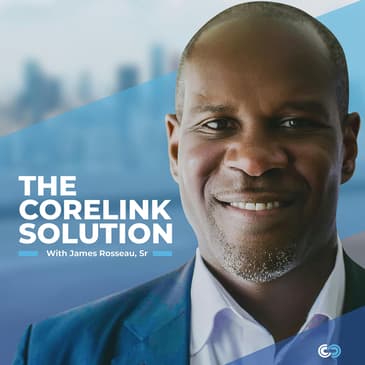

In the podcast episode The Corelink Solution, host Trig explores leadership, innovation, and company culture, aiming to empower listeners through faith, vocation, and education under Holy Culture's ministry.
The Founder’s Dilemma (Part Two): Trig reflects on Steve Jobs' insights, discussing the balance between control and wealth for founders and the importance of maintaining a culture of innovation, especially in light of Apple's recent product unveilings.
Cultivating Company Culture: He emphasizes respectful communication in the workplace, referencing a Monster.com survey on workplace behaviors. Trig highlights post-pandemic work dynamics and the need for leaders to foster a positive, intentional company culture.
Learn more about your ad choices. Visit megaphone.fm/adchoices
[00:00:01] Music
[00:00:10] Hey, family. Welcome to another episode of the Co-in-Solution where my goal is to empower you
[00:00:15] to reach your potential. Through faith, I'm going to start adding that faith, art, and vocation,
[00:00:21] and education. Those are the things that we are involved in, in holy culture, the
[00:00:26] Co-in-Solution, all under the Co-in-Length Ministries umbrella. So let me start saying
[00:00:31] some of that, so you get closer to what we do here at the Co-in-Solution. The second thing I
[00:00:37] need to tell you is today, I've got two topics, but shorter topics. The first is what
[00:00:42] we still need to learn from Steve Jobs. I'm going to call it the founders, the Luma part
[00:00:48] two. We don't want to go into that. We've seen some interesting things recently, after
[00:00:52] the Apple Day of unveiling products and such. Some of the discussion that came out of that,
[00:00:57] I believe, is really interesting. The second thing I want to talk to you about is
[00:01:01] curating company culture as founders, as leaders we have an awesome opportunity to curate
[00:01:08] a thriving culture. Mustard.com just recently did some surveys and had some very interesting
[00:01:14] statistics I want to share with you as well as my take on how you can leverage this moment.
[00:01:20] Let's jump in, fam.
[00:01:22] Want to touch on a topic that I think is near and dear to everyone in leadership. This
[00:01:28] week we had an interesting situation after Apple unveiled the number of products. Apple
[00:01:34] comes out with products every year, if not sometimes in between their annual conflicts,
[00:01:39] etc. In this years unveiling, bear it out some interesting comments from people. Obviously
[00:01:44] you'll have people who always love any new Apple product. I'm a person who's deep in the
[00:01:50] MacBook Pro's, I'm Max, iPads, iPhones, etc. But the other side of that is some people who
[00:01:58] were a little bit more critical. I think before I talk about what they were critical about,
[00:02:02] I want to share a quick clip from Apple's founder Steve Jobs that I think will ask some context.
[00:02:10] I see. Apple was a company that was based on innovation. When I left Apple 10 years ago,
[00:02:16] we were 10 years ahead of anybody else. It took Microsoft 10 years to copy Windows.
[00:02:20] The problem was that Apple stood still, even though it invested
[00:02:25] cumulatively billions in R&D, the output has not been there and people have caught up with it.
[00:02:30] It's differentiation has eroded, in particular with respect to Microsoft.
[00:02:36] So the way out for Apple and I still think Apple has a future. There's some awfully good people
[00:02:40] there and there's a tremendous brand loyalty to that company. I think the way out is not to
[00:02:45] question burn. It's to innovate. That's how Apple got to its glory and I think that's how Apple
[00:02:49] could return to it. So what's pretty clear from Zeev Jobs is two things. One, he felt where Apple
[00:02:56] started was not where it was currently operating and he felt the idea or the way to remedy that
[00:03:03] was innovation. And I think that speaks to some of the comments you heard coming out of the conference
[00:03:07] from Apple this week. Is that a lot of people felt like there was nothing level of innovation
[00:03:12] that they were used to that they really wanted to see transformation and what they saw at the
[00:03:16] unveiling of the products was incremental. And I think it points to a learning lesson for all of us
[00:03:22] as leaders. A lot of times people talk about the founders dilemma and if you Google it what you'll
[00:03:28] find is a common dilemma that speaks to and a founder starts an organization he or she gets to these
[00:03:35] crossroads and it is a true dilemma. And it's based on a choice, the person can become rich
[00:03:40] or they can become king. And what is meant by that is they can become rich by giving up some of
[00:03:45] their equity, some of their ownership and control of the company and then be a part of going public,
[00:03:50] bringing in whether it's private equity, stakeholder, adventure capitalists etc. And they become rich
[00:03:55] because now the value of the company has increased significantly. The other side of that is
[00:04:00] or they can be king. And if their king that means they hold the equity, they hold total control
[00:04:06] and essentially run the company as they see fit with all power. But one of the things in
[00:04:11] the founders dilemma that's always pointed out is you cannot have both. You can't become rich
[00:04:17] and keep total control. But I think that's only one dilemma. I think there's a second founders dilemma.
[00:04:23] And that second founders dilemma is the jet propulsion behind innovation for the company.
[00:04:30] The founder, any of us as founders and leaders have a view when we create something new and
[00:04:36] bring it to the market. It's usually born out of some burden. You know for years I worked the company
[00:04:41] called Legal Shield. It was founded by Harland and I figured it's an aim right now. You have to
[00:04:46] forgive me. He's passed away. But just a wonderful founder and literally started the company because
[00:04:51] he had a horrible automobile accident found that going through the legal process was draining
[00:04:57] all of his funds to the point of almost near bankruptcy and said, how do I create a product
[00:05:04] a service system that will let the average person be able to afford legal services? And he was
[00:05:10] bent on making sure that company came to fruition fast forward. He grew an incredible company.
[00:05:16] And then at one point said, well, he's getting older in years. He's you know,
[00:05:20] him and his wife probably wants to travel more wants to do different things and he sells the company.
[00:05:25] In a stays on for a while to help obviously lead the company and then turns it over to the
[00:05:30] next CEO. Now, when the story is told about Legal Shield and whatnot and they talk about Harland,
[00:05:36] they talk about that transformative energy. They talk about bringing something to market that never
[00:05:41] existed. They talk about the innovation of going around to state to state and getting law firms to be
[00:05:46] a part of this new ecosystem of legal services. Since that time has they've been transformation
[00:05:52] of course there has been. But the CEOs that followed Harland don't necessarily have that same burden
[00:05:58] and it's hard to place that burden in peoples. But I think that is a part of what we can learn from
[00:06:04] what Steve Jobs has said and what he has done. If you think about it, most of us grew up in the
[00:06:10] day in the era of, you know, we move from wax to cassette tapes to CDs and then Steve Jobs introduced
[00:06:19] the iPod and told us on this device, you'll be able to take your catalog, your book of CDs
[00:06:25] and put everything on this one device and most of us didn't believe it. And not only that he
[00:06:30] give us a device but you need to understand that he and Apple will not the first ones to bring it
[00:06:35] to market. They were the first ones to create in such a way that it was hyper intuitive and that it
[00:06:41] made sense to the average consumer. He went from there to then saying, okay great, you've got that
[00:06:46] and you've gotten used to that. Let's give you other products. Right? So they give us computers,
[00:06:51] and MacBooks, etc. And then we get the iPhone and the iPhone changes the game. And so we've
[00:06:56] seen from Steve Jobs that level of constant innovation, almost never being good enough in getting
[00:07:02] ahead of customers, not waiting for what consumers want but trying to give consumers something
[00:07:08] they will want. How do we ask founders and bet that level of innovation into the DNA of the company?
[00:07:17] That to me is the second delimit to address family. Let me go to another topic, family. Another
[00:07:24] leadership topic I think is really important for us to get and that is cultivating culture. One of
[00:07:31] the most pressing things we have to do as leaders is cultivate culture and Peter Drucker used
[00:07:36] always say culture eats strategy for breakfast. I was reading a recent monster.com survey and they
[00:07:43] talked to a number of employees and they were asking employees what they thought about the culture
[00:07:48] and what's one of the most important workplace mannerisms you look at in terms of your colleagues
[00:07:53] and 50% 5,0% said respectful communication. Now that's interesting, respectful communication. So
[00:08:01] on leader pocket that when you list of things to look at monitor and check is communications inside
[00:08:08] of your organization respectful but there were some stats to look out for. They asked workers to list
[00:08:14] the rootest workplace behaviors. Allow them to choose more than one of course. In a top of the
[00:08:20] list 88% said not cleaning up after oneself. 81% said gossiping is a problem. 78% said using
[00:08:30] inappropriate language and 77% said being unresponsive to messages. And so one of the things to consider
[00:08:39] is again how much the pandemic changed the work environment. I don't know about you but for me
[00:08:43] it's made a dramatic shift and when we look around as we still see organizations struggling with
[00:08:49] how to balance it, demanding some people come back from remote work and come back in the office
[00:08:53] spaces on the other side a lot of employees saying wait a minute I figured out how to work at home
[00:08:57] successfully. Why do I need to come back? I enjoy the flexibility I have at home whatever that
[00:09:03] is going from the bedroom to the bathroom to shape up in such a little bit and walk in down
[00:09:08] to the office at the end of the hall. I enjoy that and I'm not ready to give it up. However one of
[00:09:13] the things that also happened during the pandemic is the removal of some of the let's call it
[00:09:18] conveniences of being in the same space. The ability to be at the coffee machine, coffee machine
[00:09:23] together, and just chat in two for a second. You can sip a coffee, have a cracker, and say hey
[00:09:28] this project we've been working on I've got an idea. The spontanity of being in the office together
[00:09:34] whether it's going to the coffee machine, walking down to the lunch room, chatting chew, drop by
[00:09:38] somebody's workstation or office those things are gone. And so we have a more difficult time
[00:09:45] working through some of those communication things right? If communication is 50% of what
[00:09:50] is important to people we have to address it leaders. We have to get in front of it. So there's
[00:09:54] a few ideas I love to throw your way. One of the biggest lessons for me through the pandemic
[00:10:00] and I was at that time doing some executive coaching with different leaders and organizations
[00:10:04] was stepping back and not throwing our hands up in the air. It's important to step back
[00:10:10] because you say to yourself everything's changed and the reality is everything has not changed.
[00:10:17] There are three things I'm going to remind you that have not changed. One is the why of what you do.
[00:10:23] Why do you do what you do? What is the story behind the organization's mission
[00:10:28] and vision? You need to retell the story often to get people grounded in. Why this organization
[00:10:36] exists and why they're there? The second thing is who you deliver to, who is your customer,
[00:10:42] describe them in detail. Use avatars, use descriptors, help people understand if you know for me
[00:10:50] and I think about our radio station. I think about Nelly. Nelly is 53 years old. She's a white woman
[00:10:55] and a mix family. She's home doing a good portion of the day. She pays so the series xm
[00:11:00] subscription and she listens to Holy Culture Radio as she's washing dishes. She likes to sing along
[00:11:06] with the songs and so she may not get into all the bars at every song but she sings along with the
[00:11:11] song course and then she leaves around 2 o'clock to pick up and help on some days. Pick up her
[00:11:17] college child who's going to the local community college. He gets in a car. He goes to reach for the
[00:11:22] radio. He wants to hear little boozy, little Wayne Kendrick, etc. She's going to wait a minute. I want
[00:11:26] you to check out what I'm listening to because I think you like it and they together listen
[00:11:30] to Holy Culture Radio. That's how I see Nelly. That's how I also see our secondary audience
[00:11:35] which is let's call it people of color 25 to 45 dominantly. I visualize what they look like
[00:11:43] the things they enjoy, the demographics, the psychographic etc. Help your team do the same.
[00:11:50] Who do you serve? Because that has not changed. The third thing that has not changed is what
[00:11:55] you then deliver. What is the product and service? And are you intimately aware of all the components
[00:12:02] of it? Are you intentional about keeping it healthy, growing it, etc. That is for you as the leader
[00:12:08] to make sure you're keeping that momentum driven inside the organization. Now let's do what
[00:12:14] what has changed. What has changed is how do we get it done? Obviously what we're more working
[00:12:21] the how has changed. To the point I mentioned earlier, less inner office conversations which means
[00:12:26] less spontaneous ideation, etc., which means less hanging around to get the knowledge
[00:12:31] of the relationships. Which means you have to replace what was spontaneous with intentionality.
[00:12:40] You have to replace spontaneous with intentionality. You have to replace spontaneity or
[00:12:47] spontaneous with intentionality. And so give some thought to what you do. One of the things
[00:12:53] that many of us learned back in the day was Disney's management approach, which I love. They call it
[00:12:58] management by walking around. You can imagine that, Disney. You got a theme park. You got many
[00:13:03] cast members as they call Disney employees who managed to park in various ways from the line
[00:13:09] management to getting on to a ride to control the ride itself to cleaning, to selling food and
[00:13:14] beverages. Think about all the people, the thousands of people at one theme park. One of the things
[00:13:20] they demanded from executives. This was not discretionary. Every executive had to do it is you had
[00:13:26] to spend time walking around the park. That's management by walking around, walking around, observing.
[00:13:33] What are the cast members experiencing? What are the challenges they're dealing with? What is our
[00:13:37] culture look like? How does it truly show up with people in the park? Do we add differently before
[00:13:43] the park opens than when the when the park closes or are we the same? All those types of things
[00:13:50] must be monitored, probed, elicit it. We have to ask our folks how they're feeling and then as
[00:13:57] the survey did ask them what is important. So family I think we have a wonderful opportunity ahead of us.
[00:14:03] Let's continue to watch the data but let's also continue to ask our people what is important because
[00:14:09] we want to have a growing, thriving culture that not just helps the organization be profitable
[00:14:14] but help employees thrive in their careers. Family as always those are my takes on these topics
[00:14:21] but I love to hear yours. I may have missed something maybe you think my views a little off. I invite
[00:14:27] it all. This is a tribe I hope that we learn together with them truly. So drop me an email if you want
[00:14:33] James RISO or RSS EAU at holyculture.net. Totally works for any of the socials, James RISO senior
[00:14:42] on any of the social platforms. And please let your voice be heard. I love the feedback until next time
[00:14:49] be informed be empowered be accountable.