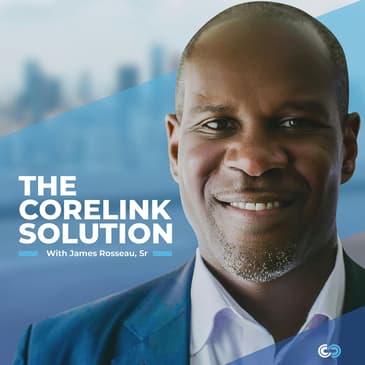

Roles and titles are addictive but not definitive in the definition of a leader. What are the characteristics of an effective leader? During this episode I focus on six leadership skills we should all focus on as traverse our career journey.
Learn more about your ad choices. Visit megaphone.fm/adchoices
[00:00:10] Hey family, when I say the word leader, what pops into your mind? It may be a prominent CEO you admire, an influential public figure, your pastor maybe, a civic leader, someone you see driving change.
[00:00:25] But the reality is that each of you are leaders in your own respective ecosystems and beyond. Roles, titles are additive, but they are not definitive in the definition of a leader.
[00:00:37] During this episode, I want to focus with you on six leadership skills I would encourage for all of us to stay focused on as we sharpen our saws together. Let's jump in.
[00:00:50] As we begin to talk about the topic of leadership, let me share a quick story.
[00:00:54] So I was at JPMorgan Chase for about 11 years, and I believe it was a place where I really honed my leadership skills, at least at the first level, coming in as a vice president.
[00:01:07] And then I was able to be promoted into senior vice president and be there about five years as a senior vice president before moving on.
[00:01:15] And I was able to ascertain a lot of things, observe a lot of things, get some good mentoring, etc.
[00:01:21] And I remember once, you know, I think when you were in the corporations, you see a lot of different life cycles of things that become, you know, like this fad, so to speak, or this new, I don't even want to call it a fad because that's almost dismissive or derogatory.
[00:01:37] Not a fad, but sometimes new processes, procedures, techniques come in, and they're a big, quote unquote, thing for a moment.
[00:01:45] And, you know, for some who are a little older than me, it was total quality management.
[00:01:49] But in my era, it was Six Sigma. Six Sigma exploded, became a big thing.
[00:01:53] It became a, you know, must do, particularly if you're managing operational areas, which at the time I was.
[00:01:58] I was managing HR service delivery for all North America for JPMorgan Chase.
[00:02:03] And when Six Sigma started, we had, you started to learn some of the vernacular, what Six Sigma means, how you calculate it, and so on and so forth, and green belts and black belts and all those different things.
[00:02:14] And we had a clash for those who would be leaders of Six Sigma teams.
[00:02:19] So given the team I had, I definitely had to go to that.
[00:02:23] So I go to this training, we're up in New York, and I remember sitting in a room, and as the instructor is teaching about Six Sigma,
[00:02:30] she naturally is using the terms that go along with it.
[00:02:34] And one of the terms is defect, right?
[00:02:37] That's a problem.
[00:02:37] It's a defect.
[00:02:38] Because if you're not Six Sigma, Six Sigma is almost perfection, something that prevents you from being Six Sigma is referred to as a defect.
[00:02:45] I remember one of my peers said, I object.
[00:02:50] I will not be called a defect.
[00:02:53] And the person said, well, no, no, no, I'm not calling you a defect.
[00:02:57] That thing in the process that prevented you from having Six Sigma level quality is a defect.
[00:03:04] No, listen, I will not be called a defect.
[00:03:07] I think it happened one more time, and then that person got up and left the room.
[00:03:12] I mean, had a small tirade as they left.
[00:03:16] I will not be called a defect.
[00:03:17] I've been at this company a long time.
[00:03:18] You know, how could you say this?
[00:03:20] Is this not right to refer to us that way?
[00:03:22] And stormed out the room.
[00:03:24] And I won't forget that moment because, to me, it was an opportunity to learn and adapt.
[00:03:33] And language and even the misunderstanding and appropriation of the language caused the person to miss that learning moment.
[00:03:42] That was pivotal for our organization.
[00:03:44] And so I say all that to say, one of the first leadership skills that jumps out for me for continuous growth is agility and adaptability.
[00:03:54] Things are moving rapidly in the environment.
[00:03:58] What can you look at today that you would say is the same as it was two years ago?
[00:04:04] Is the same as it was in 2023?
[00:04:06] Is it the same as it was at the start of this year?
[00:04:09] A lot of things just change so rapidly the way we get information, access information, convey information, the tools we use, the way we communicate, etc.
[00:04:21] And so being adaptable as a leadership trait is important.
[00:04:27] Can you cultivate continuous learning for yourself and for others around you?
[00:04:33] And one way really to do this is rethinking your attitude towards change, towards failure, towards learning and adopting the principle of being a continuous learner.
[00:04:47] So that's my first one.
[00:04:48] If you're going to be a leader and you all are leaders, my friend, you are a leader.
[00:04:55] Don't let the role or title confuse you.
[00:04:59] I don't care what you are called.
[00:05:00] There is someone looking at you, learning from you in the moment, and thus you are a leader.
[00:05:08] I know many of you have faced this just in your day-to-day life, in your work life.
[00:05:15] Let me be specific.
[00:05:16] When you come into the office and you expect things to be exactly the way they've been, why shouldn't you?
[00:05:23] You have the regular morning, your breakfast, your drive to work, your parking spot or parking place.
[00:05:28] Or if you take a public transportation, whatever it is, that routine seemed the same.
[00:05:32] And so when you walk in the door, you expect to be the same.
[00:05:34] And then there's an announcement.
[00:05:36] We need to get everyone together in the cafeteria.
[00:05:38] We need to talk about some changes that are going to take place.
[00:05:42] And then they use the big O word, one of the two big O words.
[00:05:47] We are outsourcing or we are offshoring.
[00:05:51] Either one of those O words drives a lot of consternation, concern, and rightfully so, because that typically means your role is going away.
[00:06:00] You are sending the work that you currently do somewhere else.
[00:06:05] I had the same experience, but I was the leader of the team that we were going to offshore a ton of our work from North America.
[00:06:15] And I had teams in Delaware, small team in New York City and a large team in Dallas, Texas.
[00:06:22] And we declared we had to offshore some of our things.
[00:06:26] And I remember going through the conversations of what this usually looks like.
[00:06:32] It is very, what's the word I'm looking for?
[00:06:35] I don't want to, it was operationalized.
[00:06:38] Let me put it that way, because in our organization, it had been done so many times, so much so that there was a unit that had been created and intact to help groups offshore.
[00:06:49] So once you made the declaration, this group worked with you.
[00:06:52] They worked through what all the financial models should look like, what you should move, how you think about what you should move.
[00:06:58] I mean, very analytical and financially driven, of course.
[00:07:02] And for me, I was struggling a bit on some of the process because one of the things in the process is you really are conscious about not disrupting operations and how you manage communications and such during that period of time.
[00:07:19] So much so that for me, and I don't, again, I'm not throwing stones, but there's a part of it which is don't tell people they're going to be impacted until you really have to.
[00:07:30] So in other words, you may know now, but you need to wait months because you don't want to pull that communication trigger until you're about ready to transition it for fear that you'll disrupt operations because everyone who is going to get impacted will roll out or at least a good portion of them will leave.
[00:07:48] And for me, it was hard because I tend to lean into empathy, high level empathy and thinking about what's happening to a lot of different people.
[00:07:56] So I raised my hand and said, look, I, you know, I get that that is the normal process, but I'm going to do something a little different.
[00:08:03] And suffice it to say, I'm happy to actually be able to say this now that not only did we tell our team early, not only did people not leave at the rate that folks would, you know, projected they would, but we took a different approach and spent more time with the folks that it was going to be offshore to and invited them to come over from India and spend time with us in the U.S.
[00:08:30] And that team and the current team became friends.
[00:08:36] They enjoyed each other's company.
[00:08:38] They, they developed a sense of camaraderie and pride about making sure the U.S.
[00:08:44] operations moved well, making sure execution was done well.
[00:08:49] We, there were culture parties where the Indian team prepared different foods and whatnot.
[00:08:53] So we could experience them on the U.S.
[00:08:55] side and vice versa.
[00:08:56] Same thing with clothing and other cultural norms.
[00:09:01] And so I say that to say the second leadership principle I want to throw out there is emotional intelligence.
[00:09:08] I believed that is something that served me well at that time.
[00:09:12] It has continued to do so.
[00:09:13] And I've watched others do the same thing.
[00:09:16] And I would say I still work on it because I want to be tremendously self-aware of the, where I perform well and where I have challenges, where I can be an accelerator versus where I need someone to help me accelerate.
[00:09:33] Places I should spend my time versus places I should have someone else from my team step in because I'm not as effective there.
[00:09:41] And so, you know, I, I throw that out as the second one.
[00:09:45] And I would also say as a part of that ratchet up the empathy scale.
[00:09:50] I've, I've talked about this before, but it's worth repeating.
[00:09:53] I believe there are four levels of the role you play as receiver in a conversation, four levels you could choose to play.
[00:10:01] One, you can, you can hear and you can definitely hear, but hearing should gravitate minimally to listening.
[00:10:08] That you are processing the audible signal that you're hearing and from listening to effective listening that you're processing and paraphrasing back to confirm critical points of that sender's message to ensure that you actually get it.
[00:10:25] And then the fourth level that I, I hope I can get to continually is empathy that you're able to not only digest it, comprehend it, paraphrase it back, clarifying it, but digest it and feel it a bit.
[00:10:43] To try to understand beyond the words, where that person is coming from, what they're feeling, the root of it versus sometimes what's on the, on the front end are the, you know, almost like probing factors of it, right?
[00:10:58] Like descriptors, but can you get to the root of what they're trying to communicate?
[00:11:01] So number two for me is emotional intelligence.
[00:11:06] And so number three on my list is, let me think, let me set this up a little bit differently.
[00:11:11] When I was at said firm, uh, legal shield, I had someone one day talk to me about a presentation I was doing.
[00:11:21] And, you know, sometimes I would have these presentations and I got used to presenting.
[00:11:25] I get, by the way, I, you know, I grew up, I mean, with stage fright beyond belief.
[00:11:30] And I finally went to toast masters, learn some techniques, learn how to channel my nervous energy differently, comment down, redirected.
[00:11:37] And a number of different things that helped me present better.
[00:11:42] Cause I, that was just going to happen as a part of being a senior leader in a large organization.
[00:11:45] I had to get out and present more and I got more comfortable with it, but I still would oftentimes pack a lot of information into a presentation.
[00:11:54] Like my decks could get thick.
[00:11:56] And I had a person say one simple thing to me, just assume that every page in your presentation needs five minutes to clear the page.
[00:12:05] Claire would say that to me, big shout out to Claire.
[00:12:07] Claire would say Claire Terrell, my CMO at a legal shield.
[00:12:11] Claire is just brilliant person, by the way.
[00:12:13] Claire would say you need five minutes minimal to clear a page.
[00:12:17] I don't care what you put on the page.
[00:12:17] You need five minutes to clear it.
[00:12:19] That's just use that as a rule of thumb.
[00:12:20] And that simple tidbit and me digesting and using it changed my presentations dramatically and they became more rich.
[00:12:30] They became more fluid.
[00:12:31] They became more conversational.
[00:12:33] And so that is a lead into my third point that I believe is really important is communication.
[00:12:39] Research from Halo revealed that 75 percent, approximately 75 percent of employees see communications as the number one essential attribute for leaders.
[00:12:50] And Grammarly's 2023, the state of business communication report shows that poor communications cost U.S.
[00:12:57] businesses an estimated one point two trillion annually.
[00:13:02] Not million, not billion, trillion.
[00:13:05] Poor communications cost an estimated one point two trillion.
[00:13:08] And so focusing on communications as a leader is so key.
[00:13:12] Ensuring that you think about the recipient when you go to send a message and how they might best receive it.
[00:13:19] I've been through processes before such as Myers-Briggs and the print process.
[00:13:24] Print is a brilliant process.
[00:13:25] It's not as widely used as Myers-Briggs, but it helps you understand what helps a person accelerate versus what may put them in shadow, so to speak.
[00:13:35] In shadow, you really don't want to work with people when they're in shadow.
[00:13:37] I know it's hard to do anything.
[00:13:39] And one of the things I remember about that process is we all looked at our print categories, if you will, or print profiles, and you understood what that person needed.
[00:13:49] Some people need more analytical information.
[00:13:52] Some people need more visionary information.
[00:13:55] Some people need quick line to the actions they need to take as a part of what you're telling them.
[00:14:01] Some people need the long story buildup and then the thing.
[00:14:06] Some people need answer first.
[00:14:07] Just tell me the answer and you can tell me how you got there later.
[00:14:10] Being cognizant of what people need when you communicate can help you tremendously get your message across and have healthy dialogue.
[00:14:21] So number three for me as leaders, please, please, please let us all, particularly in an environment we're in now where it's so easy to miss each other.
[00:14:30] And the time we have together, if we have it, is that much more precious.
[00:14:36] Consider how you develop your communication skills.
[00:14:40] So I've gone through three things that I see as critical things for us to develop as leaders.
[00:14:45] Let me go into number four.
[00:14:48] This is not going to be the most popular one.
[00:14:50] I do realize that.
[00:14:52] It's not going to be the most popular.
[00:14:54] Most of us are tired of talking about it.
[00:14:56] You likely are probably tired of talking about it, but it must be covered.
[00:15:01] And that is artificial intelligence.
[00:15:05] Similar to where I opened up in terms of things that happen in environments that become a phenomenon, if you will.
[00:15:13] Earlier, I mentioned total quality management, which back in the day, I think that's probably a 90s thing was a big deal.
[00:15:20] Maybe in 80s.
[00:15:21] Then it was six sigma.
[00:15:22] We went through seasons of offshoring and outsourcing.
[00:15:26] And you could probably rattle off three or four or five major things that happened that swept through business environments and almost came across as a must do.
[00:15:39] If you're going to not just thrive, but even survive in your industry.
[00:15:44] It felt within the corporation that this is a must do body of work.
[00:15:49] I believe artificial intelligence represents that.
[00:15:52] And you think I would really want to pronounce for us as leaders is that people take cues from us.
[00:16:01] In as much as you demonstrate intellectual curiosity, in as much as you think through options and things that can grow in your environment,
[00:16:13] in as much as you create conversations about applicable usage, that all carries down to and across your team.
[00:16:24] You set the tone.
[00:16:26] And so whether it's thinking through how using products such as Grammarly to tighten up written communications,
[00:16:33] whether it's the options you turn on inside of Slack, whether it's Trello and the things you allow the automation to do and what's called Butler and Trello,
[00:16:46] whether it's Zapier and allowing things to happen there.
[00:16:49] And those are more consumer centric AI pieces.
[00:16:53] Right.
[00:16:53] But whether it's content creation, content distribution, you name it.
[00:16:58] AI has been a part of what we do for a while.
[00:17:02] It's just more pronounced now and more in fashion to talk about and use in a different way.
[00:17:09] And so I encourage you as a leader to get comfortable with it.
[00:17:13] Don't just tolerate it.
[00:17:15] Get comfortable with it.
[00:17:17] Flex your intellectual curiosity and help your team by setting the right tone.
[00:17:23] Let me go to number five.
[00:17:26] And this one, I would say I've kind of hinted at all throughout what I've said thus far.
[00:17:32] But number five is change management and dig this for a moment.
[00:17:36] A Gartner study uncovered that 73 percent of employees report moderate to high stress levels as a direct result of changes in their organization.
[00:17:47] Family.
[00:17:47] Let's think about that.
[00:17:49] 73 percent.
[00:17:50] So seven out of 10 people always like that visual.
[00:17:52] Me personally, I close my eyes and I think about counting off 10 people and then going, wow, seven of them are experiencing moderate to high stress levels as a direct result of changes in the organization.
[00:18:07] So what does that mean?
[00:18:08] We as leaders, titled or untitled, in current role in this season or not, have to be better at how we drive change management.
[00:18:19] And there are a number of things, obviously, that that encompasses.
[00:18:23] But that means effective communications.
[00:18:26] That means analytical skills.
[00:18:27] I'm sorry.
[00:18:28] Let me just go back to effective communications for a second.
[00:18:30] Think about what I said earlier.
[00:18:31] There's a couple of things there, right?
[00:18:32] One, how you hear, listen, effectively listen and gain empathy.
[00:18:39] Two, how you think about the receiver of information as you prepare your communication.
[00:18:43] And by the way, prepared communication is not limited to written form or presentation, even your verbal communication.
[00:18:49] Have you ever thought about how some people's message when they speak seems to be very crisp and concise?
[00:18:57] When they go up to speak at a rostrum or speak on a Zoom, so on and so forth.
[00:19:00] Please understand that many of us write down bullets in terms of what we want to cover in said meeting and speak from the bullets and try not to let ourselves waver too much to the left or right.
[00:19:16] Because we know there's the possibility of not injecting ourselves into the meeting and potentially being too quiet or being on the opposite side of being so long winded that people miss our point.
[00:19:28] And so if you know you're susceptible to either of those things, not injecting or being too long with it, write down some bullets and speaking points before the meeting.
[00:19:38] Have them right there on the sheet in front of you.
[00:19:40] I've got five things I want to make sure I communicate and get across that are important.
[00:19:46] Five things.
[00:19:47] I got three things.
[00:19:48] Whatever the case may be and know what they are and try to stick to that script.
[00:19:52] And obviously you can go over time and go off script and so on and so forth.
[00:19:55] But just think about that.
[00:19:56] So effective communication, analytical skills, cross functional collaboration is a big deal when you think about change management.
[00:20:04] It's easy for us to all get tunnel visioned into where we are, what we do in our day beginning to end and what has to happen.
[00:20:12] But what about when you look to the left and look to the right?
[00:20:16] What do they think about?
[00:20:19] What concerns are they going to have?
[00:20:21] And how will you communicate with them along in this process?
[00:20:26] Being strategic and putting a high priority on making sure you communicate so well that no one ever feels snickered.
[00:20:36] When you're going through change management, surprises are not a good thing.
[00:20:40] No one wants to feel as if they are, quote unquote, just finding out.
[00:20:46] Why am I just finding this out?
[00:20:48] What do you mean this is happening tomorrow?
[00:20:51] That should not happen.
[00:20:52] And so when you think about change management, particularly when we are more hybrid, that means you do have a little bit more work to do, leader.
[00:21:00] It's not just the all hands meeting in the office.
[00:21:04] Even if you do Zooms, man, somebody may miss the Zoom.
[00:21:07] People are out sick.
[00:21:08] People are traveling.
[00:21:09] You have to be meticulous in ensuring the message reaches everyone.
[00:21:17] Family, let me bring this conversation about leadership and things we can do to continuously grow as leaders.
[00:21:26] Let me bring it home with this last one.
[00:21:28] And let me say this.
[00:21:30] As a acknowledged introvert that I am, that over years when I tested on Myers-Briggs, it would show I'm an extrovert.
[00:21:39] That's because I've learned how to flex, as my coach would say, in different situations.
[00:21:43] So depending on when I'm testing and what's going on with me and my roles and responsibilities and whatnot, I'm really close to the center.
[00:21:50] But at my natural state, I'm an introvert.
[00:21:53] One of the things that challenges me in that is knowing this one is important for me as a leader, as it is for you.
[00:22:01] Relationship building.
[00:22:03] Relationship building, I don't believe we'll ever get old or fall off the list of top things we have to do as leaders.
[00:22:11] We have to get out there and know people.
[00:22:14] You know, Gallup's meta-analysis of employee engagement says this.
[00:22:19] Business units with good employee engagement have 41% fewer quality defects and 37% less absenteeism.
[00:22:27] A 21% increase in productivity was also seen as a result from higher employee engagement.
[00:22:34] So relationship building obviously plays its way into employee engagement and how you facilitate relationships between yourself and your team members and the team members amongst themselves.
[00:22:47] But also even outside of your workspace, think about after you leave the workspace, think about other people in your industry you need to connect with.
[00:22:57] Think about outside of your industry.
[00:22:59] Think about your local social environment.
[00:23:02] Think about what's important to your ecosystem.
[00:23:05] Relationship building is a must.
[00:23:09] And I would encourage you to consider that you need to be intentional.
[00:23:15] Many times we leave relationship up to when someone else has orchestrated something and there's times to do X, Y, and Z, then of course I will do it.
[00:23:24] In today's world where we're more hybrid, there's less, again, opportunity to walk with each other down to the lunchroom or catch up by the water cooler or by the coffee machine.
[00:23:34] Those opportunities are fewer.
[00:23:37] And so that means we have to be more intentional to create spaces and build relationships.
[00:23:43] It means you may also have to go to more conferences.
[00:23:48] Because that time is not only to meet other people from other companies, that may be the time you spend with those you actually work with on a regular basis, but don't get that time.
[00:23:56] That means vacation time is more precious if you care about the relationships.
[00:24:01] Spending time with those you love and want to love on.
[00:24:06] And so relationship building, family as a leader means a lot.
[00:24:10] And one last thing I'll say about this one is the death of your relationship has a direct impact on the death of your influence.
[00:24:18] You know, it's easier to give tough messages to people when you have more death in the relationship.
[00:24:25] When you have a higher degree of rapport, you don't have to dance around things as much.
[00:24:32] The deeper the relationship and the more honest you've been with each other during the course of that relationships, it gets that much easier to provide both positive and reassuring feedback as well as the construction feedback.
[00:24:44] Excuse me, constructive feedback.
[00:24:46] That is invariably going to happen.
[00:24:49] You are going to have that moment.
[00:24:51] None of us are perfect and none of us will be until we are with our Lord in heaven.
[00:24:55] So until then, be positioned to be able to have the reassuring conversations and the constructive conversations.
[00:25:05] And so do plan on being a strong relationship builder.
[00:25:10] Thank you for listening in on this episode about leadership.
[00:25:14] It's a topic I will come back to often as I believe it is so core to what each of us are trying to do.
[00:25:21] If you found it helpful, please drop me a line.
[00:25:24] Also, if there are other pieces and attributes that maybe I didn't cover that are top of mind for you, share them with me.
[00:25:30] I'm always looking to learn, as are so many others in this tribe.
[00:25:35] Hit me on email, jamesrasseau at holycoach.net.
[00:25:38] That would be perfect.
[00:25:40] Or any of his socials at jamesrasseau senior.
[00:25:43] Much love.
[00:25:43] Be informed.
[00:25:45] Be empowered.
[00:25:46] Be accountable.