
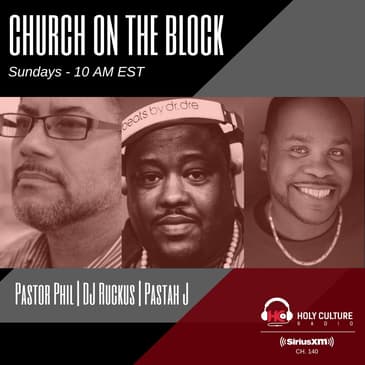
In this episode of Church on the Block, Pastor Phil, Pastah J, and Dr. Terence Z. Gadsden, AKA DJ Rock On discuss the significance of Juneteenth and its impact on the African American community. They share personal experiences and reflections on historical trauma, emphasizing the importance of understanding and acknowledging the history of Juneteenth. The conversation also highlights the role of faith leaders in addressing these issues and fostering resilience, love, and gratitude within our communities.
Learn more about your ad choices. Visit megaphone.fm/adchoices
[00:00:00] We can change like my dream, side of the earth. This is made of all this. We've got the weather, the weather is crazy. Through my plan and the snow. You're on past the film. Welcome to Church On The Block.
[00:00:15] Real talk about hip hop, the church and the streets with my great co-host past the J and Ruck Boy. We are here today and this is the weekend after Juneteenth. But Juneteenth is all a Jun. I'm saying, we're all right in all day, every day.
[00:00:33] And we're going to talk a little bit about that today. Juneteenth. What is it? Why is it significant? And you know, the resurgence of it in summer guards. Right? I grew up in Kansas City with Juneteenth was like all the time.
[00:00:46] People knew about it. And it was festive. It was jazz. It was concerts. It was parades. It was Mr. and Mrs. Juneteenth. It was just all that way in Kansas City. Some places didn't celebrate as much as they knew about it. But they some cities.
[00:01:01] But now I think more so than ever because of everything that's going on with African-American in the general police shootings with young people in the politics that are going on with folks in African-Americans
[00:01:17] and the way politicians and ham and stuff stuff is just so crazy that this Juneteenth celebration, these Juneteenth celebrations and folks taking days off with beforehand. Now it's a national holiday. It's even more significant because of all the ill stuff that's going on with me in the studio
[00:01:37] without. We didn't kidnap you. That's right. We didn't snatched you out. We didn't got it out from the books. Confinition his doctor degree. That's right. We got doctor Terence Z. Guest it in the bed of what's up. What else?
[00:01:51] I was going to be with y'all. What's up, what did you do? We had a show. We had a pool of the pool of the pool. Pooled him out. He just came back from the family room. We got him out. Got him right on top.
[00:02:03] That's right. That's right. And of course we got another then the brand new fresh right off the diploma. Doctor Jane. Doctor Jane. Yes, sir. Yes, sir. I'm my son of a new old even got it yet. It's coming in the mail. It's probably.
[00:02:24] Make sure they win in packages. Somebody going to snatch and run out to block. I got this. Have you taken me home? I'll be like, what? Maybe I'll be trying to bring it back. I had somebody. I had somebody steal some of my car.
[00:02:41] Some kind of number and whatever I had. Hey, you passed the field. Yeah. Yeah. I got your Bible. Your whole book back everything. Man, somebody was trying to get it. I got I need $50. You stole it. You didn't want to stolen it. You need to grow.
[00:02:54] Don't tell me. Somebody stole it. You saved it. Oh, my stuff. Give my stuff back. What are you at? Yeah. Got your house right. Right. How's it with me, man? But man, and Terrence is a 10 care family right now.
[00:03:07] DJ Rock on DJ, a ruckus, a ruckus, a ruckus. Yeah. DJ, a ruckus. Yeah. DJ Rock on can't be in the same set together. It's it's it's it's it's attention. It's attention. He or he or we have to do a live DJ thing right here together.
[00:03:23] That'll be kind of cold. That'd be kind of cold. Yeah. Good pop a house. What's in hell? John said because when Terrence went rock on to start DJing. He is in like a zone. He, yeah, he looked at the area, it was a hockey talk.
[00:03:38] I ain't no, ain't no askin' no play. Hey, go, go, go, go, go, go. Anyone on the drink don't bring your water right... You like, just don't tell him to do it. Just put on me. Well, just... You can be on the feet, make it hot.
[00:03:50] Make it hot. Make it hot. Make it hot. That's what you feel like I want to do. No, just do it right. I don't, don't. No request, so ask him no request. I'm gonna fuck my phone upside down and look my phone. Oh, my goodness.
[00:04:01] He's about to bring a ruckus. He bought the Brickle Ruckin and a ruckus. He needed constant strength. Oh, man. So man, how did y'all, I mean, I don't know, HBCUs always with, with enamored, smothered with with great history. Um, but, um, how did y'all connect with, um,
[00:04:24] Jun King, like, like, was it in the family? Talk about the family? Was it his school? Was it, was it, was it, was it, was it, was it always aware of it? How did it come to you? I'm a laptop this year, beginning. Oh, yeah, no.
[00:04:37] So, um, it wasn't until my family and I removed the Charles of South Carolina. What? And you know, Charles since South Carolina is, you know, is the bedrock of a lot of history, American history. Yeah.
[00:04:50] And so it was new to a Moody South Carolina that I learned a lot about, you know, African American history. A matter of fact, one of the first things I learned that Memorial Day was actually celebrated May 1st, 1865, and Hampton Park, Charles and South Carolina.
[00:05:04] And I didn't know that it was to commemorate the Black Union soldier. You talked about it? Yeah, I don't know at all. Did you talk about the... Yeah. And it was like, man, I didn't know that it was, it was a black holiday.
[00:05:17] I didn't know that was that Memorial Day was created by Black folks who were, you know, there were 257 black Union soldiers who were in this mass, Confederate grave. And from the South African's dug them out, gave them a proper burial, respect, they marched around,
[00:05:36] Hampton Park, they sung songs, they prayed. And so that was my introduction to, like, yo, this is history that you probably didn't get in New Jersey. And then it was, and then we talked about June 10th and what that meant in Texas and how, you know,
[00:05:51] two and a half, two and a half years, almost two and a half years later after the emancipation parculation. Yeah. You know, the last, you know, the last group of enslaved Africans were free. So it was Charleston for me and I was high school.
[00:06:05] So 10th grade, 11th grade, and 12th grade, it was like, man, this is the history you need to know. Yeah. So that's how I learned. Yeah, let's do it. Wow. There's the whip, let's need learn that history like that. Like, well, first of all, let me go back.
[00:06:19] How do they find the mass grave? Do they type into something or something happen? Well, that's a great question. I mean, about 60% of the African Africans, enslaved Africans who came to the United States, came to Charleston. Charleston and Louisiana, New Orleans is like
[00:06:38] the two places they must go to understand a little bit more but so it was always, you know, from my family, we're gulligichi, so West African, so we're gullig, gulligichi people and so all the way from South Carolina to Georgia. So it was just passed down that
[00:06:56] but how I was taught was that they knew, that means it was just history passed down. Yeah. Here was the mass grave. It was actually in the Confederate Confederate war camp and so they went and dug those, dug those mass graves out. Yeah, yeah, yeah.
[00:07:17] The other situation sometimes like what was a little here in Chicago when they tapped it, was it over here when they started digging initially and they found first nation natives. Yeah, yeah, right, sometimes that's the thing, right?
[00:07:33] They do things on top of sacred spaces in this rock man. That's what I was asking like, what about you, Jen? Yeah, what you? Yeah, man. So I was much older. Like I didn't, I didn't really learn about it until college.
[00:07:49] So you had been into a ski gear for the first time I had heard of June 10th, which was crazy. Yeah, yeah. And I had been well traveled with all over the world. You know, in high school, and it's got the chance to quite a lot.
[00:08:04] And still, no, then never even heard of June 10. And there was folks from Texas. So my roommate, my college roommate, well when I moved off campus, when we sat in the apartment together, here's from Houston. And you know, God was just outside Houston.
[00:08:23] So he was the first person like, yeah, June 10th coming up. And I'm like, what is that? Yeah, what? He was from God. So he was from God. Yeah, yeah. Yeah, he was from a little city called Baita Al,
[00:08:36] which is not far from God since on the coast of Houston or whatever. And so he was like, what even the class? Well, somebody from Texas who like, this is a big part of their history and the way they celebrated their entire life
[00:08:50] was put me on a game. I mean, he didn't put me on just like DJ Screw and Paul Walker, you know, June 10th. Okay, okay. I know, back in like 90s or 2000s. And so like, it blew my mind. So I started doing research on my own.
[00:09:05] Because I was like, how have I never heard of this? You know? And so I was like super, I was embarrassed at first. And so I started telling my friends that I was telling people about it. And so we really celebrated it in college.
[00:09:19] And so I was getting you like, we would take the day off ourselves. I remember that. But like this is how in the past day, we end on the class like we did. You know what I'm saying? Or when you get whatever you do,
[00:09:30] whether you're internship, you get to someone. And going to work on June 19th, you know what I was saying? We always say it's like that. And I think the moment I got the most like clearest understanding of which is crazy
[00:09:44] was even later as I actually went on blackish. And they had the roots. Who did? Yeah. You know that little little, little diddy was kind of like school house rockish about like, you know, falling in the field, I'm only just like, then only it's like, yeah, yeah,
[00:10:01] like what was the real risk presentation of what June 10th was and men. For me, and I was like, this is crazy. I'm a grownup. Like an old grownup. And I'm really truly understand what this means. So yeah, that's me man. It was in college,
[00:10:16] but I think not many years ago when I really got the depth of the importance. So yeah, I mean, when I first heard it when I was in school, it was like, what's that in school? It was like in the street just in Chicago.
[00:10:29] It just didn't Kansas City. If you were to, what does this man we doing this for? I mean, I was maybe middle school. Yeah, and they broke the whole story. And I was like, wait a minute, wait a minute, wait a minute, wait a minute, people were free
[00:10:41] to what I have years. And they just kept them as I would blue. Me even now today talking about get choked up and angry about it because the greed of the white people in charge, slave master's saying, I know that I know the baby's say,
[00:10:59] but these Negroes can't read. He'd black folk can't read. Well make sure we can, they do, they do keep everything away from. And even if the slaves knew the fear of leaving, I was trying to find a way out. And you know, man,
[00:11:16] I still get that frustrated that way, because to me it is a, a, a mimics life without a can of American. It mimics the same, that thing, no matter what people say about it, think about it, you know, the freedoms that we have
[00:11:39] are always and are constantly being challenged, currently being threatened to be taken away. And some are being taken away. You know what I'm saying? I was at a church just, other weekend in my dice and speak, spoke, right? So Mike and I good friends,
[00:11:53] and Mike said nothing against our Asian brothers or the Tina Brothers, but everyone here, and all, it's you know, came from another place to come here, you know, in some regards. And we were smart, we brought an, and then so crazy. You have been a family from
[00:12:08] coming to the American dream, I built on the back of Africa as an African American, right? And so that reality, like everything, they just re-calibrated the mindset of that, that folks, some folks come here to get the American dream for feel because they have no, they have no,
[00:12:24] there's no threat to them. We come anywhere in this country, and it's a threat to that space. So to me, the threat of economic insecurity, if I let these black people go. And that you know, two years, that's too Harvard, that's two or three harvests. I mean, that's,
[00:12:42] you know? Well, okay, yeah, I gotta get enough to get you in the United College. I don't know what, what you know what I'm saying, but the whole element of hatred of another human race for the sake of money and the degrading of that, that's property, man.
[00:12:59] And you've talking about it even now and remember how I first heard about it? I was like, I don't even want to go to Galveston. It was like a group of people every year, kids who are going to go to Galveston. There's this big celebrations with it.
[00:13:11] And I'm cool, man, I don't know how we even feel about that. You know, my man, Rasul Berry, if you saw his special American Bobbiocicite supported him to do yes, the whole thing on June 10th is very good, because it was a whole kind of real
[00:13:25] awakening for him. And one of the, one of the guys he interviewed was, great grandson of one of the stage from Galveston. So it was all the stuff that he was connected with and this house that the slaves built and all the kind of stuff, man.
[00:13:39] So it's one of those kind of things like you hear about it in that time and even now I'm like just the depth. I can't see myself. I've been hurt by different people. I've been affected by everything. I can't see myself wanting to put you in it.
[00:13:56] I can't see dehumanizing somebody else who's in that space. I mean, I think black folks are African hurt, these white folks, when it's since that that would be a mindset they're seem to be justified or this person did this. I see what you're talking to.
[00:14:08] You know, you're a monster. Right? That kind of logic. But I can't, for the life of me see, that's just inhumane. And what does it take for a person to be that level of hatred? That is just, that's just, that's just hard to see in that space.
[00:14:25] When we celebrate that, me and to me, whether it's a vinawn of block, whether people barbecue and whether folks are kicking back drinking, whether folks are just actually sitting down to remember the history. It is that reality that we still are two and a half years behind.
[00:14:41] We still, yeah. Mike Dyson and Joe could say, you want to what? You know why we late? We late on time because y'all was late in this no. Yeah. Yeah. I learned he was a great, great, if he played on the words and the logic of it all.
[00:14:56] Um, I think, when I think about what it has become and I know we'll get later in a show and just kind of talking about, you know, Juneteen now and what it means. But I think on the historical nature of it, what I am like most,
[00:15:16] I think frustrated by is not even like all another two and a half years, or even like, you know, we want another, you know, scared to be in other seasons, harvest any of that. It's the apathy of the other 49 states. It was like, like the mass approximation,
[00:15:40] the mass specification population has been delivered. Right? Yeah. How they all are the states border in Texas, like Houston to Louisiana is like the house, get the jump like why did no one, like how did no one get the word?
[00:15:58] Like if they didn't get the word to him, why there was a death some kind of a vote, some kind of stumped. And I know, you know, I'm talking from my 2024 privilege vantage point. I wasn't there in here, but that's still frustrating to be as like,
[00:16:12] where was the solidarity? And now we're over to abolitionists. Where was the folks to be like 250,000 people are still enslaved. You know what I mean? Or maybe it just wasn't wildly known. I'm not going to pretend like I know all of the details of the history,
[00:16:29] but that body, you know, too. Yeah. Yeah. Yeah. Folks are just implicit in that whole reality. Yeah. Man, we were talking about Juneteenth and the impact of of its effect on our life. We touched on a little bit of a little deeper now.
[00:16:46] But if you're hearing this for the first time, you're like, I'm tired here about Juneteenth or you knew about Juneteenth, it's not just something in the history. Like, wow, I learned a new thing that this black man invented to stop light. It's not that.
[00:17:00] It is deeper than that because of its effect in our own by DNA and mental. And it's crazy how I'm going to say, white folks can see it when it comes to other things. Like, I can see it that makes sense in that course.
[00:17:16] When it comes to African Americans, it's suspect is always something. It's almost like we've got a fight for that pain to be identified and recognized. You know what I'm saying, Jay? You know, you know, you know, you know, me the impact of this of that trauma, you know,
[00:17:32] affects us even at this day. Even though that was 159 years ago, 150, 9 years ago. That's great. Yeah, man. Absolutely. Why get it? It shows itself up with so many ways and all of our lives, or especially, you know, I say in a lives of black men.
[00:17:49] I mean, there's multiple ways I could talk about this one is like, even the trauma and just certain words being used. Right? You can talk about like a black woman and say, hey, that's my girl. And everybody goes as a term of endearing it. But you said,
[00:18:07] let somebody say to a black man, that's hate boy, right? Or boy, like it's like something you're rising up in. Don't come people. You know what I mean? Like that you didn't even know was in you. Like it could be your friend. Like that's my boy. Yeah, right.
[00:18:23] But then you like, wait a minute. That's somebody else's. And you feel the thing with that. Yeah. And I always tell the story of like, when I realized that I had some real internalized trauma was my wife is an urban agriculture and shell
[00:18:38] and she's been farming and doing urban gardening for decades now. But when she first started, man, I couldn't even watch it. I couldn't even look at it. Something this right, like a visceral reactant to it. I was going to house and like,
[00:18:51] I check you out when you come back. I knew she loved it. I tried to stop her but I just like that in my thing. And one day she was like, you need to come out here and I'm like, I'm straight. She's like, no, come down here.
[00:19:01] And she like grabbed my hands and put them in the soil and started talking to me and she like, I'm like, what? She like, no, you feel that. That's life right there. That's not death. That's not pain. That's life. And you need to stop letting the fact
[00:19:17] that every image you ever seen of black women slumped over in the soil having been connected to slavery keep traumatizing you. We are the originators of this. We are the ones that built this country. We grew all the fool for this place.
[00:19:30] We, every piece of clothing you have on and that cotton was picked by us. You know that? And I'm just like, boom, on my hands and the soil, like feeling it for first time and realizing it for the first time and I'm like, gee, it's absolutely right.
[00:19:44] And I'm like, how did that trauma get in me? Nobody drove me to feel that nobody said you better think this way about it. It was path to my DNA and to every image I saw and to every movie I had to watch all those things.
[00:19:56] And so like even this, like why we celebrate what Junting means. We also have to be aware of the damage that enslavement, that even hearing stories like we were free and another two and a half years folks were still being enslavement. Right? Like the damage at that dust
[00:20:20] to us is real and the trauma that it causes is real. And so whether people recognize it or not tries to feel or whether people dig as real or not, real recognize real. We know when they're on the side of this there.
[00:20:31] We know what's but the real deal is. So we got to start facing these trauma ahead on and start trying to pretend like they're not dead. That's why we find ourselves in our communities, last night they were doing because we don't deal with the trauma in our lives.
[00:20:46] So yeah, this stuff is real man. Like it's pretty real. It was crazy that we would take the trauma out on each other. Yeah, certainly. And one thing that it think anything of it in that kind of. Yeah, and we embody that trauma right and it's past down.
[00:21:09] And I think it's crazy about Juneteenth in the same way that there was a group of ancestors who didn't know that they were free. Many of us didn't know about this holiday. They didn't know that in the old history. Right? It was kept from us.
[00:21:26] I mean, it didn't come off federal holiday to what's what 2021. And so I think it's just, it shows you the importance of how history is so important. We have to know our history. And this is not just black history. This is American history. That's right.
[00:21:44] I'm stressed that too to you, my colleagues, my Caucasian, my Asian, my Hispanic colleagues. This is American history. It's not just black history. This is American history because as we mentioned before, African Americans, even though this nation was native indigenous land,
[00:22:05] African Americans helped build a lot of this way. So the history is important as to learn history and unlearn some things. And I hear that's kind of when you sound a story, Jay, that you had to unlearn some things. Right? And understand, yeah, this nation is,
[00:22:29] we help build this nation, but also there's so much history that I'm even learning in my, you know, even today. Like, I'm learning things at wild. I didn't notice, you know, how come I didn't notice? And it's hidden from us, but I think,
[00:22:45] but I think the impact of June 10, I think obviously in 2021, we just came off of Runa Pandemic, George Floyd. And so I think a lot of us were like, you know, you know, going deeper and understand, and looking and learning. And longing for some kind of connection.
[00:23:07] You know what I mean? I think post-Jewish Floyd and all that we saw in 2021, not only were long and for connection because of the pandemic, were long for identity because it felt like we were under attack. You know what I mean?
[00:23:24] In this show, I don't think it was any worse than they have been before, but it was just we were all at home. So it was like, framed for us. You know what I mean in a different way. And so yeah, 2021, like it was like
[00:23:37] the explosion with June 10, I remember that first June 10th post pandemic, man. But it felt like everybody had shirts on it. I was doing street dance and ho or, yeah. Yeah. I mean, you know, and we know Frederick Douglass, I mean, what was the fourth to a slave?
[00:23:56] You know, he laid that. And it wasn't until it was like, I made that connection like, ah, like yeah, this is why for years, I didn't feel why we celebrated four of July, you know. We won free, you know, you know, in 1776,
[00:24:11] we were spinning, you know, we was on the, and I don't even call it, I don't even call the plantations anymore because if you go through the south, now they got plantation harbor, you know, it's drive. So I call it force force labor camps.
[00:24:25] You know, we want to force labor camps. It's not playing for labor camps. Or slavery camps. Yeah. You know, because now the history is, oh, it was a place that's different. It's like, oh, it's subdivision. No, no, no, you know. So, but even making the word antebellum
[00:24:41] and making it a positive attitude. Yeah. No. Antebellum is like, it's supposed to describe the type of slavery. Antebellum slavery. Now they try to use it like as to, to glamorize that southern living of that time. Yeah. Yeah, this is ridiculous. Yeah. Yeah.
[00:24:59] The, the, the depth of what, what happens to us as a people, resilience, you know, let's come up to you around whatever, like you talking about the soil and the whole thing. But to fight through that, just to have a sense
[00:25:24] of normalcy, a sense of, oh, I'm okay and is that that, that work, why, while the oppression is still coming at you, in the midst of it. Hmm. How can we as pastors as leaders awaken our church? Because you know, I think if we're not careful,
[00:25:47] folks will embrace a European epistemology of theology and of knowledge, you know, people will take it and it grass of this European epistemology, European theology. And then even beat their own epigenetics of what they're feeling about this oppression and be like, no, this is what, this ain't right.
[00:26:13] You know, even when you go to another country you go to a guy like, like we went to a better group in a lot of the African presence in Mexico, right? And the teachers, we had a teacher every day
[00:26:25] and the brother came in and talked these dance moves and he's like, these dance moves you're learning. A lot of them were learned because slaves in Mexico who were chained took a step forward, took a step back, took a step forward and all of a sudden,
[00:26:38] when he said, so the dances were bitten on slaves, move them back, right? So we like, y'all hang never doing that dance again. It was like, oh, he's kind of feeling but you didn't know what I handle and the Vincent had a piece, right?
[00:26:53] So one of those kind of things like to fight through that, right? And sometimes like you say, don't know what's coming up for you, you just know it's there. Yeah, still what you're fighting through it and then you're still being oppressed in this other space, man.
[00:27:10] And it is, but as pastors like sometimes it's like another fight of, when in a minute, that ain't, you mean they're slaying took two steps and they made that a dance or whatever it is that folks don't wanna believe, right?
[00:27:25] What it is, maybe they're even feeling on the inside because no, that can't be. And so there's someone who fights you in that mold that way. How can we as pastors, you know, minigurre, Chris and leaders awaken our community up in these spaces like that.
[00:27:40] And what is face painted this? Yeah, yeah, I'm just joking. Hey, cause that. It's good, though, man. Let's go. Yeah, that's a good question. I have to tell you, I'm literally in a series preaching about trauma and resilience. And so this idea, the language I'm using
[00:28:04] when it comes to faith, because I'm talking about trauma and I'm gonna go away, talking about the going away, trauma is an event or something that happens to you, that the clings to you and you hold onto and you're not even sure how, why or how
[00:28:19] it impacts you, and why you react to it in a certain way. Like what it's things with you because it's traumatic because it is a major life event. Resilience is forging through adversity in order to grow. Right? Like so resilience like you have to have adversity
[00:28:34] in order to grow. So the way I've been talking about it and faith framing is calling it resilient love. Because the only way we come out on the other side of trauma, any healthier, since trauma is like bagged, I could just stay with us forever
[00:28:49] is that we have to love each other through our trauma. That's why it's resilient love. Through our adversity, we hold each other accountable, we push each other. And so my example of it is that your love is what Michelle did for me.
[00:29:03] She did not allow me to stay. Right? In my trauma, she didn't allow me. It was real. It was a thing and she named it. But she loved me so much that she made me face it. But notice, she didn't say,
[00:29:17] go put your hand in the soil over there. She put her arms around me and pushed my hands into the soil. So both of our hands were in and together. Right? And so to me, that's what it takes when we're talking about faith.
[00:29:30] Both God is going to be in the trouble with us and we as brothers and sisters in the faith should be in the trauma with one another. Like helping each other do it. I got trauma in this space, you walk with me through that.
[00:29:42] You got trauma in that space? I'm gonna walk with you through that. I may not even understand your trauma. When you go with you through that, I'm right here. The same way God is right here and that resilient love says that we will walk with each other.
[00:29:55] God won't put them more than we can bear all that good stuff, you know what I mean? And so I think that's what we got to teach as faith leaders is that like first and foremost, we got to stop running from the adversity. Right?
[00:30:10] I'm not saying the trauma is fair. I'm not saying that racism is fair and I'm saying anybody. But I'm saying that everything, Roma's 828 is clear. All of these work together for the good of those who love and love in the car to the police, part of this.
[00:30:23] And what all is right now? Man, man, he'd have been shipwrecked, beaten. You know what I mean? Like everything you can think of, right? Like rocked up, right? Everything, he's saying, I don't know how. But somehow, he's working out for the good, right?
[00:30:38] Like it don't feel good but it's working out for the good. But I think that's if we can truly reframe it and be resilient and love each other through it. So that's all I got, man, because trauma is common. Yeah, yeah, yeah, yeah. We say that.
[00:30:54] I think for, in my context, you know, I'm at, you know, not parking diversity with with with college shoes, you know, every, every, every, at February, we take a San Cove for a term. Yeah, we go through the southern states of the United States
[00:31:08] and we learn the history of this country through the lens of the African-American experience. But it is a very theological, you know, it's a theological lens we also have to. And we look at, you know, how can we be God's change agents?
[00:31:22] You know, how can we unlearn and learn history? But also, how can we see a God's creation and how all of us were created in the image and likeness of God? So, you know, we're image-bearers of God and seeing, you know, looking at the brokenness
[00:31:38] of this world which includes this nation, right? And learning kind of, and learning like, yo, this is history that's been, that has happened. And we still see the effects of this, you know, the sin, this history kind of invites us pieces to this day whether it's institutional racism,
[00:32:00] whether it's blatant racism, whether it's, you know, systematic, you know, oppression, whatever. But I think, you know, I think for us is, you know, we've tried to look at it. Okay, this is the history and we can go and sugarcoded.
[00:32:14] And even as we go on this, these San Cove for journeys, we enact the freedom rise. You know, we pair people up way before, before during and after. So we're on this run on this bus, learning each other's stories.
[00:32:29] And so when we learn, when we learn each other's stories, that's one thing we regardless of your faith tradition, your background, we all got a story. And so when we learn each other's stories, we able to empathize, sympathize and like, yo, I see you.
[00:32:42] And so when we learn the stories of those who live in this nation who are oppressed, who were went through all, you know, adversity, racism and, I mean, lynchings. When we learn their stories like, man, we connect.
[00:32:55] And so I think that's helped us, but also with that theological lens. And also looking at people like Frederick Douglass and Harriet Tubman as they were Christians, they were follows of Christ. And oftentimes we don't think about that, you know,
[00:33:12] they, yes, they love Jesus, but they were trusting God, but they was also fighting for what is right. What is just, and I think sometimes that gets lost well, it's some people I just want to trust God and the guys are going to do what's going to do.
[00:33:25] No, no, no, no, no, they did that too, but there was also advocating for that tradition as there was no on the front lines, risking their lives because they knew that, hey, they got, we're image burrows of God.
[00:33:38] And so, so I think I tried to bring that same, that same intensity in those those individuals, even Dr. King, who some I met a student this year, didn't, didn't know Dr. King wasn't, wasn't was a Christian or a preacher. They just, they just knew Dr. King
[00:33:55] as like political actors. And so, so just again, you know, looking deeper and given that theological lens but connecting, connecting, connecting those who in the past were also Christians and saying, in the same way, they were fighting we today in 2020 before we need to be fighting.
[00:34:17] So that's kind of how we've kind of really brought in the faith element and even June 10th, like man. So, but that's how we've been able to navigate and look at it from a faith perspective. So much, man. So much, that's a lot of work to do
[00:34:32] to get people to do that. Church on the block, we talked about June 10th. We are in it, we are in it, man. And we were talking about this impact on our hearts and life. And we kind of conclude it with, you know,
[00:34:44] in this section, we're going to talk about what things we can do to celebrate a moment as parishers and leaders of congregations, of youth, of churches, of, you know, universities. What are some things we mentioned but like message wise or what is it that we need
[00:35:01] to bring about to awaken both the healing this needed to be taken place, man. Because our trauma in the hurt has been untouched and untouched for so long, I think, that we kind of get through the day. And so I got it and this,
[00:35:19] and I know what this is why man goes say, hey, I know this is going to happen. I know theologically, I'll think about this in this way. And so I got to make it through today. And so it continues to be mounted. But I want to know somewhere,
[00:35:30] I'm okay to feel this way. These are legitimate feelings, right? I'm feeling this, I'm feeling like, well, and things that we may have ideas to do, things we've done, things we haven't done yet. But what do you think is some ways to do it?
[00:35:42] I mean, for me, I would say, getting with some creatives and doing some social media kind of. And there's some stuff out there like that. There's a young woman. She's like, let me tell you about Robinson Johnson who was doing, and she's bringing up things and say,
[00:35:56] okay, not just the history of this and that, but how this person's flop through whatever. But just ideas as we go into what people can do to celebrate this history. I would say all of June, I know when you hear this,
[00:36:08] it's still kind of the last part of June, but ways of which we can celebrate, ways which you can awaken people. Yeah, I think it's just, as you can know ourselves. I mean, we talk about June, but also June is also Black History Month. I mean, Black music,
[00:36:25] has June Month, I mean, just understanding what June team is all about. I mean, everything from how Cherry, Red, soda was a way to commemorate it, right? But I think, but I think one of the things I was thinking is, and I lost my thought
[00:36:45] on my gosh, I had it, I'm a legit, I love my legit. I forgot what I had, I had my thought, I'm like, good, Jay, I'm like, you can hit it. I'll come back to you, you get back to me. Oh, yeah. I got two quick things.
[00:36:59] One is, one is, this is why Black folks, like we meet holidays like June team, is because we've gotta find ways to reverse shame. As people, we have internalized the shame that comes from white supremacy. So anything that whiteness told us was bad about ourselves,
[00:37:20] we've internalized it and this become a trauma to us. So even when it's not real, even when it's like, you don't even live the life that's been imposed upon your good example be kids who grow up and like in the hood or whatever,
[00:37:36] but they got two parents, they go to a good school, they're like, you know, somebody ask them about it and live and people get shot every day. And it's like that's not even your life, like that, that is some people's life, but it's not yours.
[00:37:51] And so all the things that have been imposed on us that were supposed to be shameful of or supposed to be even from our skin to the music, to the food we eat to everything, right? Like we've got to flip it, right?
[00:38:07] And so I think that's why I love how they've had June team because that's what it is. It's a real personal. Like it's a day of like, they did what? And we like, you know what? Skip your phone for July,
[00:38:18] we're gonna qualify for the work on the 18th, on the right. So we need to do more of that and not allow the culture, especially the dominant culture, to name for us what's honorable. We need to reconnect to our faith and know what God says about this honorable.
[00:38:34] We created an image of God, the Bible days where it gives us work and value. And so we don't have to look too whiteness to give ourselves honor or to give ourselves a day. We can now go into our own history,
[00:38:47] look at why we like to read Kule, right? Like all those things and Pokemon accountable. And then I think I said, this is one that was really helpful for a lot of folks when I said it in my first sermon,
[00:39:01] of this series is we got to stop with what I call comparative suffering. And that's when we somebody else is suffering. And we compare all the time like, oh well, you know, they lost their mom and dead in a fire and they,
[00:39:20] that what do I have to complain about? Right? Trombo does not work that way. We have got to be okay with naming the trauma that we have no matter whether we think it's worse than somebody else is or not as bad. It's not about comparing.
[00:39:34] We're not in the trauma Olympics. We're not in the pain and suffering Olympics. We just gotta learn to walk with each other through whatever suffering and trauma we may have. My suffering may be around my dad. Somebody else's stuff might be around, you know, being less than abuse.
[00:39:50] Somebody else's might be around, you know, having parents that were addicted. None of that is more important or worse off than anybody else's. We got to learn to walk with each other and not compare suffering, but just say we're all going through trauma
[00:40:03] and I wanna beat that for you that hopefully will be on for me. So that's another one man. That's not compared less. That's trying to best to become more specific. Yeah, that's deep. That's deep. That's deep. I think my sister's PhD is in child psychology
[00:40:19] but it's also in was his own resilience. And so she's got great research he's done in resilience, right? In those spaces that are there. I just wonder how can we break free from this. I mean, I went through a thing with this group
[00:40:39] of Christian neural sciences, right about the brain and what would some people in London church and we out somewhere. And they said just like what you said earlier, Dr. Jay, that it is gratitude. Thanks for it is gratitude as a tool to bring that healing for what trauma
[00:40:59] or what action you've experienced. Now I believe that we at African-American people got so much gratitude, so much love. There was an older guy who was just talking about how he has a debilitating kind of walk, right? He's mobile, he's walking is debilitating. With the African-American women,
[00:41:20] every time they saw them from being at wall greens, wallmark, doing whatever. Certain you need some help, you okay? No, I'm good. No, you ain't. And the gratitude for the fact that they've been in places where they needed that help and nobody helped them.
[00:41:39] All they've been in those spaces was somebody did come and help and that becomes contagious. You know when folks go to a black church, where after American work, they're like, I love it here, the love that becomes from a place of gratitude.
[00:41:52] The problem is it come time stop after the church door sometime. It's like it's time after what you do? You cross in front of me. You know, many times I know I've been in spaces where I did something driving or I did something,
[00:42:08] I'm stumped, I light, not thinking and doing. I'm like, hey, hey, no my bad, you right? I'm recognizing that I'm human and I'm gonna be mad. Somebody else is gonna stop by the light, but I remember that time, I was at the light
[00:42:23] and it took me forever and I forgot, right? So I'm not gonna go ham on the horn. I'm just saying that that level of gratitude to continue perpetuate that in every look and creative I live, I think like what you're saying
[00:42:35] every day is one way to bring it to healing. So in the moments of June 10th, gratitude for the, I think it's over 250,000 slaves in Galveston, right? They were free and so it's like, wow. The strongest ones that made it from the boat
[00:42:54] to the cotton field to the sugar cane plantation, made it through all those years of slavery and then made it, you know, it's just man, I'm grateful. I'm not celebrating the pain, but I'm like, oh, that's so great. We did you serve it.
[00:43:14] We grateful for slavery, like some boats are trying to write. It's just, yeah. We learned to trade, we learned to trade in slavery. Why we got branded at the same time. So I think the more you can, one of the things,
[00:43:32] sit down with your kids and your grandkids and watch something, they got stuff on YouTube, they got a continuous kind of thing like we just talked about blackness, you know, they got things on there where you can now have a discussion about that kind of stuff.
[00:43:44] And they got a course in a different history thing. They got celebrations in the neighborhood being able to express that gratitude for that healing to take place. Man, we went through a thing, several zig and things and now we hear, we celebrate, let us live on that space.
[00:44:00] So that would be my thing to do. I think the more we can learn and teach it, like when my brothers went to Ghana, they was like, we ain't throw it all. How is it, how is it our people? And our land are living like this.
[00:44:18] You know, once the mine has been stretched to a certain spot, it can go back to a old spot. That's right. It's like, Mars was blown. Oh no, we're gonna, they picked them socks up. It was like there's a whole other thing.
[00:44:34] So in the same sense, once you're learning that history, the mine's been expanded, then no cuss it's your brother man. Just so I had more today trauma. But bug that person all the way out because you said, man, hey, y'all hot. I know y'all hangin' a block.
[00:44:49] You getcha' out some water. And it's full of garbage and what? I'm out here trying to sell some weed. All of a sudden, you didn't turn the whole and you create the whole other, that's why I think sometimes like, where we live in mug,
[00:45:01] we walk up and then a sidewalk, a cuss that ain't going on. I'm like, why are we so angry all the time? I told his husband, I told his half of her, I'm on the bus first, she's trying to get in my way.
[00:45:11] Let them, let them win me get on the bus. Like why are you, I'm here in the whole conversation, the whole dissertation. You know what I'm saying? Yeah, I mean, yeah, one of the things I was gonna say and so many things, but you can't heal,
[00:45:23] you can't heal from things you don't name. And so we have to name with it that is hurt us and I think, we think about Juneteenth, man, or emancipation, emancipation day or freedom day. As it was called, you know, it is our history, it's our story
[00:45:40] and as African, you know, the sense of African people in this nation, we have a unique story and as mentioned earlier, we only group that was forced here, you know, and majority of us, you know, were forced here and to be on this land.
[00:45:56] But I think, and I think even from my Christian brothers, sisters, you know, we got to talk about this because we also had to talk about how the enslaved, how Christian men, you know, Christian folks, say, they justify slavery and use the Bible,
[00:46:14] they weaponize the Bible to justify, oh, this is biblical, which it was not. So we have to, my Christian brothers, we don't wanna talk about it, you have to, because you have to explain why Christian folks were, were, you know, had other humans, you know,
[00:46:36] own other humans, you know, so we gotta talk about this. And we have to look at this moment like, wow, we, you know, we free, but look at far we've come, look what look what look what we've done with we've had, we've always been resilient,
[00:46:53] people have always been, you know, people who have had, just brilliant. And so, so I think, you know, we can't, I look at this as opportunity for us to continue to learn history that has been either hidden, you know, stolen all those things, even the,
[00:47:14] even the Juneteenth flag, right? How it's the star of Texas, right? And then you have another, the other, the symbols around it are 13 other colonies, the state that were, you know. So like even learning that, okay, is it is red and blue, you know, signifying that,
[00:47:36] yeah, we, we Americans too, so much, so much even in Juneteenth, I think we just have to address the church, you know, we got to talk about it, you gotta, we gotta, we gotta, we have to not shy away from it and be ashamed of it,
[00:47:51] because I don't see a lot of my people saying, no, and for the lie, you know, great. So we think so. So anyway, but I think we just got to continue to learn and unlearn some things and deal with the trauma
[00:48:04] and, and, and I think if we can help our people, all people understand our history and how rich it is, I think that's like the free us up and say, oh yeah, like, we, we were resilient people creating an image in likeness of God.
[00:48:19] Yeah, yeah, the reality of, what you're experiencing in other country, like, yeah, it's like, oh, this is how we really live. Don't really dislike, we really dis, in gaze, I mean, in a like, they perfect a human, they fall,
[00:48:37] they sent, we're gonna be happy with the reality of, I mean, you see, it was arguing in a market, there was going at it, but when nobody, we've never done, all right, to not it. I mean, it was like, it was going back and forth,
[00:48:50] and it was, it was tribal stuff, right? And I'm different parts of Ghana and Kenya and other places, but, man, I just, I'm like, okay, this is ripped from us in that, and that, and that, snaps from our country, to the pair of command.
[00:49:07] You know, man, brothers, this is great, got our passage, you guys can close your marks. Oh, man, I'm just, I thank you for letting us talk about this, and I'll say this, man. And maybe it's because it's fresh on my mind,
[00:49:22] but I can't not talk about my strongly held belief that the church, especially, but I don't wanna let the government off the hook either, that reparations is a conversation that needs to continue to be at here. You know, I federal holidays like June,
[00:49:41] teens where we're going to admit, the egregious acts done against African Americans and other descendants of Africans in this country. And I'll talk about the reparity. So I just, I have to say, like it's good to have holidays to commemorate. It'd be even better to have repair
[00:50:00] that will start to close the racial wealth gap in the country. We're Dr. Gassin, good to be with you. Thank you for, we want you back on some more, we will, we want to do a DJ, not a battle, but a DJ showcase on the show.
[00:50:16] There'd be a lot of great, bad old man. Thanks for having me appreciate the dialogue. Yeah, always, always, always, always. And for a lot of people. So I'm having you here. I'm gonna drop these bars in a second, church on the block.
[00:50:29] You know, bear an accident to people having cars, whether it was an accident that they had on their own, had a pole, or they had printed hits somebody or somebody hit them. And when ambulance come or the fire department comes, they have these jaws of life,
[00:50:46] these daggers of sauce that can cut through metal like butter with a hot knife. You know, and they cut through those jaws of life when people are on pain or people are going through stuff and they pull people out and say their lives.
[00:50:57] Even when the car just bought themselves and got wrapped around a pole, it doesn't matter how it happened. They are the jaws of life. I believe that as follows of Jesus Christ, we are to be the same jaws of life.
[00:51:10] We are to say, hey, I don't know what's going on right now. I don't know what happened. I don't know how this Jew-team issue happened in your life and why has society and things around us forced or kept you, or caused you, a manipulated you, a traumatized enough,
[00:51:26] to kept you stuck in this one spot, but as believers in the Lord Jesus Christ, who came down from heaven to earth and was the jaws of life for us, we must be that for other people. Can you commit to being the jaws of life?
[00:51:40] When this society, this world is stuck and tell the truth about the situation happened in situations that caught people stuck without a judgment, just trusting in the Lord to let you use you to awaken others for that level of freedom.