
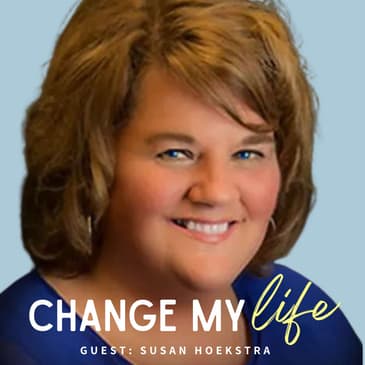

Hmmmm... Validation and affirmation is there a difference? Is it wrong to have the desire of wanting to be affirmed? What can we do to satisfy the hunger of wanting to be noticed? Well, you can find out all of that and more in today's episode.
Please join me and author Susan Hoekstra as we discuss informative highlights from her new book, A Firm Grasp. I promise you will enjoy this one!
ABOUT THE GUEST
Susan Hoekstra started A FIRM GRASP Ministries to encourage others to gain a firm grasp on God's mercy, leading them to notice the way God notices. Throughout this journey, she began songwriting, leading small groups, teaching bible studies, speaking at women's retreats, writing, and lay counseling. She has been featured in Just Between Us magazine and Christian Devotions. She is host of THE NOTICE - God stories live, and THE NOTICE podcast. Her book A FIRM GRASP - Feeling validated in a notice-me worldexplores our need for acknowledgment and approval and how the God of mercy satisfies! Sharing her diverse testimony and encouraging others towards a deeper understanding of God's mercy is her passion.
You can check out Susan's Podcast HERE
Related Episodes:
▶︎The Other Side of Mercy
▶︎Forgiving the Nightmare
▶︎A Different Kind of Different
Let's Connect!
Rate & Review our podcast HERE
Check out our website HERE
We appreciate your support ❤️
Subscribe & follow us on ➡️ social media
Thanks For Listening 🎧❤️
[00:00:01] [SPEAKER_00]: Coming up on the Change My Life Podcast.
[00:00:05] [SPEAKER_01]: In general, we feel unworthy. I have not met a person who they might not admit it, but deep down inside at some point or another we feel unworthy.
[00:00:21] [SPEAKER_01]: What's our fear when we feel unworthy? We feel like someone is going to punish us.
[00:00:27] [SPEAKER_01]: And in this particular case, God's saying, uh-uh, I'm not punishing you because I took the punishment for you.
[00:00:37] [SPEAKER_01]: So can we get this idea that you're unworthy off the table? Because I covered you.
[00:00:46] [SPEAKER_00]: Hey everyone, it's MJ. Thank you for joining me once again. I hope you are having an amazing day today.
[00:00:52] [SPEAKER_00]: I just want to take this time to say thank you to all of our listeners and subscribers and those of you who are new to the Change My Life family.
[00:01:01] [SPEAKER_00]: Welcome. I hope that you would subscribe. There'll be many inspirational episodes that will be coming your way.
[00:01:08] [SPEAKER_00]: And don't forget, you can stay connected with us on social media. We are on Facebook as well as Instagram at Change My Life Podcast.
[00:01:16] [SPEAKER_00]: So thanks again for your love and support.
[00:01:20] [SPEAKER_00]: Okay, I have a very wonderful episode prepared today and a very special guest.
[00:01:27] [SPEAKER_00]: She is a musician, lay counselor, author, songwriter, speaker, ministry leader, teacher, and the host of the Notice Podcast.
[00:01:37] [SPEAKER_00]: None other than Soonzin Hoekstra. Thank you for being here today.
[00:01:43] [SPEAKER_01]: Thanks for having me, MJ.
[00:01:44] [SPEAKER_00]: Wonderful. And you guys, she has a wonderful ministry.
[00:01:49] [SPEAKER_00]: She ministers to those who struggle with feeling validated, especially the abused, the betrayed, the fatherless and artists.
[00:01:59] [SPEAKER_00]: So my prayer today is that you will be encouraged and know that God is the only one, the only one who can truly satisfy this appetite that we all have.
[00:02:12] [SPEAKER_00]: And that is wanting to be noticed.
[00:02:16] [SPEAKER_00]: So make sure you share this episode with someone because I know that you're going to be blessed by it.
[00:02:22] [SPEAKER_00]: So let's jump right in.
[00:02:25] [SPEAKER_00]: So, Susan, tell us, because I think some people may get these two things confused.
[00:02:31] [SPEAKER_00]: What is the difference between validation and affirmation?
[00:02:37] [SPEAKER_01]: That's a great question. In the book, I talk about validation being acknowledgement.
[00:02:44] [SPEAKER_01]: Acknowledgement means that we're actually noticing or acknowledging where somebody is coming from.
[00:02:49] [SPEAKER_01]: It doesn't necessarily mean we approve of it or we agree with it.
[00:02:53] [SPEAKER_01]: We're just acknowledging it. So if somebody is sharing something, we're going to acknowledge where they're coming from.
[00:02:59] [SPEAKER_01]: Affirmation I define is approval.
[00:03:02] [SPEAKER_01]: This is where we actually give people words of encouragement or we approve of what they're doing.
[00:03:09] [SPEAKER_01]: And it's important to have a distinction between those two, MJ, because I think we get caught up in thinking we need somebody to agree or approve of us in order for them to actually acknowledge our presence and our existence and our thoughts.
[00:03:25] [SPEAKER_00]: Yes. Yes. So let me ask you this, because I know as being human beings, we're naturally relational.
[00:03:35] [SPEAKER_00]: So is it wrong for someone to feel or to want to be affirmed?
[00:03:43] [SPEAKER_01]: Absolutely not. You know, I think a lot of times in Christian circles, we think that if we're trying to get that approval that we're trying to be self promoting in some way.
[00:03:54] [SPEAKER_01]: And the reality is, is we are told to encourage one another in scripture, right?
[00:04:00] [SPEAKER_01]: We do want to encourage each other. And sometimes that means, hey, you did a good job or I really liked this or something. That's an approval.
[00:04:08] [SPEAKER_01]: You know, you're telling somebody. But at the heart of it, I think we really need to feel validated first, because if we're not validated,
[00:04:16] [SPEAKER_01]: then which is acknowledged, then when somebody approves of us, it almost feels like they're patronizing us.
[00:04:24] [SPEAKER_01]: So I think it's real careful that we want to know that now long ago. OK, we can go back to Satan, right?
[00:04:32] [SPEAKER_01]: He wanted he wanted to be as great as God. So he took it too far, right?
[00:04:38] [SPEAKER_01]: He wanted this need to be met too far. But think back when you were born, you just would move your finger and your mother or your family would get excited.
[00:04:49] [SPEAKER_01]: The fact that you moved your finger, you know, we got excited about everything, your divine space, everything that you are.
[00:04:56] [SPEAKER_01]: And so we need to have that in order to grow as a person, grow as a spiritual being.
[00:05:04] [SPEAKER_01]: We need people to acknowledge our presence and also approve of things that we did.
[00:05:11] [SPEAKER_01]: So I think we need it. And the Trinity explains this perfectly, M.J., because the Trinity is God, the Father, God, the Son, and God, the Holy Spirit.
[00:05:22] [SPEAKER_01]: Right. And what do they do? They continually validate and affirm each other.
[00:05:28] [SPEAKER_01]: I'm not doing this about my father, Jesus said. Right. So we have all those connections.
[00:05:34] [SPEAKER_01]: So it is a need that's ingrained in us. But just like Satan did, we can take it too far and it can turn into a lust pattern.
[00:05:42] [SPEAKER_00]: Oh, that's good. That is so, so good.
[00:05:45] [SPEAKER_00]: So let me ask you this, because I know you mentioned that creatives struggle with affirmation and sometimes that's hard to believe because creatives, they are so to me, they seem so confident.
[00:05:57] [SPEAKER_00]: And to those of you who don't know creatives, those are people who, you know, operating in artistic things.
[00:06:03] [SPEAKER_00]: So artists and music and those kinds of things. But they struggle with affirmation. Why is that?
[00:06:11] [SPEAKER_01]: Well, I think first of all, I think creatives and I think you probably would agree with me, M.J., that like if you're a visual artist, you might see more vividly colors that exist out there.
[00:06:23] [SPEAKER_00]: That is so true.
[00:06:25] [SPEAKER_01]: As a musician, I hear timbers and I hear different pitches more distinctly than somebody else.
[00:06:34] [SPEAKER_01]: And so I'm seeing, I'm noticing more in life. Right? So I'm noticing these things and then I try to then I feel like what am I going to do with that?
[00:06:44] [SPEAKER_01]: I got to get it out. I got to express it. So we can journal.
[00:06:48] [SPEAKER_01]: Like let's say you're really into words, like if you're an author and you are a lyricist, like a songwriter, you're really into words.
[00:06:54] [SPEAKER_01]: You can journal and you can get some of that out that you absorb.
[00:06:58] [SPEAKER_01]: But at some point we don't want to just journal. We want to share that with other people.
[00:07:06] [SPEAKER_01]: And so what if we do that and we're not acknowledged?
[00:07:11] [SPEAKER_01]: No one notices our creation or doesn't even care about it or approve of it. Then what happens?
[00:07:16] [SPEAKER_01]: So that's where the struggle comes in. We struggle because didn't anybody see what I created?
[00:07:22] [SPEAKER_01]: It didn't exist before. And so I think that's that makes us struggle even more because we need more, maybe even sometimes more affirmation than others because we see more.
[00:07:36] [SPEAKER_01]: That makes sense to you.
[00:07:37] [SPEAKER_00]: Oh, that makes total, total sense to me. Yeah, it's I never looked at it in that light before.
[00:07:43] [SPEAKER_00]: But yeah, we our senses are just a little bit more intensified than others.
[00:07:48] [SPEAKER_00]: So I can definitely see why we struggle with that.
[00:07:52] [SPEAKER_00]: So what should creatives do then in those kinds of cases?
[00:07:57] [SPEAKER_01]: Well, I think one of one of the things is to recognize that journaling or just creating for the sake of creating is cool.
[00:08:08] [SPEAKER_01]: So like, for instance, you can be creative with a recipe. It doesn't necessarily have to be artistic, but there's a lot of art to cook in.
[00:08:15] [SPEAKER_01]: OK, so I mean, you can be creative if you if you turn it anything that didn't exist before.
[00:08:23] [SPEAKER_01]: That is an attribute of God, isn't it? And so if we're here to reflect attributes of God, don't we want to create things that didn't exist before?
[00:08:32] [SPEAKER_01]: Because that showcases a little bit of who God is.
[00:08:37] [SPEAKER_01]: So I think it's getting comfortable with the fact that first of all, you're reflecting God.
[00:08:43] [SPEAKER_01]: Secondly, where does that reflection have to take place?
[00:08:48] [SPEAKER_01]: Does it can it take place like I probably written maybe two or three hundred songs, but I haven't produced all of them and I haven't shared them with the world.
[00:08:57] [SPEAKER_01]: Is it OK to do that?
[00:08:59] [SPEAKER_01]: Is it OK not to share everything?
[00:09:01] [SPEAKER_01]: And the answer is I think we need to get comfortable with that and say, you know, we are sharing it because it is an expression of our love back to God.
[00:09:10] [SPEAKER_01]: And it can be something really special when you write a song or do write a poem or something and it's just between you and God.
[00:09:18] [SPEAKER_01]: There's something special that happens because you're bringing beauty and you're expressing something to him, just like the Psalms.
[00:09:25] [SPEAKER_01]: Take a look at the Psalms.
[00:09:27] [SPEAKER_01]: There's a lot of expression going on in there.
[00:09:30] [SPEAKER_00]: Yes, most definitely.
[00:09:31] [SPEAKER_00]: Most definitely.
[00:09:32] [SPEAKER_00]: That's good.
[00:09:33] [SPEAKER_00]: That's so good.
[00:09:34] [SPEAKER_00]: So I want to switch gears a little bit.
[00:09:36] [SPEAKER_00]: I'm the type of person that I like to get to the root of the problem.
[00:09:40] [SPEAKER_00]: And I feel like so many people, they don't do that.
[00:09:43] [SPEAKER_00]: And I feel like we just put band-aids on everything.
[00:09:47] [SPEAKER_00]: But when you get to the root of it, that's how you can truly heal from something.
[00:09:51] [SPEAKER_00]: So can you expound on the unheard and the unseen, the effects of abuse?
[00:10:00] [SPEAKER_01]: Well, it's interesting that there really is a connection between people who have been abused and their feelings of not being heard or seen.
[00:10:11] [SPEAKER_01]: There is, I mean, people who are abused, first of all, whenever you're in an abusive situation, the first thing that happens is you are silenced in some way.
[00:10:22] [SPEAKER_01]: Like if you're sexually abused, you're told to keep it a secret.
[00:10:25] [SPEAKER_01]: Don't tell anybody.
[00:10:26] [SPEAKER_01]: Okay.
[00:10:28] [SPEAKER_01]: So right there, you're silenced, right?
[00:10:31] [SPEAKER_01]: If you're verbally abused, you're silenced too because you cower, right?
[00:10:35] [SPEAKER_01]: Or if you're physically abused, you're going to silence because you feel shame.
[00:10:39] [SPEAKER_01]: And how do I tell people that I let myself put, I got myself in that situation?
[00:10:45] [SPEAKER_01]: So there's all this shame that comes with it.
[00:10:48] [SPEAKER_01]: And so oftentimes we don't tell anybody.
[00:10:51] [SPEAKER_01]: I know from a personal story, I was sexually molested when I was 10 and it took me weeks to tell my mom.
[00:11:00] [SPEAKER_01]: Weeks.
[00:11:01] [SPEAKER_01]: And even now you hear about like the Me Too movement that people will talk about it years later.
[00:11:08] [SPEAKER_01]: And research tells us that often what happens is when you're a child and you're abused like that, you shut that part of yourself down.
[00:11:17] [SPEAKER_01]: Because it's actually God's way of protecting you because you don't have the capacity to deal with what just happened to you.
[00:11:26] [SPEAKER_01]: So oftentimes later in life, which happened to me, I actually had to deal with that that unheard thing, that unseen thing and really deal with the emotional, the psychological ramifications of that effect of abuse on me.
[00:11:43] [SPEAKER_01]: So it was tough. But we look, we need to tell people we need to go ahead and get this out because that's our first step to healing.
[00:11:54] [SPEAKER_00]: Yes, most definitely.
[00:11:57] [SPEAKER_00]: So tell us how telling your story could benefit you, others and God.
[00:12:04] [SPEAKER_00]: Instead of keeping it all a secret, how can it benefit you?
[00:12:08] [SPEAKER_01]: Yeah, because we, you know, we often say what we shouldn't.
[00:12:14] [SPEAKER_01]: You know, I don't know about you, but I was raised that, you know, you don't talk about certain things.
[00:12:19] [SPEAKER_01]: You don't talk about sex, you don't talk about money, you don't talk about religion and politics.
[00:12:25] [SPEAKER_01]: You don't talk about those things.
[00:12:27] [SPEAKER_01]: But now everybody's talking about those things all the time.
[00:12:30] [SPEAKER_01]: Right.
[00:12:30] [SPEAKER_01]: Yes.
[00:12:30] [SPEAKER_01]: So in this case, it's sort of like why should we tell our story? Why should we be vulnerable?
[00:12:39] [SPEAKER_01]: And here's the bottom line and I talk about this a little bit in the book.
[00:12:43] [SPEAKER_01]: We need to tell our stories because it glorifies God.
[00:12:49] [SPEAKER_01]: Because if I didn't ever tell my story about my sexual abuse, how would I get healed from it?
[00:12:58] [SPEAKER_01]: Because I'm not acknowledging it. It gets back to that word acknowledging.
[00:13:02] [SPEAKER_01]: OK, I need to acknowledge that that happened to me.
[00:13:07] [SPEAKER_01]: And that's the first step for healing.
[00:13:09] [SPEAKER_01]: So it benefits me, but then it benefits others because there might be somebody that you share your story with who's gone through the same thing and they haven't done that.
[00:13:19] [SPEAKER_01]: And of course, it benefits God because at the end of the day, it isn't about what happened to you.
[00:13:24] [SPEAKER_01]: It's about how God delivered you.
[00:13:27] [SPEAKER_01]: Yes.
[00:13:27] [SPEAKER_01]: From what happened to you.
[00:13:29] [SPEAKER_00]: Yes.
[00:13:29] [SPEAKER_01]: So that's why our stories we I mean, we love good testimonies, don't we MJ?
[00:13:35] [SPEAKER_00]: Yes, most definitely.
[00:13:37] [SPEAKER_01]: And we like whenever someone shares their testimony, if your heart is really right, you're excited and you feel connected to that person when they tell their testimony.
[00:13:49] [SPEAKER_01]: You don't feel like embarrassed or like, I can't believe I just said that.
[00:13:55] [SPEAKER_01]: You know, because you're connected because you're like, wow, look what God did.
[00:14:00] [SPEAKER_01]: Look what God did.
[00:14:01] [SPEAKER_00]: Yes, that's so awesome.
[00:14:04] [SPEAKER_00]: Yeah. So it seems like abuse may be like the root of people just crying out for validation.
[00:14:13] [SPEAKER_00]: So my question to you is how can you tell if you have a validation deficit?
[00:14:23] [SPEAKER_01]: Well, this is it's a little tricky because sometimes you want to know like think back to when you were first born and when you were being raised and your parents were all excited about everything you did.
[00:14:37] [SPEAKER_01]: I caught in the book.
[00:14:38] [SPEAKER_01]: I call it the fan club.
[00:14:40] [SPEAKER_01]: You're given this fan club, right?
[00:14:43] [SPEAKER_01]: And this fan club is there to cheer you on.
[00:14:46] [SPEAKER_01]: And say, wow, wow, you moved your finger or you smile.
[00:14:50] [SPEAKER_01]: Or as you get older, you take that picture that they drew and you put it on the refrigerator and you talk about how wonderful it is.
[00:14:57] [SPEAKER_01]: Right. So we were destined to be in that community where we're given that kind of validation and affirmation.
[00:15:06] [SPEAKER_01]: But the reality is this is unfortunate that sometimes we're not really that hasn't been done for us.
[00:15:16] [SPEAKER_01]: So, for instance, let's say in my case, my father died when I was 10.
[00:15:22] [SPEAKER_01]: So there I have a deficit in a way because I didn't have him to affirm me all those years.
[00:15:28] [SPEAKER_01]: And so sometimes like, for instance, when I go to a wedding and there's the daddy daughter dance, I'm usually fine with it all.
[00:15:35] [SPEAKER_01]: But some reason daddy daughter dance comes out and blood gates come on inside.
[00:15:40] [SPEAKER_01]: It's like a big trigger.
[00:15:41] [SPEAKER_01]: I don't know. But I just get this sense inside me that, you know, oh, wow, I didn't I didn't have that.
[00:15:48] [SPEAKER_01]: And so I do have in the book an actual quiz that can help you identify if you have those deficits.
[00:15:55] [SPEAKER_01]: But I think mostly we do when, you know, I mean, the fatherless, those who've been abused, you know, those are more likely people who have a deficit.
[00:16:07] [SPEAKER_01]: But that doesn't mean that you don't have a last pattern for what I call approbation.
[00:16:13] [SPEAKER_01]: Approbation is the last for attention.
[00:16:17] [SPEAKER_01]: So sometimes we think we have a deficit when in reality, we just have over exaggerated lust pattern.
[00:16:24] [SPEAKER_01]: So how do you know that? You kind of have to become more and more self aware.
[00:16:30] [SPEAKER_01]: And I think a book like this is about that.
[00:16:32] [SPEAKER_01]: It's about getting a grasp on affirmation and understanding where you're at in this whole thing.
[00:16:40] [SPEAKER_01]: Are you do you have a deficit?
[00:16:42] [SPEAKER_01]: Do you, you know, do you need more attention than the average person or don't you?
[00:16:47] [SPEAKER_01]: And I think that, you know, examining that is very, very helpful.
[00:16:52] [SPEAKER_00]: Yes. You you state that mercy is the best way to satisfy our validation deficit.
[00:16:59] [SPEAKER_00]: So can you talk about that a little bit?
[00:17:03] [SPEAKER_01]: Well, mercy is being given or being not being punished for something you deserve to be punished for.
[00:17:11] [SPEAKER_00]: Right. Yes.
[00:17:12] [SPEAKER_01]: And you had a beautiful podcast recently with a pastor who talked about mercy.
[00:17:16] [SPEAKER_01]: Loved that episode. It's just wonderful.
[00:17:19] [SPEAKER_01]: So for those, you need to catch that episode.
[00:17:22] [SPEAKER_01]: But there's there's the sense of mercy is we're not being punished.
[00:17:28] [SPEAKER_01]: Right. So think about this in general, we feel unworthy.
[00:17:34] [SPEAKER_01]: I can't I have not met a person who they might not admit it,
[00:17:40] [SPEAKER_01]: but deep down inside at some point or another, we feel unworthy.
[00:17:46] [SPEAKER_01]: And this is could be because we make mistakes.
[00:17:49] [SPEAKER_01]: It could be because of our limitations as individuals because we can't do everything.
[00:17:54] [SPEAKER_01]: Or it could be just because of sin.
[00:17:56] [SPEAKER_01]: Right. So we feel a sense of unworthiness.
[00:17:59] [SPEAKER_01]: So here's here's the bottom line.
[00:18:01] [SPEAKER_01]: If we feel worthy, what's the solution to the wordiness?
[00:18:07] [SPEAKER_01]: What what's our fear when we feel unworthy?
[00:18:10] [SPEAKER_01]: We feel like someone's going to punish us.
[00:18:14] [SPEAKER_01]: And in this particular case, God's saying, uh huh.
[00:18:18] [SPEAKER_01]: I'm not punishing you because I took I took the punishment for you.
[00:18:23] [SPEAKER_01]: So you don't have to have this fear of punishment from me.
[00:18:28] [SPEAKER_01]: So can we get this idea that you're unworthy off the table?
[00:18:31] [SPEAKER_01]: Because I covered you. You're good.
[00:18:34] [SPEAKER_01]: So can we talk about some other things like what kind of things are you going to create?
[00:18:38] [SPEAKER_01]: Or how can you serve somebody else?
[00:18:40] [SPEAKER_01]: Or how can you write a book or do a podcast or whatever ways God leads you to do?
[00:18:45] [SPEAKER_01]: Let's talk about those things.
[00:18:47] [SPEAKER_01]: I really think that's what God wants to do.
[00:18:49] [SPEAKER_01]: He wants us to get away from that, that trudge of feeling unworthy.
[00:18:54] [SPEAKER_00]: Oh, God is so good.
[00:18:57] [SPEAKER_00]: He's so, so good. So good.
[00:18:59] [SPEAKER_00]: That was good. Thank you for that.
[00:19:01] [SPEAKER_00]: So you you named your book, A Firm Graves.
[00:19:06] [SPEAKER_00]: Why did you give it that title?
[00:19:08] [SPEAKER_00]: I'm just very curious to know.
[00:19:10] [SPEAKER_01]: Because well, sort of a play on words with the affirm and affirmation.
[00:19:15] [SPEAKER_01]: That's part of it.
[00:19:15] [SPEAKER_01]: But more it's just like we need to grasp onto mercy.
[00:19:20] [SPEAKER_01]: Yes.
[00:19:20] [SPEAKER_01]: We need to grasp onto this concept of mercy that we are unworthy, but Jesus said you're worth it.
[00:19:30] [SPEAKER_01]: So in the essence and the message of this book is the gospel.
[00:19:34] [SPEAKER_01]: You are unworthy, but God said you're worth it.
[00:19:37] [SPEAKER_01]: So can we move on now?
[00:19:39] [SPEAKER_01]: Can we get a grasp on that?
[00:19:42] [SPEAKER_01]: And then you're going to feel validated.
[00:19:44] [SPEAKER_01]: Now, remember, God does.
[00:19:46] [SPEAKER_01]: God sees us 24 7.
[00:19:49] [SPEAKER_01]: Anyone can read Psalm 139 and have to get an understanding of how much God sees us.
[00:19:56] [SPEAKER_01]: That's the that's the song that talks about every hair on your head and it all.
[00:20:01] [SPEAKER_01]: He knows what you're going to say before you're going to say it.
[00:20:03] [SPEAKER_01]: So if we really look at it, not only is God saying mercy is going to handle it, he's going to say, hey, you're taking care of I see you.
[00:20:13] [SPEAKER_01]: I see you when you write that song that nobody heard.
[00:20:18] [SPEAKER_01]: I see you when you're you really when you were abused.
[00:20:23] [SPEAKER_01]: God did see that.
[00:20:24] [SPEAKER_01]: OK, I see you when you're struggling to to have somebody just even acknowledge your presence that you exist.
[00:20:33] [SPEAKER_01]: I remember one time, MJ, I went to a small group.
[00:20:36] [SPEAKER_01]: I was in the middle of a really, really bad time.
[00:20:39] [SPEAKER_01]: Went to a small group and I just sat on the couch and I just sat there like didn't say anything.
[00:20:46] [SPEAKER_01]: And for me not to say anything is a big deal.
[00:20:48] [SPEAKER_01]: So one of the ladies in the group came up to me, didn't say a word to me.
[00:20:53] [SPEAKER_01]: She just started stroking my hair.
[00:20:57] [SPEAKER_01]: And I felt like it was the most meaningful gesture because she knew that I was hurting.
[00:21:05] [SPEAKER_01]: She knew something was going on, but she didn't have to know what.
[00:21:09] [SPEAKER_01]: And she just she just showed that love and care and mercy on me like I know life is tough.
[00:21:17] [SPEAKER_01]: I get it. And it's OK.
[00:21:19] [SPEAKER_01]: God sees you. And he saw me in that moment.
[00:21:22] [SPEAKER_01]: And that's why I do this podcast called the notice because I want to talk about the ways God does notice us.
[00:21:28] [SPEAKER_01]: That's a perfect example.
[00:21:30] [SPEAKER_01]: God notices us. He sees us and he brings people into our life to show that acknowledgement and that affirmation all kinds of ways.
[00:21:42] [SPEAKER_01]: We just got to pay attention.
[00:21:44] [SPEAKER_00]: Yes, Susan, this was so, so powerful.
[00:21:49] [SPEAKER_00]: Can you tell our listeners a little bit about your book and how we can support you with purchasing the book and your podcast?
[00:21:56] [SPEAKER_01]: Well, sure. Of course you can get the book on Amazon.
[00:21:59] [SPEAKER_01]: That's the most easiest way to get it.
[00:22:01] [SPEAKER_01]: There's also my podcast, The Notice that you can hear me on and also come to my website, SusanKHookstra.com and find some information about it there.
[00:22:12] [SPEAKER_00]: Yes. So I hope you all would support and I hope you will share this episode with someone.
[00:22:16] [SPEAKER_00]: If you are struggling with affirmation and validation, you need to know that God is the one who can truly, truly validate you.