
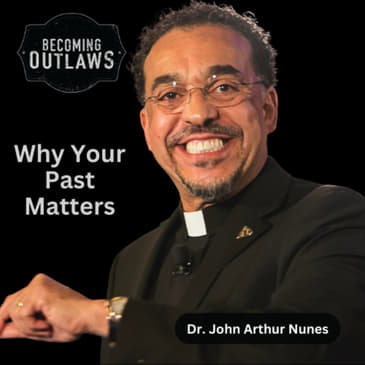
What is the value of delving into our past? Does it hold us back from moving forward in life? Or is it necessary? This is a must listen conversation with author, speaker, academic, and pastor, Dr. John Arthur Nunes. Dr. John Arthur Nunes is currently the pastor at Pilgrim Lutheran Church in Santa Monica, California, a Senior Fellow at The Center for Religion, Culture, and Democracy, and Dean and Lecturer at Camp Arcadia, in Michigan. He was formerly the president of Concordia College in New York. Born in Jamaica and raised in Ontario Canada, John has lived in the U.S. since 1981. He has also served as the President and CEO of Lutheran World Relief (Baltimore), was a professor at Valparaiso University, and an inner-city pastor in Dallas, and Detroit. He is an accomplished author as well, books include, Wittenberg Meets the World: Reimagining the Reformation from the Margins (2017) and Meant for More: In, With, and Under the Ordinary (2020). John is married to Monique Nunes. They have six children and eleven grandchildren. together lead the consulting group Nunes and Associates.
00:00:12
Why Our past matters more than We think.
00:00:15
Or does it? It's a topic for today.
00:00:17
I don't know. Are we talking about the
00:00:22
historical past, the beginning of the universe, America's past,
00:00:26
or our personal past? I think they all matter to some
00:00:30
degree. But coming from believers, A
00:00:34
Christian's perspective, we're taught, and it's theologically
00:00:37
true, that when you accept Christ, you become a new
00:00:42
creation. All things are gone.
00:00:45
Behold, all things are new. And is there a dilemma though,
00:00:50
in that all things are new? And that we can't reflect on the
00:00:55
past if we need to. Do we still have wounds that
00:00:57
need to be healed? We still need is there value in
00:00:59
our past life, not in our former life, but in in our life before
00:01:06
Christ, our experiences, the things we've said, the things
00:01:10
we've done, the interactions, the relationships we have,
00:01:13
friends and family and this or that.
00:01:15
And as life goes on, do those hold values still in our lives
00:01:19
today? And if So, what?
00:01:21
I have a? Someone who would be much more
00:01:24
articulate than myself to unpack that, that we have here today,
00:01:28
Doctor John Arthur Nunes. He is currently the pastor at
00:01:31
Pilgrim Lutheran Church in Santa Monica, CA.
00:01:34
He's a Senior fellow at the Center for Religion, Culture and
00:01:38
Democracy and the Dean and lecture at Camp Arcadia in
00:01:41
Arcadia, MI. He was formerly the president of
00:01:44
Concordia College in New York. He was born in Jamaica and
00:01:48
raised in Canada. And he's been a resident in the
00:01:51
US since 1981. He also served as the president
00:01:56
and the CEO of Lutheran World Relief, and was the president of
00:02:01
Valpriso University and an inner city pastor in both Dallas and
00:02:06
Detroit. He's also an author.
00:02:09
His books include Wittenberg Meets the World, Reimagining the
00:02:12
Reformation from the Margins and more recently Meant for More.
00:02:17
In with and under the ordinary, John is married to his wife
00:02:23
Monique, and they have six children, 11 grandchildren.
00:02:27
And they lead a Consulting Group, Nunes and Associates.
00:02:32
And thank you for joining me, Doctor.
00:02:37
Thank you so much Ken for the welcome and for the introduction
00:02:40
and for sporting that Tigers hat, since we can celebrate
00:02:44
today that the Anaheim Angels. I think beat them last night
00:02:48
here in Southern California. Get another chance today.
00:02:54
Right. Nothing like baseball.
00:02:57
So this topic, I don't know, maybe one you know, I didn't
00:03:05
think much about it until we discussed talking about this is
00:03:09
or I haven't thought about it with a theological spin, a
00:03:13
religious spin, a Christian spin.
00:03:17
We're always taught, like I said, and it's true that we
00:03:20
become a new creation. All things are passed.
00:03:23
But then when we have trials in life or traumas in life or just
00:03:29
getting into relationships and you do marriage counseling,
00:03:32
actually ironically, you do Christian marriage counseling.
00:03:34
And what do they do? They make you bring up your past
00:03:37
and your past relationships so you can learn from them and not
00:03:41
duplicate them, or how you can find spot them in other people
00:03:44
or whatever. Is that duplicity or how do we
00:03:52
unpack that? Yeah, you've really framed this
00:03:56
well. Can the complexity as Christians
00:04:00
who are new creations behold, the old is gone.
00:04:03
But. What does that mean?
00:04:05
I mean, is it really gone? Is the old really gone?
00:04:10
I once read someone who said, you know, that in the water of
00:04:14
baptism and when you're saved, that the old self, the old Adam,
00:04:18
is drowned in that water of baptism.
00:04:21
But he's a really good swimmer and he kind of just crawls and
00:04:24
creeps his way back into your life.
00:04:26
So at the end of the day, you know, the past is something we
00:04:31
have to deal with, I mean. I guess there are a variety of
00:04:36
unhealthy responses we can have to the past.
00:04:39
We can live in the OR try to live in the past, or engage in
00:04:43
nostalgia about the past. The writer of Ecclesiastes
00:04:49
Chapter 7, verse 10, Solomon says that that's not a wise
00:04:53
thing to do, to say that the good old days were good.
00:04:56
We can talk more about this as we converse today.
00:04:59
The other thing we can let the past do, I guess, is haunt us.
00:05:03
And we can live under the kind of shadow of the past.
00:05:06
And I guess the other unhealthy response would be to not pay
00:05:12
attention to the lessons we can learn from the pasts, from our
00:05:17
from our pasts. So there, I guess it's 3
00:05:20
unhealthy ways we can think about the past.
00:05:22
So I think your framing is exactly right.
00:05:24
The past matters more than we think.
00:05:28
Yeah, and along with what you're saying, so if.
00:05:33
If you were to not think about it, if you were to think about
00:05:36
our past like we know history, which is if you forget history
00:05:41
and you don't look at the past, you're doomed to repeat it.
00:05:44
Is that the? Yeah, George Santana, the
00:05:46
historian, said that, yeah, those who forget their history
00:05:50
are condemned to repeat it. Yeah, that's.
00:05:52
Yeah, it's like an inevitable thing.
00:05:54
So does that translate to humans mean to like our personal past?
00:06:01
If we don't address, if we're not self aware enough to look at
00:06:06
and self evaluate our behavior, we'll just continue that
00:06:11
behavior. That's exactly right.
00:06:13
And and and own it and come to terms with it.
00:06:18
A early theologian named Saint Augustine once described it this
00:06:22
way. He said sin is not the desire
00:06:26
that we have or the desires that we have had.
00:06:30
But it is the disordering of those desires.
00:06:34
So one of the ways we can learn from the past to your point is
00:06:38
to learn about and and come to terms with and to your to use
00:06:43
your expression. Be self aware about what our own
00:06:47
tendencies are, what our own proclivities and propensities
00:06:53
are, what our own vices are. And flip those on their head and
00:06:58
turn them into virtues. So for example, you know can
00:07:03
you're a very charismatic individual, you have a great
00:07:06
personality. People like you when they meet
00:07:08
you, and you can use that personality for positive ways,
00:07:14
or you can use it for negative ways and as.
00:07:17
You look. Exactly.
00:07:19
And as you look at your past, you can see the way in which.
00:07:25
You have maybe used that charming personality that you
00:07:28
have for some negative ways, and then learn from that and get
00:07:33
that. That, that desire, more rightly
00:07:37
ordered, is what Augustin is calling us to do.
00:07:43
Yeah, so if I were to examine myself, I wouldn't have come up
00:07:46
the word charming. But just in your example of
00:07:48
myself, if I were to say OK I have these attributes a self
00:07:54
examination. Here's some pros, here's some
00:07:59
cons. Here's how the pros could be
00:08:02
cons, and then to have enough is it self-awareness and courage to
00:08:12
say here's how I've actually misused my pros.
00:08:16
Because if you don't do that. I think you have to call
00:08:23
yourself out, right? Is that a way to put it?
00:08:25
That's that's that's just really well said.
00:08:27
You know our our Sunnyside and our shadow side are related.
00:08:34
So some of this, when you come to Christ, it's not like you
00:08:37
lose your mind, OK, Or you lose your personality or you lose
00:08:41
your the person that God created you to be.
00:08:46
It's that that mind and that personality.
00:08:50
And that person you are created to be is now in a redeemed
00:08:56
state. So it's now your desires are
00:09:02
rightly ordered, your thoughts are rightly redeemed, and are
00:09:12
used for the kind of purposes that God has in mind for you.
00:09:16
You have a new sort of creativity.
00:09:20
Because you've learned from your past and from past errors,
00:09:25
someone once said that the historically lobotomized have
00:09:31
nothing with which to be creative.
00:09:35
In other words, if you want to think outside of the box, you
00:09:40
got to know what's inside of the box.
00:09:43
And if you want to have a creative future, you got to know
00:09:47
what's inside of your own kind of.
00:09:50
Toolkit your own. So yeah, I think the term you
00:09:54
used rightly and wisely, is kind of a self-awareness about the
00:10:02
gifts that God has given to you. And I and I think in myself and
00:10:09
just like what I call the Christian culture church going
00:10:13
and. Families going to Bible studies
00:10:17
and retreats and it's just part of their life.
00:10:21
Where how can I put this behavior, self behavior versus
00:10:33
an internal change. So when I think of becoming new,
00:10:38
I think of all the sins have been washed away.
00:10:40
My spirit's been reborn from a Kingdom of darkness to a Kingdom
00:10:43
of light. There's still darkness in the
00:10:47
world. I still the flesh.
00:10:48
I still have the same desires and this and that.
00:10:50
I now have the tools to get through life in a better way.
00:10:54
But those who don't understand feel like maybe I'll say from
00:10:58
the inside and the outside. So from the outside looking at I
00:11:02
would get feedback. Probably not as much as I
00:11:04
should, but it's like, well, you.
00:11:09
You say you're a Christian and you still act this way, or why
00:11:12
would you do that and people that aren't?
00:11:16
You claim to be a Christian and then do it publicly and then
00:11:19
you're easily labeled A hypocrite and things like this.
00:11:23
And it's like, yeah, of course I am because what a Christian is,
00:11:27
what I say that I am is that I'm so flawed in the Savior where I
00:11:34
think sometimes. So I'm all of those things.
00:11:38
I'm grasping on to this because of what I actually AM and.
00:11:43
I think in the church sometimes where the hypocrisy feel comes
00:11:48
from are people who are trying to act like they're Christ, and
00:11:53
it's posed to allowing Christ to live through them as sinful
00:11:58
preachers. Yeah, that's again, you know,
00:12:01
you you, you nail it. You remind me of what CS Lewis
00:12:07
once said. Someone once asked CS Lewis,
00:12:09
what about that guy over there? He he claims he's a Christian.
00:12:12
Look and look how like Grumpy and grouchy he is all the time.
00:12:18
How could he be a Christian? And yes, Lewis said.
00:12:21
Can you imagine how much grumpier and Grouchy or he'd be
00:12:24
if he weren't a Christian? So yeah, you know, there is
00:12:29
something around us owning our personality and being authentic
00:12:36
about our personality. And taking the time to engage in
00:12:41
self examination of who we are. And I think one of the things
00:12:45
that goes wrong in our culture is we are surrounded always by
00:12:50
the clutter and the clatter of noise and technology and
00:12:55
distraction, ceaseless distraction.
00:13:00
And in a culture of distraction, we don't carve out the time
00:13:05
sufficient. To disconnect ourselves and
00:13:10
detach ourselves from our false loves, and to clear out that
00:13:16
clatter in order that we can hear God speak to us in a new
00:13:21
way. Yeah, see if you can help me.
00:13:26
So you mentioned time a lot. We all know what time it is.
00:13:33
So time is how we mark. Of beginning and end right.
00:13:38
It's it's a measurement of living or how many times we
00:13:42
breathe in an amount. I don't know exactly the
00:13:44
definition for time but we know how we use it.
00:13:46
It's a measurement of time. Some place we can be and then
00:13:49
leave and it's a track keeper. Would you say we are made-up of
00:13:59
as human beings? I I guess DNA right we're.
00:14:06
Biological creatures that have some kind of genetic code that
00:14:10
enables us to be functioning in our brains, well, just
00:14:15
functioning in the fact that we can sit and hear each other and
00:14:18
try to understand and come to things.
00:14:19
Or just humans through a DNA. And the 2nd is, is time too
00:14:24
broad? Are we made-up of time?
00:14:25
Can time be everything? So I've lived 53 plus years.
00:14:31
That's my time. Was that just a measurement?
00:14:36
Or is my 53 years is time fall under the accumulation of my
00:14:41
upbringing, of the values instilled in me.
00:14:45
Every conversation I've ever had, anything I've done or said,
00:14:49
secretly or private, I think about scripture that says every
00:14:53
word you've spoken, you know recorded good or bad kind of
00:14:58
thing. Like everything is because
00:15:01
outside of time. But is that a measurement of
00:15:04
time where he's saying everything?
00:15:07
Not like Santa Claus. I'm watching you.
00:15:09
Good or bad, it's every bit of your movement that DNA has
00:15:15
produced for you has created who you are in this time, which is
00:15:22
really our life experience. That doesn't get washed away,
00:15:26
then how can you move forward in time with plans, dreams,
00:15:31
ambitions? Anything healthy and disregard
00:15:37
everything that is my 53 years of time and just start as if I'm
00:15:41
an emotional infant. Well, I thought you said you
00:15:48
weren't a philosopher. That sounded very philosophical
00:15:50
there. So time is inescapable.
00:15:55
And yet if you ask anyone to define time, most people can't.
00:15:59
I mean what? At the end of the day is time.
00:16:02
You hinted at it. You said it's a unit of
00:16:04
measuring our life experience. But the past really doesn't
00:16:11
exist, Augusta would say, because it's past.
00:16:14
The future doesn't really exist because it hasn't arrived yet.
00:16:17
And the present doesn't really exist because as soon as you say
00:16:23
something or do something, it's immediately past.
00:16:29
So time. Abstractly, does not exist.
00:16:34
But relatively, in terms of our experience, it does.
00:16:38
And you're right, we're kind of bound to time.
00:16:43
You know, aging is a good clue that we're kind of bound to this
00:16:49
thing called time. It's a.
00:16:51
Love, love and hate relationship with aging.
00:16:53
We do, yeah. Isn't it interesting that God
00:16:58
identifies? God's own self as I am that I
00:17:03
am, Jesus shows up and He does the same thing.
00:17:06
He says, you know I am the bread of life.
00:17:09
I am the way, truth in the life. I am the true vine.
00:17:13
All of his socalled, I am sayings.
00:17:17
So Jesus coops for himself a term with respect to time that
00:17:23
is in an eternal present tense. Yes, kind of interesting.
00:17:29
It is interesting. Can I add to that that and then
00:17:32
when it refers to us, it always uses the word today when it
00:17:37
instruct us. Today is the day of salvation or
00:17:40
today when you hear his voice. I think that's the closest we
00:17:45
can get to I am, we're not the I am.
00:17:47
But he's living in an alternate in some kind of state of
00:17:51
continual present, and I think that is the closest we can
00:17:56
understand of being outside of time.
00:17:59
Right. He's living outside of time, and
00:18:01
then I think a spiritual life is kind of outside of time.
00:18:05
The most spiritual moments I've ever had felt like a you were
00:18:10
outside of time. Yeah, it's when time stops, you
00:18:13
know It's when it's when you lose track of time.
00:18:16
When you're in the zone, that's when you're in to describe what
00:18:21
you're describing. These spiritual moments I One of
00:18:24
the points I want to make today is we have to be intentional.
00:18:29
About carving out time and space and place for those moments to
00:18:36
happen because our world again has overwhelmed us with a
00:18:42
barrage of noise and relationships and connections
00:18:51
and responsibilities and our souls.
00:18:57
Find it difficult to find rest. So along those lines, you are
00:19:05
the Lutheran tradition, which is liturgical and by its nature, if
00:19:10
that's fair to say, right of. Course, yeah, absolutely.
00:19:13
So in a culture that is turning, you know, more towards the
00:19:20
spiritualism than? Anything else than religion
00:19:26
anyways. But even within the Christian
00:19:28
realm, there's a pull away from denominationalism.
00:19:32
Baptist, Presbyterian, Lutheranism.
00:19:36
What would you say from your perspective as a Lutheran
00:19:41
minister who appreciates and understands the value of a
00:19:45
liturgical practice? What would you add into that
00:19:49
cultural conversation of? Besides, like something can feel
00:19:55
warm and like home if you grew up in something and you just
00:19:59
like to do that same kind of tradition.
00:20:01
But what is the value of the liturgy in a social setting of
00:20:08
communal worship? I don't think I'm taking it
00:20:11
outside the question because I'm.
00:20:13
This is golden. This is golden.
00:20:14
I like this a lot Ken. So just two points.
00:20:19
I agree with you 100%. In fact, I just posted recently
00:20:24
on social media that I believe that denominations are done per
00:20:30
se, not that the Church is done. You know, the church, you know,
00:20:34
founded by Jesus Christ, you know, built on the confession of
00:20:38
Peter that he is the crisis son of the living God founded, you
00:20:44
know, on the day of Pentecost, when the Spirit gives birth and
00:20:48
life to the church that is eternal, that goes on forever.
00:20:53
But I think this American phenomenon of nonprofit,
00:20:59
voluntary organizations that are created around certain doctrinal
00:21:04
formulations, I think those are, I think, I think those days are
00:21:10
over, Okay. So it's going to be interesting
00:21:12
to see what comes next. And a lot of people, a lot of
00:21:15
historians are conjecturing what may be next and that's a whole
00:21:21
another conversation. But for me, to your point, you
00:21:27
know, I'm not a Lutheran first, you know, I'm, I'm a pastor in
00:21:32
the one Holy Christian and Apostolic Church 1st.
00:21:35
And for that's how I identify myself.
00:21:38
Luther is kind of important for some theological emphases, but I
00:21:44
don't see my Lutheranism as a cause for division from other
00:21:48
sisters and brothers who who believe in their heart that
00:21:51
Jesus is, is Lord and confessing with their mouths and are saved
00:21:56
and we are sisters and brothers. So just to be clear on my in
00:22:00
terms of my own eclesiology, but but I am a liturgical Christian
00:22:05
liturgy is really interesting because liturgy, because of its
00:22:10
repetition, serves to ingrain on the soul what the soul at times
00:22:17
cannot itself speak or say. And so it's really interesting
00:22:25
to me, for example, when I am with older people who are
00:22:28
suffering from dementia and they are not remembering their name
00:22:35
or who the other people in the room are.
00:22:39
And then you pray in ancient prayer with them or something
00:22:43
that they have prayed in worship and it all comes back to them.
00:22:47
It's stunning how that works because it's ingrained on their
00:22:50
very being. So I think that's one of the
00:22:53
powerful advantages of liturgical worship.
00:22:57
The downside, of course is when it becomes simply wrote, you
00:23:03
know, mechanistic, ritualistic ritual is good, ritualism is not
00:23:13
good. So and you know and and so
00:23:18
that's, you know, that's the downside.
00:23:20
And some people turn it into that.
00:23:24
But that's not what the purpose of liturgy is.
00:23:27
The purpose of liturgy to the point of our question.
00:23:29
And now I'm going to connect our topic to what you're saying the
00:23:33
perfect. So everybody's got liturgy.
00:23:36
The only question is, do you have good liturgy or bad
00:23:39
liturgy, or do you have liturgy that's been tested through time
00:23:43
or liturgy that you're just kind of making up on the spot?
00:23:47
Now, in the American ethos, there is a sense, and I'd love
00:23:50
to have a, you know, it'd be great to have another speaker on
00:23:52
here, and we could maybe even have some dialogue.
00:23:55
But especially in the West and in the US, there is this sense
00:23:59
that that which is the most innovative and that which is the
00:24:02
newest and the freshest is the best.
00:24:06
And so I'm saying that the past matters because we listen to how
00:24:10
people in the past prayed and what kind of has been carried
00:24:15
through time and through tradition, what's been tested.
00:24:19
And in the same way that, I don't know, do you like classic
00:24:23
rock? I shouldn't jump to that
00:24:25
conclusion, but I'm guessing you know you're a Detroiter.
00:24:28
You know Bob Seger, Bob Seger's from Detroit.
00:24:31
I actually live really close to Bob Seger.
00:24:33
I'm not quite sure where, but it's like within a mile or
00:24:35
something. I know that.
00:24:36
I just, it's crazy. I brought that up.
00:24:39
Yeah. So you got Bob Seger, You know,
00:24:41
So what is classic rock Okay? Classic rock is music that was
00:24:46
at one time, you know, Top 40 and it survived the test of
00:24:50
time. And here we are 50 years later
00:24:53
and they're still playing it. Okay.
00:24:55
Well, that same principle applies to liturgy, you know, or
00:24:59
classic liturgy is here we are so many years later and we're
00:25:03
still singing it because it's proven and it's been tested and
00:25:07
it survived through the test of time.
00:25:15
Is that is that address what you're saying?
00:25:18
Yeah, it does. And if I could, I don't know if
00:25:21
I summarize it, you know. From my level or whatever is
00:25:27
liturgy in and itself actually isn't the value.
00:25:33
The value in liturgy is what it ingrains in us.
00:25:37
In the truth that it instills. I don't.
00:25:41
Maybe I didn't say that right. I'm looking at your face.
00:25:43
No, that's exactly right. So I mean liturgy.
00:25:45
Okay. What?
00:25:45
So a part of the liturgy is called, formerly the Curiae
00:25:49
Elaison. What is that?
00:25:51
It's simply the prayer. Lord have mercy.
00:25:53
Yeah, that's an ancient prayer. You can't ever go wrong with
00:25:57
that prayer. Every tradition can pray that
00:25:59
prayer. Lord have mercy, okay.
00:26:01
So some are more formal when they pray that prayer, others
00:26:04
are more informal and ecstatic when they just shout out.
00:26:07
Lord, have mercy. I love being in a liturgical
00:26:11
setting in a church when I feel like the liturgy.
00:26:18
Is an expression of what the congregation is feeling and the
00:26:22
ministers presenting. I don't like liturgy when I feel
00:26:26
like they're going through emotion, because this is what we
00:26:28
do. Liturgy is not about a book.
00:26:30
You see, one of the things that goes wrong about liturgy is some
00:26:33
people, again in this modern age, think that the liturgy is
00:26:37
about speaking the words out of a book in the right order at the
00:26:41
right time. And that's not what good liturgy
00:26:43
is. That's not good worship.
00:26:45
Reading out of a book is not good.
00:26:46
Worship liturgy has to do with the the shape of our worship as
00:26:55
God speaks to us and we speak back to God, God's own word.
00:27:00
So I know that's not our topic today, but it does pertain to
00:27:05
the topic. Namely because when you talk
00:27:08
about literature, you're talking about something that's historic
00:27:10
and has been handed down. And the value of tradition is,
00:27:16
it means that you just may not be the smartest person who has
00:27:22
lived in the history of the world.
00:27:24
And there just might be the case that someone who lived before
00:27:27
you knows more than you about something.
00:27:31
You could call it ancestral wisdom, you know?
00:27:34
And liturgy is just ancestral wisdom in worship.
00:27:37
OK, So I mean think. I mean can think about things
00:27:42
that your mother or father or grandparents said to you that
00:27:47
echo in your mind, that's. Once a man.
00:27:50
Twice. Once a man, twice a baby.
00:27:54
That's from my dad. It's from my dad's dad.
00:27:57
Yeah, What you sow is what you reap.
00:27:59
I've got you. See, those are this is how the
00:28:03
past matters. You see these things that they
00:28:06
said were true and they should be handed down.
00:28:09
You ought to tell your children and grandchildren and those who
00:28:12
come after you, the exact and young people who you mentor.
00:28:16
You ought to share this kind of ancestral wisdom.
00:28:21
And I think we've lost that in our penchant for the immediate
00:28:27
and for the sensational and for that which tantalizes and
00:28:32
titillates us. I think we've lost some of that.
00:28:37
There's a a poet named TS Eliot. He was an American, born in 1888
00:28:43
in St. Louis, MO, died in England in
00:28:46
1965, So he dies in 1965. Ken, which is before the rise of
00:28:53
before Al Gore invented the Internet.
00:28:56
Yeah, he dies in 1965. Before Apple, before even.
00:29:00
What's that other one called? BlackBerry.
00:29:02
Even before that. All right.
00:29:07
And he says this. He says, where is the life we
00:29:10
have lost in living? And it was so busy living that
00:29:16
we've lost life. And then he goes on to say,
00:29:19
where is the wisdom? Some ancestral wisdom.
00:29:24
Where's the wisdom we've lost in knowledge?
00:29:27
We've got all this knowledge, you know, all this education,
00:29:31
all this education. But where's the wisdom?
00:29:34
Among maybe some of our forebears who can neither read
00:29:38
nor write, but had a wisdom that they passed on to us and that
00:29:43
bears preservation. Then he goes on to say where is
00:29:48
the education or the knowledge we've lost in information.
00:29:52
In other words we've got we live in an Information Society where
00:29:55
you can get I mean you can just you can find anything anytime we
00:29:58
got like this glut and surf it of information but we don't have
00:30:05
knowledge on how do you put the facts together and make them
00:30:08
work. And even more, we don't have
00:30:10
wisdom. Yeah, I mean, if you think about
00:30:13
what? Very.
00:30:16
I sound like an old person, but when the younger generation
00:30:19
having more knowledge accessible to them than any other time in
00:30:23
history. But knowledge doesn't bring
00:30:25
wisdom. Life does, or ancestral wisdom.
00:30:28
So what will the next generation look like that has so much
00:30:31
knowledge but not the wisdom to use it, so much information and
00:30:35
no wisdom to use. That's exactly right.
00:30:38
And This is why churches in 2023 and moving forward need to be
00:30:44
intentional about thinking about intergenerational ministry.
00:30:50
How are they intentionally connecting old people like us
00:30:56
with these young guys, man, these teens and these 20
00:30:59
somethings who are clueless? I don't have 11 grandkids, so
00:31:02
let's back up a little bit. Well, yeah, but you got to be
00:31:06
intentional about, you know, building those connections in
00:31:09
your ministry, I mean your life, because they're not going to
00:31:12
happen otherwise. There's a Saturday.
00:31:15
Bible study just men's a dozen people or less.
00:31:18
I started going to recently and what I love about it, there's
00:31:23
always more you can learn from Scripture.
00:31:25
But when you've been studying it your whole life, you're not
00:31:28
expecting a great new revelation, but you go.
00:31:32
But what I get the most out of it and I enjoy is that there's a
00:31:35
former Baptist minister there of an elderly age.
00:31:40
There's several older men. Than me.
00:31:44
There's like some of me there and then there's like young
00:31:47
bucks that are getting their first place.
00:31:50
They're not married yet that are actually listening to each other
00:31:54
and they're the young ones are listening to the older guys
00:31:57
wisdom. It's you rarely see that like
00:32:03
here young man is how don't do what I did.
00:32:06
That's it. Don't do it.
00:32:07
See This is why the past matters.
00:32:10
You can avoid some of the traps, and I love the word you talked
00:32:14
about the traumas. And you're picking notes in what
00:32:17
I'm saying. Yeah, you're good.
00:32:19
I mean the trials and promise the trials and traumas.
00:32:23
See, the first time I quote you, I say, you know, as you know,
00:32:28
Ken McMullen has said, and then I say the quote, and then the
00:32:32
second time I say as I've previously said, because it's
00:32:36
true. I have, right?
00:32:37
That's right. Then it becomes mine.
00:32:39
See. That's right.
00:32:40
But the trials and the traumas that we experience don't need to
00:32:44
be repeated and replicated. Why can't we learn?
00:32:49
This is why the past matters more than we may think.
00:32:52
Why can't we learn from some of the wisdom?
00:32:55
Again, ancestral wisdom, that which is passed on.
00:32:59
This is what communities do best.
00:33:01
You know, I'm an academic, but I don't trust ideologies.
00:33:08
I don't trust ideologies. I don't trust theories because
00:33:11
they're not connected to people and communities.
00:33:14
You know, I'm very active in trying to connect the gospel to
00:33:20
the social life of communities. But I don't trust activists,
00:33:25
right? You know, because activists are
00:33:27
more concerned about getting attention to their activism than
00:33:31
they are to the problem that they claim they're trying to
00:33:34
address. So sorry for beginning political
00:33:37
on you. But you know, This is why this
00:33:39
communitarian approach, this where we where we gather in
00:33:44
these communities. Hey Ken.
00:33:46
I'll be at a retreat a leading a retreat for men at Adrian
00:33:50
College in March. I'll, I'll, I'll send you the QR
00:33:53
code for it. It'd be fabulous if you could
00:33:56
join us. You know, it'd be really cool.
00:33:58
I shouldn't be doing this live, but you know, be really cool if
00:34:02
you could set up and if we could do a little thing from the men's
00:34:06
retreat. Yeah, we can talk about it for
00:34:09
sure. I've never gone on the road, but
00:34:12
hey, I got to get out, you know? Yeah, you've got a great format
00:34:16
here. And, you know, maybe we can.
00:34:17
Maybe you might hear something during the retreat that strikes
00:34:21
you as interesting, and you could maybe get a a little panel
00:34:24
discussion even going with someone for sure, yeah.
00:34:28
I have a hard time keeping up with you.
00:34:29
I don't know if I could keep up with a few of you at the same
00:34:31
time. Need an interpreter.
00:34:34
There you go with your flattery. That's the charisma I'm talking
00:34:37
about. So let's circle it and close it
00:34:38
back with this. Too simplistic to say or can you
00:34:44
elaborate or would this thought help people is if you have, if
00:34:51
you're a Christian and you think, well, I someone suggests
00:34:53
I need therapy. I have.
00:34:54
I'm not getting past this issue, this divorce, or I had trauma
00:34:58
when I was at or whatever it is and it's just kind of dragging
00:35:01
along in your life. And maybe someone has even said,
00:35:04
you know what? You probably need to talk to
00:35:05
somebody. You're like, man, I'm a new
00:35:07
creation, you know, Church tells me, I'm behold, I'm new.
00:35:10
Everything's in the past. Is it fair to say to this
00:35:13
person, you know, what if you broke your leg?
00:35:19
Would you just get up and keep walking on it and ignore that
00:35:25
you have a pain and something's broken?
00:35:28
Or is it just as? Wise and therefore even
00:35:33
spiritual to say I need to go to a professional or somebody and I
00:35:40
need to get this properly taken care of so that it can heal
00:35:44
properly and it may take time and that's not bad thing.
00:35:51
So let me start with Jesus, because when in doubt, go to
00:35:55
Jesus, right? That's always the right answer,
00:35:56
right? Good, go to so the resurrected
00:35:59
Jesus in his glorified body. OK, so you have a guy who's got
00:36:04
a perfect resurrected body, still has wounds that are scars
00:36:11
now on the imprint of his hands and his fissured feet and one in
00:36:19
the side. He carries those scars even in
00:36:23
his resurrected body. So even in our redeemed selves,
00:36:29
we can still carry scars from our previous life.
00:36:33
Emotional scars, emotional scars.
00:36:36
Relational scars. Things that people have done to
00:36:39
us that we just can't shake. I was with a book group last
00:36:43
night and there was a woman there in her 70s.
00:36:47
And when she was 17 and a senior in high school, someone told her
00:36:54
that she would never be a good writer.
00:36:57
And she says her whole life she's wanted to be a writer.
00:36:59
And this is echoed in her head. We carry these things even in
00:37:03
our redeemed selves we carry these things.
00:37:07
I want to say there's two ways that I recommend people deal
00:37:10
with these things, and one is therapy.
00:37:12
There is a place and a role for Christian therapy.
00:37:16
So I think it's a false notion among some churches where they
00:37:21
say once you redeem you don't need therapists, you don't need
00:37:24
experts, you don't need to your point around if you have a
00:37:27
broken leg, even Jesus carries scars and is resurrected self
00:37:31
and we're not Jesus. That's for sure.
00:37:34
So and our redemption isn't perfect, isn't complete until
00:37:40
heaven. So while we're in this life I do
00:37:43
recommend for some people therapy.
00:37:46
However, I also recommend spiritual direction.
00:37:51
Taking time to cultivate your spiritual life, whether it's on
00:37:56
retreats and men need to men need to be more real about this,
00:38:01
you know, realizing that you know because men are, you know,
00:38:05
men. We tend to behave as if we don't
00:38:09
have any issues. We don't have any problems, and
00:38:10
we and we push them on the inside and don't deal with them.
00:38:14
Men need to be much more serious about this, but we all do to
00:38:18
carve out time and space where we can extract the clutter in
00:38:25
order to hear God knew, as God speaks to us, about the future
00:38:30
that he has in mind for us. Perfect.
00:38:34
All right, Doctor Nunez. It's always a pleasure.
00:38:38
The delight and joy are mine. Ken.
00:38:41
Thanks for doing what you do, brother.
00:38:43
Gavin among the outlaws, he said.
00:38:46
Come follow me. People from all walks alive
00:38:49
since have been becoming allies.