
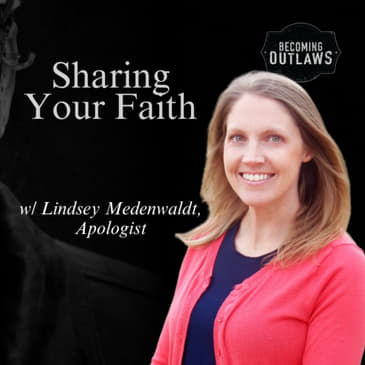
Feeling curious about sharing your Christian faith but unsure where to begin? This episode equips you with practical tips and insights to navigate conversations about faith with anyone.
Our guest, Lindsey Medenwaldt (Director of Ministry Operations at Mama Bear Apologetics and author of "Bridge Building Apologetics"), offers guidance on fostering respectful dialogue in today's diverse world.
https://mamabearapologetics.com/
[00:00:00] How many religions in the world if you had to guess would you say there are two you'd be
[00:00:18] wrong 42 you're getting warmer but you're way off it depends who you ask and there's
[00:00:24] no exact consensus on this but the numbers could range from 4200 depends who you're asking
[00:00:31] possibly up to 10,000 so to make it simpler though most researchers would say they fall
[00:00:38] under five categories or five main religions I should say Christianity Islam Judaism Hinduism
[00:00:47] and Buddhism however you could consider Buddhism maybe more of a philosophy a specific worldview
[00:00:54] than a religion but most religions and faiths of course believe that there's is the only
[00:01:01] one truth can there be one truth so many wonder about religion who aren't engaged in it is
[00:01:12] if you can't know for sure why engage in it at all doesn't matter who cares we'll find
[00:01:18] out when we die or many think well it could be cultural so all of these paths it doesn't
[00:01:26] matter which one you're on they all lead up the same mountain they all lead to the mountaintop
[00:01:32] which would be God whoever or whatever that is that's referred to in different terms could be
[00:01:39] universalism religious pluralism I refer to it as opyrism and Christians specifically are
[00:01:49] called to share their faith so how do we do that in a world that either doesn't care or
[00:01:54] is convinced their belief system is true and in a current cultural environment where there
[00:02:01] seems to be no absolutes truth really can be whatever you want truth to be we have with
[00:02:08] us Lindsay Medmult she is the director of ministry operations at mama bear apologetics and serves
[00:02:15] as a consulting editor for the Christian research journal her primary focus is on
[00:02:19] world religions and how we talk about other faith she has a new book entitled bridge building apologetics
[00:02:26] how to get along even when we disagree welcome Lindsay hi Ken so glad to be here hi thanks for
[00:02:34] being on uh let's talk about mama bear apologetic so I was on the website and I'm looking at over
[00:02:40] and I see this quote says mess with our kids and we will demolish your arguments
[00:02:47] so first of all what's what's apologetics what would be a defined definition of that and then
[00:02:52] and then what's mama bear apologetic I think the easiest way to think about apologetics is
[00:02:56] defending your faith it comes from the Greek word apologia which means to give a defense
[00:03:03] and in our case as Christians we're giving a defense for the hope within us
[00:03:08] whenever anyone asks which comes out of first Peter 315 and so mama bear apologetics is
[00:03:15] all about equipping moms so they can equip their kids so that whenever somebody asks us
[00:03:21] about the hope within us we can offer a defense for why Christianity is rational and true I love
[00:03:27] that for mom specifically so is that geared towards uh moms with kids or and or moms
[00:03:35] with their families kids and how to share faith with their lady friends or what's the focus
[00:03:42] any motherly role I think that it's really important for people to understand that
[00:03:47] it could be with kids in your neighborhood or teenagers at youth group any role where you have
[00:03:55] an influence over kids all the way through teen years but also we have grandparents who talk about
[00:04:03] helping their grandkids navigate faith questions and we've also talked about adult children
[00:04:09] kids are kids forever when you're a parent you think of your kids as your as your babies forever I
[00:04:15] didn't understand that until I became my mom I'm on myself and I was like oh I understand why my child
[00:04:22] is always going to be my baby even when they enter adulthood and so it could be really any
[00:04:28] motherly role but we also talk about adoptive families and different areas of life where
[00:04:35] we have an influence over kids there's an advantage to growing up in a Christian household and having
[00:04:42] Christian parents and being taught the bible stories and having the church culture and environment
[00:04:51] but I've been around long enough no and you probably do too that there's also the syndrome
[00:04:57] of the kids that grow up in church and then they kind of rebel against all of it
[00:05:04] and there's even a trend on social media that makes me sad is what I used to believe as a Christian
[00:05:13] and this is specifically what they're talking about I grew up in that environment I grew up
[00:05:17] with parents who did this or that and then they made me go to church and I did this and I
[00:05:21] used to believe this in youth group I even used to share my faith here's why I'm a Christian anymore
[00:05:26] I have my thoughts on that what would your thoughts on that be well I'm a pastor's kid
[00:05:32] and a missionary's kid so I feel like I had the the card stacked for me and also against me if we're
[00:05:38] talking about maybe the rebellious phase I did go through a period in college where I investigated
[00:05:45] other faiths and and sort of looked at other worldviews he mentioned at the top of the show
[00:05:50] that there are up to 10 000 religions it's totally true and we can't be expected to know or
[00:05:56] understand all of them and so one of the things that I hope parents will find hope in is that
[00:06:02] they can equip their kids in Christianity and give them solid truth to stand on so that when
[00:06:10] they face those other ideologies or even stumble across those trends on social media whether we're
[00:06:16] looking at evangelicals or what I used to believe hashtags that they can see the falsehood and
[00:06:23] the false narratives that might be proposed in those in those streams yeah I mean I'm a parent too and
[00:06:33] I struggle with those kind of hashtags and those kind of comments or even people telling me that
[00:06:38] sort of conversation and purpose the person I think of two things one is there's to me there's
[00:06:43] two different thoughts on that is one is there's always like you said a rebellious period
[00:06:50] or a time where they go exploring and they they're learning that they have their own mind
[00:06:55] their own thoughts and they've only been thinking what they've been told to think and and then
[00:07:00] they come back like a like a prodigal that comes back to the father then is the other that was
[00:07:07] if you left us you were never with us and that you can attend church and have Christian parents
[00:07:13] but never actually receive the faith for yourself and what you're looking back on is just the
[00:07:18] church structure and church rules and then you feel like it was almost cultish because you were
[00:07:24] mind controlled because you never found Christ in it and I think that's what scares me as a parent
[00:07:30] a little bit or even for the church is making sure people actually find Christ and not just how to
[00:07:38] be a Christian right I would say that Christianity is maybe not the only faith that suffers from
[00:07:44] that or has that fear we hear stories of people who come out of the latter-day saints for example
[00:07:51] or the Muslim faith and they'll say yeah I never really bought into that I never really believed
[00:07:56] I just kind of went through the motions because my family went through the motions so Christianity
[00:08:01] is certainly not immune to that we need to be cognizant of how we're teaching our kids
[00:08:08] how we're equipping ourselves so that when periods of doubt might enter our own lives
[00:08:12] that we can confront those with reality and truth that we've already learned and equipped ourselves
[00:08:17] with because we are going to face doubts there there really are instances where Christians who
[00:08:26] truly truly truly believed entered a period of doubt for whatever reason but if we've
[00:08:31] equipped ourselves before those doubts enter the picture it becomes a little bit easier for
[00:08:36] us to answer those questions in a logical and less emotional way yeah I find a majority of the
[00:08:44] doubts come when life troubles come and it's why this why God because they see God as if you're
[00:08:51] able to stop pain and tragedy why don't you do it when real Christianity is in this life
[00:08:58] you will have trouble but it so in your in your background you grew up in that kind of
[00:09:06] Christian household when was a point where you're like well I don't just believe this because I
[00:09:13] was told to believe it because it's my culture and routine or I've come to even an educational
[00:09:20] doctrinal understanding but where it became personal and no matter the doctrine issue
[00:09:26] you would like die on this hill that that Christ is the truth honestly so I became a Christian
[00:09:35] I don't have an exact age I think it was around five years old there was an altar call at kids
[00:09:41] church uh just what we did and um I loved Jesus and I just knew that I needed to follow Jesus
[00:09:48] but I didn't have that sort of come to Jesus moment where I needed to know more until I was
[00:09:56] in seminary so I was in my 30s and we got an assignment in my first ever apologetics class
[00:10:04] that we needed to have a conversation with a non-believer uh so any any sort of non-Christian
[00:10:10] I picked an atheist friend of mine and it was during that conversation that I realized
[00:10:16] that I didn't have answers for why I believed what I believed was true and I couldn't respond to some of
[00:10:21] her questions that she had we had a delightful conversation but at the end of it I was heartbroken
[00:10:28] because even though I was a Christian and I had real faith I wasn't able to defend it the way
[00:10:35] that scripture tells us to do so uh and so that was really my moment but yeah it was all the way
[00:10:42] in seminary that it took me to have that moment so what's the difference between so in apologetics
[00:10:49] you described it as uh you know a defense of the faith so how do you share the faith and
[00:10:54] defending it but not being defensive yeah so that's the art of conversation and I think
[00:11:02] in our culture we've lost the ability to have fruitful respectful dialogues so the second half
[00:11:09] of first Peter 315 is to defend the faith but to do so with gentleness and respect that means that
[00:11:16] we're listening well we're getting to know a person on their level why it is they believe what
[00:11:21] they believe what experiences have they had that brought them to the conclusions that they hold
[00:11:27] and then in in that dialogue we're then probably given the opportunity to share our own
[00:11:33] perspectives but it comes in a real conversation with genuine friendships we're much more likely to
[00:11:40] have respectful dialogue in those kinds of situations versus perhaps going online and trying to engage
[00:11:47] with someone uh in in the internet the sphere yeah then that gets nasty it can get so nasty
[00:11:56] I think I've seen it referred to as a dumpster fire more times than uh it's referred to as
[00:12:02] a healthy place to have healthy conversations yeah I even find uh I find offensive I think sometimes
[00:12:10] you know if I didn't believe this faith was true and was christian to the core I would be offended
[00:12:18] well meaning christians online with just their daily posts who feel they're doing ministry and I
[00:12:24] hate to judge their ministry but it's all judging and it's telling sinners they're going to hell
[00:12:29] it's telling other church members if you don't believe this way you're going to hell and that
[00:12:33] I think can you just show love you know um show the love of christ and what I find really appealing is
[00:12:41] I was in a um actually I was in a Wendy's yesterday and um and there is a older couple that came in
[00:12:51] like very fragile old it took him a long time to get to the door it took him a
[00:12:56] long time to get up to the counter uh he had a hard time ordering because he didn't understand the
[00:13:00] menu he couldn't see it that far that kind of elderly situation okay and as they were figuring
[00:13:06] out what they wanted which was the apple walnut salad or the cob and you know this lady who had
[00:13:12] already ordered who was half their age maybe had a teenage son a different ethnicity I just throw
[00:13:18] that in uh these were super Caucasian people if you can be super Caucasian and she was
[00:13:24] ethnic I found in their conversation was born in Egypt anyway she comes up it seems like two different
[00:13:29] worlds of people and just says can I um well actually she didn't ask she told the person
[00:13:35] I'm buying their lunch and they're like oh no miss you know you don't have to do that
[00:13:41] she goes no you're not going to stop me you remind me um I have some other couple I know
[00:13:46] that I love very much and I have to do this the long story short is it turned into God bless you
[00:13:54] no God bless you older lady saying begins to say beyond just like that cordial God bless you everybody
[00:14:01] says that this was her birthday and this happened to her two years in a row and this other lady's
[00:14:09] like wow I didn't know that my birthday I have two birthdays because in Egypt she goes down this
[00:14:13] whole they start to have this conversation they say how do you have two birthdays well my parents
[00:14:17] you can need you up you can pick whatever day you want and they picked a 30 because it was easy
[00:14:21] to remember it's not my real birthday so I have two and this weird conversation happened
[00:14:26] and before it was over they end up sitting together and having lunch and talking about
[00:14:30] how good God is and I thought you know for anybody in that restaurant like me if I
[00:14:38] didn't know what was happening there that would be a huge witness as opposed to in my Facebook feed
[00:14:45] somebody telling me how sinful I am and I think you know what if I was a sinner that's what sinners
[00:14:51] do don't focus on their sin just on the love of Christ and helping being kind yeah that Wendy's
[00:14:58] example is is such an easy example to see when we see it because we don't see it very often
[00:15:05] right and it kind of sticks out like a sore thumb unfortunately because we're not engaging with
[00:15:10] people that way I love that they asked each other about the circumstances of birthdays and and
[00:15:17] why not and really took the time to learn that's what I think Christians have forgotten to do
[00:15:24] is to truly get to know people on their level and it doesn't it's not rocket science right
[00:15:30] like we we could get to know our neighbors by asking them okay tell me about where you came from how
[00:15:34] did you land here we just recently moved and and so we've been learning a lot about our neighbors
[00:15:40] it's more natural when you're new in the neighborhood to learn those kinds of things but
[00:15:44] even if it's been a couple of years and you've been living in the same place but you haven't
[00:15:48] met your neighbors it's never too late to extend yourself to them and say I'd love to get to
[00:15:55] know you it's been a couple of years maybe it's been longer than a couple of years but we live right
[00:16:00] next door to each other let's take some time to get to know each other and I mean it's really that
[00:16:06] simple we don't have to step out of our comfort zone necessarily because in our neighborhood we
[00:16:12] should be in our comfort zone already and we see these people at the mailbox or we you know we
[00:16:18] see them walking down the street or we just see them driving to and from work every day
[00:16:24] and so it's not as complicated as I think we've made it we also don't have to share our faith in
[00:16:31] every single conversation part of the things that I advocate is having conversations that build on
[00:16:38] one another because that's what friendship does we don't get to know a person generally I mean
[00:16:44] the Wendy's situation I'm not sure they exchange numbers or anything but it might be a one-off
[00:16:50] like that but generally if we're getting to know people over time faith conversations or conversations
[00:16:56] about deeply held beliefs become much more natural to bring up rather than here I have this track
[00:17:03] let me give it to you which certainly has its time in place right like I'm a missionary kid I
[00:17:07] understand that in some instances it's truly knocking on the door and let me tell you about
[00:17:12] Jesus but in most circumstances that won't be effective they'll shrug you off or
[00:17:18] they'll ignore you or there are other things they'll slam the door in your face right
[00:17:23] so I think friendship and relationship is definitely the way to go as far as building bridges and
[00:17:28] being able to talk about your faith yeah I mean I guess I say I grew up in church but I was kind of
[00:17:36] a youth group outcast I wasn't and part of it was it's sad looking back now I was an outsider
[00:17:43] because I had non-Christian friends that were close to me so there's this so what you're saying
[00:17:49] sounds simple but in some people's minds how they grew up it's not because you're supposed to
[00:17:55] buy things from Christian only Christian companies have Christian friends only live in a
[00:18:00] Christian neighborhood and your youth group and your church friends are your only thing
[00:18:05] as opposed to a place to get discipled so you can go be in the world but that becomes
[00:18:12] your world yes yeah we become we get into a Christian bubble and there are phases in our life
[00:18:19] where that becomes really important and necessary in whatever circumstances we're in I'm not saying
[00:18:25] that a Christian bubble is a terrible thing to have I think there are times and places for
[00:18:30] that but we should be able to step outside of that bubble and speak with an atheist or a Muslim
[00:18:37] or a Hindu and and not have this weird awkward feeling about it but our culture even though I mean
[00:18:46] in the United States where we're called the melting pot and we see a lot of different cultures
[00:18:51] represented we tend to stick with with our own groups whatever those groups might be
[00:18:58] oh you go to that church so you hang out with those people from that church
[00:19:02] oh you your kids go to that school so your friends friends of friends must go to that school too
[00:19:10] and I think instead we need to think about the opportunities of getting to know
[00:19:14] all of our neighbors whatever they might look like or whatever they might believe but you're
[00:19:20] right I think I would like to think it's so simple I have atheist friends and non-theist
[00:19:26] friends and non-Christian friends and I think that it's easier than we've given it credit for but I do
[00:19:34] recognize that there's that difficulty of okay when is it appropriate for me to leave the nest
[00:19:42] and and share my faith with confidence and and when would it be better for me to maybe stick back
[00:19:48] and learn some more and and that's going to be a different answer for everybody
[00:19:53] yeah and I think a majority of people you hear testimonies of that came from a different faith
[00:19:59] that are difficult to transition from like Islam or Judaism it was usually it wasn't
[00:20:04] because you left a track on their door or you approached them at sat next to them on a bus
[00:20:09] and cornered them it was because a friend or a roommate at college maybe someone they got stuck
[00:20:15] with but someone they built a relationship with seemed really convinced something was true
[00:20:22] and cared enough to have uh undefensive conversations yeah I mean we see this in the example of like
[00:20:32] David Wood and Nabil Qureshi right Nabil Qureshi was a Muslim and David Wood was a Christian
[00:20:38] and David Wood had all of these great conversations with Nabil recognized that there
[00:20:44] would be a cost potentially for Nabil to become a Christian because he came from a very devout Muslim
[00:20:50] family and and yet David persisted and he continued to have this real rich relationship
[00:20:58] with Nabil kind of going over those boundaries which would be you know David is this big bulky
[00:21:06] Caucasian man and Nabil is this like he was this um uh he had a he was a person of color
[00:21:14] and he was very soft spoken and gentle and and if you look at them from the outside feel
[00:21:19] like they could they're not friends but they had this rich beautiful relationship
[00:21:24] where David was unapologetic about his Christian faith and he continued to answer Nabil's questions
[00:21:30] with patience and with kindness and eventually Nabil became a Christian and uh he he has
[00:21:37] he had a beautiful testimony um of becoming a Christian because of that relationship but yeah it
[00:21:43] wasn't a track left at his door that is for sure and there's nothing wrong with you I mean there's
[00:21:48] time and place for everything you know and I'm not just like reminiscing on my past or complaining
[00:21:54] it's more for the benefit of people listening who might think or experience the same things you
[00:21:59] know experiences that we had so like when I was in youth group another reason I didn't hang out
[00:22:03] with them that much besides I felt judged was uh you know they would go to the local
[00:22:09] Taco Bell and just witness the people and not that that's a bad thing I don't prefer that if
[00:22:16] I was eating Taco Bell I would feel put upon and it's not my way but in the church I felt like
[00:22:24] that's what you do and it'd be mixed with like if you don't stand up for Christ then he won't
[00:22:30] stand up for you like it put a shame on you and I thought man I'm just I don't know something's
[00:22:36] wrong with me but long term I look back I mean there's things I could have always done better
[00:22:42] but that's been never my way and I had the majority of my best friends I had like one
[00:22:48] Christian friend the other ones had never been before or never thought about or something else
[00:22:54] still my but still friends through life even not as close but decades later
[00:23:00] um when one of them loses a spouse to cancer whose door do they knock on
[00:23:07] and then even decades after that one that I'd prayed for for years but actually in your
[00:23:12] mind you're like this one's never happening you know it is a a Christian doing ministry online now
[00:23:19] not that that has to do with me particularly but it doesn't not have to do with me I could
[00:23:25] have shunned them off by making Christianity something they couldn't stomach by just preaching
[00:23:29] at them and not being their friend as opposed to a relationship yeah yeah I think I think you're
[00:23:37] nailing it like I'm having so many flashbacks to my own childhood in my own teenage life of
[00:23:44] you know I remember sitting on a school bus and reading my bible and having a person next to
[00:23:50] me seeing me read my bible I wasn't trying to prophylatize necessarily or convert anybody I just
[00:23:57] really liked reading my bible in my teen years and eventually that led to conversations about faith
[00:24:04] I went to a Catholic high school and I went I think maybe everybody in my age that was a
[00:24:09] Christ follower sort of went through a left behind phase where we were reading those books
[00:24:15] voraciously it kind of tells you about my background to my faith background but
[00:24:19] um I would take those to my my high school and read those and I went to a Catholic high school
[00:24:25] and that would prompt conversations about well what do you think about the rapture and
[00:24:30] and we would have real conversations about maybe some of the the differences between what I believed
[00:24:36] and maybe what some of my Catholic friends believe but yeah I've had some experiences too where
[00:24:42] friends from the past with with whom I never really openly shared my faith or didn't um try
[00:24:48] to convince them that it was true would reach out to me later and say hey I'm going through this
[00:24:53] really rough time could you please pray for me um or do you have any advice um or I just realized
[00:25:00] that I want to have more faith in my family how can I do that what are some steps I can take
[00:25:05] or how can I find a church that fits my family uh and so you know these are these are people
[00:25:10] that have reached out to me in just a lot of couple of years um but friendships that I've had
[00:25:15] for for decades at this point that weren't um only about I want you to become a Christian
[00:25:23] um I think I think you're illustrating uh the concept of planting seeds not weeds
[00:25:29] and in not all of us are going to be a closer for the faith we're not always going to be the
[00:25:34] ones who pray that ultimate prayer with our friends who who say you know I'm a sinner and
[00:25:39] I need Jesus but we're planting those seeds in our actions in our words and all the
[00:25:44] things that we do throughout our life they're watching us um and um seeing how we live our lives
[00:25:49] and do we really have this hope that we say we have um and and will we stick with them uh
[00:25:57] throughout all of the things that they go through um and those seeds might bear fruit uh we might see
[00:26:04] it or we might not um but as with your friend who uh you didn't really you prayed but maybe
[00:26:11] then it's not probably not going to happen we I think we all have sort of those friends at some
[00:26:16] point but we should never lose hope because we never know um when those seeds will bear fruit and
[00:26:22] and the Holy Spirit will call people to himself. Yeah with apologetics uh you know a lot of people
[00:26:28] don't until now you know really know that word or if they do those are like Christian
[00:26:34] intellectuals that like to go down these uh rabbit trails and argue about things
[00:26:40] in my view see if you agree is there's two things that are super important according to
[00:26:45] scripture one is like we're if I thought of where do people start it would be scripture says to
[00:26:52] you were talking about the hope you have that we should always have an answer ready for the hope
[00:26:58] that we have in Christ right so if someone says why you don't have to go down all these
[00:27:03] theological and apologetic arguments you just say why what's your hope and give a
[00:27:09] that answer to that yes where you start right that's it yeah um I think I think we forget that
[00:27:16] that's where we start or we or we are we here an apologist speak and I'm speaking as an
[00:27:22] apologist we hear an apologist speaker like oh I'm never going to learn all of those things
[00:27:27] how would I even begin well the good news is you don't really have to all I'm asking you to do
[00:27:33] is know why you believe what you believe um and that might require you to go down some
[00:27:38] rabbit holes and figure out some answers but yeah no I think I think we've we've forgotten that
[00:27:44] that's a very personal answer that we should be able to give and if you don't have an answer for
[00:27:50] that other than I just kind of need to think of what my elevator speech is then you need to
[00:27:55] examine your own salvation because if maybe you don't have the hope in you then you
[00:27:59] kind of just start there and then move on the second part I was thinking of is once that's in place as
[00:28:05] far as like apologetics and Bible study Bible studies and all kinds of topics they're important
[00:28:12] you know parenting and marriage and all these different things however I've taught on and off
[00:28:18] the scripture for decades and um I've never gotten past with any group no matter how long
[00:28:25] I've done it I'll say I'm going to start with what Paul calls the elementary teachings of the faith
[00:28:30] we're called a no sound doctrine and there's like five I shouldn't even mention I know if I know
[00:28:35] I've taught my head but he basically says the elementary truths of the faith are you know and
[00:28:40] he'll say salvation or baptisms and the resurrection of the dead he names off these
[00:28:44] five principles of what the faith are and every time I started to teach those one by one
[00:28:50] I hate to say most Christians I don't have a poll on it from my experience even people that
[00:28:56] have attended church their whole life and attend a Bible study may not have a good foundation
[00:29:01] on what Paul calls the elementary truths and then we move on from there yeah so to me I've never
[00:29:08] gotten past that um some of those I call it one time I called it when I was doing a teaching
[00:29:14] I called it um I think k4 elementary k4 I made it was elementary school it's called like k4
[00:29:21] or something I don't know but I mean the elementary basics and it covers most of scripture and it
[00:29:29] falls into apologetics apologetics isn't something out there for a hobby you it's sound doctrine
[00:29:36] you know yeah yeah um you know we need to contend for the faith as Jude describes in the way
[00:29:43] that we can do that is you know another way to describe that is standing firm in our faith
[00:29:49] and it's kind of how Paul described it but we can't do that if we don't actually know the
[00:29:54] foundations of our faith um it's not just a quick prayer and you're done although you know
[00:30:01] salvation is easy and it's free and you need only believe that Jesus is your savior
[00:30:06] but there's more to a Christian life than than that it is enriched through reading the word of God
[00:30:14] it's enriched through having conversations and prayer an act of prayer life with God
[00:30:19] and and and you know the Bible tells us to pray without ceasing and are we doing that that's a
[00:30:24] really simple step for us to take is just begin to add prayer more regularly into our lives
[00:30:30] but you know in our culture we see people wanting to go to battle in in in our culture and wanting to
[00:30:37] to fight worldviews that they disagree with but when push comes to shove so many of them can't
[00:30:43] quite tell you why they disagree with it or why that worldview is wrong and then when you push
[00:30:48] them even further they're unable to tell you why their worldview is correct or why they should
[00:30:55] they should be trusted and so if we could start with the fundamentals of reading scripture
[00:31:01] and understanding the truth of the word of God it will be easier for us to not only spot the
[00:31:08] falsehoods in our culture but then to have an answer for why we disagree with those things
[00:31:13] in our culture and we don't have to be jerks about it we don't have to go on the internet and
[00:31:18] say everybody's stupid who believes this worldview rather we can have conversations with people
[00:31:24] in our own lives our own circles already without having to engage on the internet with anybody
[00:31:30] nobody has to engage on the internet with anybody if you don't want to you can stay off social media
[00:31:37] and and not engage but i'm i'm asking people to have conversations with the people they already
[00:31:44] know start with your kids start with your spouse have times around the dinner table where
[00:31:50] you say have you thought about why you're grateful these days start start with gratitude
[00:31:57] why are we grateful who are we grateful to and build faith conversations within your own home
[00:32:03] so that when you're outside the walls of your home it becomes a lot more natural to do so yeah
[00:32:10] getting back to basics it sounds so trite to say well you know get in scripture and pray
[00:32:16] statistically it's not it's not happening um no i'm i'm having on the show soon there's a new
[00:32:24] book by frank barna that goes over you know barna institute research and one of his guys are coming
[00:32:28] on and i haven't read it all yet but it's hard to look at like even among those who say they're
[00:32:35] christian only four percent would say they have a pure biblical worldview and feel like they have
[00:32:40] a pretty good grasp of what the bible said four percent not of the world of christians yeah there are
[00:32:46] others who will say christians who will say that jesus was only a teacher or a good moral leader i mean
[00:32:52] these are these are self-professed christians we see it's a hard number to nail down but roughly
[00:32:59] a third of christians say that they believe in reincarnation or tarot card readings or
[00:33:08] going to a psychic or astrology they'll they'll consistently read their astrological predictions
[00:33:15] and believe that those are true when in reality that all is is anti-biblical those are things
[00:33:22] we're not supposed to engage with and yet we see christians falling into the traps of the new age
[00:33:28] movement for example and incorporating that into their christian faith because they don't spot the
[00:33:35] falsehood they don't realize that what they believe is false and so we need people willing to step out
[00:33:44] in faith and say yeah that's not christian and sometimes it is the church who can educate us on
[00:33:51] those things other times it's books that have been written i read a lot on the new age i have to
[00:33:57] know quite a bit about that particular area but in order to spot those falsehoods you have to
[00:34:02] know truth and that's why i always tell people to start with the bible you have to know the bible
[00:34:07] and you know you could start with the gospel of mark if you wanted to and and get the basics there
[00:34:14] if you like more reading you could go to the gospel of luke and get more detail
[00:34:18] read acts read about the early church and and the early christians and the things that they
[00:34:24] did to share their faith and you know talk about being persecuted talk about being made fun of
[00:34:31] we can learn a lot from their situations and and and the way that they engaged with people
[00:34:37] because they held the gospel truth deep in their hearts they lived it every day and they weren't
[00:34:43] going to just toss it away in the face of challenge because they they believed it to be
[00:34:49] true in the core of their beings and i encourage us to learn from that from those examples and
[00:34:56] and be able to apply it in our own lives yeah we don't have an excuse i mean
[00:35:04] this is about a month ago i talked to somebody who you know they go to church and they're christian
[00:35:10] and they actually lead in a worship team and such but would say um i haven't read the bible
[00:35:17] but i get what i need by the sermons on sundays which are like tips for living basically
[00:35:24] in that particular church but i'm thinking that's who would be led astray by all those other things
[00:35:29] you talked about because there isn't a firm foundation and the book 66 books in a volume
[00:35:37] can seem like a lot but yeah if you look historically and you actually think that you believe that
[00:35:42] these are god's words to humanity on all the truth that needs to be revealed to us
[00:35:49] and when you read even if you think something's boring it has it came from divinity for a purpose
[00:35:59] and it lasted thousands of years by tons of different authors and so many people died just
[00:36:05] to translate it and we take it so for granted and we'll let just some guy give us a few verses once
[00:36:12] a week um and not hit the depth to understand to be able to like if you can read the book of
[00:36:19] Hebrews and know exactly what it's talking about you're in a good place as far as doctrine goes
[00:36:25] and i think about jesus saying you know that you know all the old testament prophets and
[00:36:30] remoses and it was all about me and if you can't explain that you're not deep enough
[00:36:36] right um and that was one of the first sermons he gave to a couple guys it must be pretty
[00:36:40] important right to learn who he is and what it means to humanity
[00:36:50] it's just getting into church and not being the church because a true church would be disciples
[00:36:55] and then learning everything that man said and who he was and and what it means to your life
[00:37:00] yeah we can't be disciples or make disciples if we don't know it
[00:37:05] um if i mean it's as basic as being able to share the gospel um and and so many christians
[00:37:11] are unable to do that they can't they can't say that you know jesus came to earth fully god fully
[00:37:18] human um that he uh lived among us and then he died and was crucified and then um three days
[00:37:25] later he physically rose from the dead and then he ascended to heaven and um they can't even
[00:37:30] say that they can't say by grace we're saved um it's not by works works are a natural outpouring
[00:37:35] of our faith we shouldn't have a situation where we're not engaging in works but we don't earn
[00:37:40] our salvation through works but if we can't recognize those things would other people come to
[00:37:46] our door as missionaries and begin to tell us things from their worldview we might buy into it
[00:37:52] because we can't spot the falsehood and it sounds right maybe they're using similar words
[00:37:57] maybe they use the word salvation um and we just assume oh salvation for them means salvation for
[00:38:03] is the same that i think that salvation uh means in christianity but it might not be and we need to
[00:38:09] be able to spot that and say what do you mean by salvation when you say salvation what do you mean
[00:38:15] by jesus he's an almost every religion who is jesus yeah do you believe he is god uh do you
[00:38:22] believe he is the savior of the world do you believe he is the way the truth in the life
[00:38:26] and that no person can get to the father except through him are these the things that you believe
[00:38:31] and if they don't then they probably don't have a christian worldview but if you can't say that
[00:38:37] if you can't spot that uh we we have some work to do and i think as a church we recognize that
[00:38:43] i think we know we have some work to do we see this in the youth exodus of the last decade or
[00:38:47] so where where kids are leaving the faith as young as 13 um even younger than that probably
[00:38:54] and and saying i that's the faith of my parents it's not the faith of me um we we see it in culture
[00:39:00] with the my true phenomena where we're supposed to just affirm everybody's truth as true when in
[00:39:07] reality if christianity is true that means that there are worldviews that are not true and we shouldn't
[00:39:13] just couch out to the culture and say oh yep your truth is your truth and that's good with me
[00:39:18] it must be true because they can't all be true at the same time uh it's impossible it's a fallacy
[00:39:26] and so i think that we we need to be certain of our own faith before we try to make people
[00:39:32] certain of our faith for sure and people want to be leaving the church if they were actually finding
[00:39:40] god there and if they don't find god there where are they going to find them other than we
[00:39:44] are the church out in the community as far as the community of the the church being and gathering
[00:39:50] you might leave it if there's just religion there or tradition from your parents or you don't really
[00:39:56] care how john wessley used to do church or john calvin used to do church or whatever
[00:40:01] is fine if you do those but that may not hold people there but if you can actually find god
[00:40:08] at these places and experience christ you will be there your friends will be there you'll
[00:40:13] make sure your family is there your kids are going to be there or if it's just entertainment
[00:40:19] it's sure hard to keep up uh with the aroist tour and all this stuff you're just not going to do it
[00:40:27] it almost needs just to get back to well it's what always has happened it goes kind of in a cycle
[00:40:33] that it runs dry and then somebody starts praying in a community starts praying and then
[00:40:41] the real thing begins to happen on a street or in a community and then it's organic and real
[00:40:48] and then eventually 100 years later it becomes dry again those same because they turn that into a
[00:40:54] religion so where um where can people find your book and how do they find i really love your
[00:41:06] your mama bear apologetics yeah so they can find mama bear at mama bear apologetics calm
[00:41:15] that's m a m a that's how we saw mama and then they can find me at lindsay medan walt
[00:41:21] dot com which i know is a mouthful i'm sorry the name that i married into and i love it
[00:41:27] but it's lindsay medan walt dot com and they can buy my book anywhere if they can't afford it
[00:41:33] i encourage people to go to their library and ask for it um to be wow i don't hear
[00:41:38] i don't say your authors say that very much go to the library if you can't afford well you know
[00:41:43] i i know that accessibility is an issue sometimes in our culture and i want people to be able to
[00:41:49] get the content and um sometimes it's not in their bandwidth to be able to purchase a book
[00:41:55] and so i definitely recommend your local library uh and and why not get more christian books
[00:42:01] in our local libraries so that other people in our community can access them and share a little
[00:42:06] more before we go on what is on your website because i think the materials there are great
[00:42:12] and who they're for yeah on on the mama bear website yes okay so mama bear apologetics we have
[00:42:19] a podcast uh that goes out every two weeks we've got a blog that goes out on the opposite
[00:42:25] weeks uh and then we've also got a couple of things that people can find we've got a resource guide if
[00:42:31] they want to know what resources we recommend we have a busy mom's guide to apologetics so that
[00:42:38] would be the uh apologetics 101 document that we would encourage moms who are like okay i keep
[00:42:45] hearing this word apologetics it seems like maybe i should learn a little bit more about that
[00:42:51] this is the guide that they want to get uh it will give them the basics of of what apologetics is and
[00:42:56] why we believe that moms in particular should be equipped in that way but we've also got some audio
[00:43:04] apologetics blogs where um we read articles because we know that sometimes moms don't have
[00:43:10] time to sit and read a blog and so we've read it to you and you can just pop it in your
[00:43:14] earbuds and listen to it that way very good thanks thank you lindsay yeah thanks for having me ken