
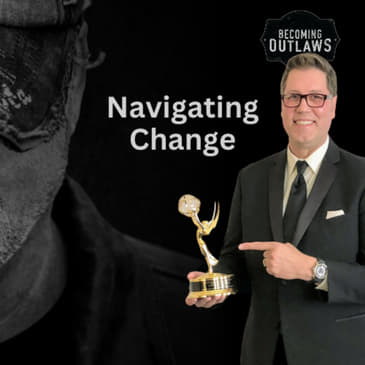

Following his life as a professional basketball player, Kurt A. David re-created his success by discovering 5-Keys for successfully navigating Sudden Change. These time-tested processes continue to help highly-successful individuals and organizations successfully Lead Change, Communicate Change, and Face Change Like a Champion.
Kurt is also an Emmy Award winning host and producer of the highly acclaimed television program, 'From Glory Days.'
Kurtdavid.com
00:00:11
There's one thing in life we all have.
00:00:15
It's change. A lot of change is good.
00:00:18
It's change we wanted to do. We planned on it.
00:00:21
We could have planned for years for it, and we make changes in
00:00:24
life. But there's another kind of
00:00:26
change as an unexpected change, a change we didn't want, we
00:00:31
didn't expect. And that's also a part of life.
00:00:35
And that one is hard to handle sometimes.
00:00:39
Well, most of the time, years ago, I just Googled it earlier.
00:00:43
I can't believe it's still out there being used.
00:00:45
But there's a in the business world when things change like,
00:00:49
you know, structure change in a company or whatnot.
00:00:53
I years ago, I came from the broadcast industry and there was
00:00:56
just always format change. Well, format change means they
00:00:59
went from like country to classical or something like
00:01:02
that. And that just means everybody
00:01:03
lost their job almost and but how do you handle that?
00:01:08
And they had. And it's still out there, but
00:01:10
this business model called Who Moved My Cheese?
00:01:14
So you may or may not have heard of that before, but that's a
00:01:16
term I've always remembered, who moved my cheese?
00:01:18
And the idea was it's this cartoon, if I remember it right,
00:01:23
basically these mice, you know, and they know where how to get
00:01:27
to their cheese every day. They know how to go through the
00:01:29
maze and get to the cheese. Left, right, left, right, left,
00:01:32
left, left, left, right, whatever.
00:01:33
They find the cheese. Well, one day the cheese is
00:01:34
gone. Somebody moved their cheese and
00:01:37
one handles it. Well, one doesn't.
00:01:41
So change can. So one of the mice, he's
00:01:43
paralyzed. He doesn't know what to do.
00:01:44
So, you know, you got to move on.
00:01:46
You got to not overthink it and go look for new cheese.
00:01:49
There's, you know, and frankly, it's not bad scenario this move
00:01:55
my cheese. But it's a little insulting.
00:01:56
I mean, it's like if you've lost the love of your life, walks
00:02:00
out, you're in the middle of your career, near the end of
00:02:03
your career, and it ends and you're without a job or you're
00:02:07
alone, Everything you thought was stable gets pulled out from
00:02:12
underneath you. I really feel a little insulted
00:02:14
to think about these two mice or whatever.
00:02:17
And this cartoon cheese, it's a, you know, it's a little light.
00:02:22
So I appreciate we have on here an adult today talking about
00:02:26
this adult conversation. How do you handle change in your
00:02:31
life? And it's Kurt A David.
00:02:34
We're going to bring them on, but we're also, I'm going to
00:02:37
watch with you, a little video from his website right here.
00:02:43
Class athletes backed up. Normal everyday life can be
00:02:46
daunting. As a professional athlete
00:02:48
myself, I know first hand the struggles to find passion and
00:02:51
purpose again when those glory days are over.
00:02:55
But it's not just high caliber athletes who face change.
00:02:57
Companies large and small risk losing momentum having unfocused
00:03:01
employees. And may ultimately experience
00:03:02
the frustration of watching your company's core purpose become
00:03:05
compromised. I've been fortunate enough to
00:03:07
speak to hundreds of companies and share the personal stories
00:03:10
of former professional athletes that often go untold.
00:03:13
My goal with every speaking opportunity is to leave the
00:03:15
audience inspired and hopeful and share the five commonalities
00:03:17
of success that will help you thrive during change.
00:03:21
Allow me the opportunity to serve your team by sharing
00:03:23
stories and principles and how to create positive leadership
00:03:26
and resolve conflict while building a better team ready for
00:03:29
change. With every invitation to speak,
00:03:31
I'm happy to discuss your specific situation and how my
00:03:34
life, my stories, and my work with highly successful
00:03:37
individuals and companies can help your team.
00:03:39
Let's start the. Conversation By sending an
00:03:41
e-mail to kurt@kurtdavid.com. Your company does not have to
00:03:45
face change alone. Allow me to help you face change
00:03:47
like a champion. Here he comes.
00:03:51
Hello, Kurt. Hey, Ken, how are you?
00:03:54
Very good. I don't know if you've ever
00:03:56
thought of this, but for your career as it progresses, and
00:03:59
maybe a decade or two down the road, that face changed.
00:04:03
Like a champion, you could be a Depends Undergarment
00:04:07
spokesperson. Lots of change going on.
00:04:11
We could go from from birth to death basically with change,
00:04:14
right? I mean, that's the the neat
00:04:15
thing about change. It's it literally is from birth
00:04:17
to death. And so and and along that whole
00:04:20
journey. I couldn't help but notice that
00:04:23
you mentioned about who Moved my cheese.
00:04:24
One of my favorite books, right? Spencer Johnson.
00:04:26
Dr. Spencer Johnson Forward by Ken Blanchard.
00:04:29
You know, the author of The One Minute Manager.
00:04:32
Great reads. If you haven't read that,
00:04:33
definitely Move Move My Cheese is a great book.
00:04:35
Simple yet effective. I might have been too harsh
00:04:38
about it, but it does have a good it has good principles in
00:04:41
it. Absolutely.
00:04:42
Yeah. Great lesson.
00:04:43
Good. Good principles is right.
00:04:45
All right. So you briefly what's what's
00:04:49
your story? I'm assuming you talk about
00:04:51
being a professional athlete and I know the answers to these.
00:04:54
You're like 8 foot nine and you weren't a professional limbo
00:05:00
person. Yeah, 4 foot and 33 inches
00:05:02
actually is what it was. For those of you that got a A in
00:05:04
math, if you got a C in math, I'm 5 foot and 21 inches.
00:05:08
If you'd hear the metric system, I'm 2 meters, 6 centimeters if
00:05:11
you failed math, I'm 6 foot nine.
00:05:13
So. I grew up.
00:05:14
There was a family of eight with one bathroom.
00:05:17
So you learned early on that life isn't all about you.
00:05:19
But all six of us kids are on athletic scholarship and two of
00:05:22
us played professionally. So imagine that.
00:05:24
I mean, I can't imagine how my parents clothe and fetus that
00:05:27
whole time, but we had a lot of sports, very competitive and
00:05:32
that was my foundation, right? That's how I was raised and and
00:05:35
that was the foundation of for the rest of my life and you
00:05:39
played basketball for who? Played college at Saginaw Valley
00:05:43
State and played overseas in Europe and European League.
00:05:46
OK, And that's the genesis of your message now, right?
00:05:52
Something happened there. Yeah, yeah, like they say, every
00:05:55
professional athlete at some point loses their job, right?
00:05:58
It's an undeniable fact and and mine was at a time that I didn't
00:06:02
expect, right. It's one of the things about pro
00:06:04
sports is you expect to play forever for as much money as you
00:06:07
can and. And unfortunately, that's not
00:06:09
the reality, right 100% of professional athletes ultimately
00:06:12
lose their job. And then I discovered through my
00:06:15
journey that the exit stats are pretty sobering.
00:06:18
And and if you want, I can share those exit stats again. 25% of
00:06:22
NFL players are broke within the first year out. 78% of NFL
00:06:27
players within two years are broke, 60%.
00:06:31
Six zero of NBA players are bankrupt within five years, and
00:06:35
there's an 80% divorce rate. So from job loss to disaster,
00:06:40
that's reality for pro sports and pro athletes.
00:06:42
And so, you know, as I went through my journey, one of the
00:06:45
things I thought was, boy, wouldn't it be neat to sit down
00:06:47
with other former professional athletes and hear about how they
00:06:50
recreated their success, right. Could you hear about those crash
00:06:53
and burn stories? Right.
00:06:54
But how do we sit down and find out people that have created
00:06:57
success? And there's been plenty of
00:06:59
those, you know, And that was been a neat thing, that.
00:07:02
I came up with my idea for the book to sit down with other
00:07:04
former athletes. And so I sat down being here in
00:07:06
Detroit, sat down with twenty former Detroit Pistons, Tigers,
00:07:10
Red Wings and Lions, and heard their story not just about their
00:07:13
glory days, but about that transition out of sports and
00:07:16
more importantly, how they recreative success after sports.
00:07:21
I kind of get the 80% divorce rate because if that follows,
00:07:27
and I mean this is stereotypical, maybe on the
00:07:29
average, but they probably attract women that were
00:07:33
attracted to them as celebrities, millionaires.
00:07:38
And then when they're former celebrities and former
00:07:40
millionaires and they're broke, I can see that possibly, you
00:07:45
know, reason for losing a lot of their personal relationships.
00:07:49
But what is this broke thing when you have 10s of 1
00:07:52
in the bank? Yeah, yeah.
00:07:54
No, I want to address that as well because you know, certainly
00:07:57
there are people out there that are.
00:07:59
Cheating on their wives or having extra mental affairs
00:08:01
perhaps. But think about this.
00:08:03
I don't care how much money you make, if you are accustomed to
00:08:06
being on road six months out of the year and all of a sudden
00:08:10
your toe to toe with your spouse every single day with a 95% pay
00:08:13
cut, what relationships going to survive that, right?
00:08:17
That's the reality. And so yeah, you know, you go
00:08:20
from this legendary status and you're the guy, you're the girl
00:08:24
you don't and female sports. But also now it's like.
00:08:28
Wait a minute. What happened here?
00:08:29
Now I'm. I'm not the guy.
00:08:30
The phone's quiet, right? That's that's one of the biggest
00:08:32
concerns I hear is, hey, nobody's calling me anymore,
00:08:34
right. It's not the same.
00:08:36
And so you know, funny thing is a lot of the guys say why is it
00:08:39
when I'm making all this money that I get free cars, free
00:08:43
dinners, free suits, but all of a sudden I stop making all this
00:08:45
money and I got to pay for everything.
00:08:47
It's so that's that's one of the inside jokes as well.
00:08:49
But back to your question about that, that you know the broke.
00:08:52
You know, a lot of these people when they get into pro sports,
00:08:55
it's sudden wealth. And it's the same thing with the
00:08:56
these lottery winners. You hear about these stories
00:08:59
where they suddenly have wealth and a lot of them don't have the
00:09:02
financial literacy to support it, right.
00:09:04
They come from different upbringing that money.
00:09:07
You know, handling money isn't always the first priority in
00:09:10
learning how to do that. I know in Major League Baseball,
00:09:13
they're trying to to do something to help with that.
00:09:16
In fact, when you sign a Major League Baseball contract these
00:09:18
days, you have to have a financial advisor on your hip.
00:09:21
When you're signing a contract however it it you know the
00:09:24
problem is advice is only as good as it is heated.
00:09:27
So it's still your money as an athlete.
00:09:29
And so if you're you know, want to buy a car, want to buy a
00:09:31
Rolex, want to buy you know houses, whatever, it's still
00:09:34
your money to make that decision and so a lot of it's decision
00:09:37
making candy. Your question though, I think
00:09:40
you know, I I use example Mike Tyson.
00:09:42
You know Mike was a ferocious, unbelievable boxer right?
00:09:45
Made a $300 million during his career.
00:09:49
Think about that for a second. He made $300 million during his
00:09:52
boxing career. I mean that's more than some
00:09:54
countries gross domestic product and lost it.
00:09:57
It was all gone. And part of it for Tyson was
00:10:00
that, you know, he had people robbing them blind, right?
00:10:03
Is is people were were taking advantage of them, but also he
00:10:07
was making decisions, you know did he really need all those
00:10:09
white tigers and in other decisions he made.
00:10:11
So it's combination, you know some of it's some of our own
00:10:14
faults. Some of it's just from people
00:10:16
that were. You know, looking to take
00:10:18
advantage of of athletes as a result.
00:10:21
Yeah. Would you, would you say some of
00:10:24
that 20% of relationships that do work, do they fall under kind
00:10:28
of like the Hollywood ones where they have these lifelong
00:10:32
partners? If it seems like typically those
00:10:35
rare circumstances are when they had somebody before they were
00:10:38
famous, when they had the, when they were scrounging to pay rent
00:10:43
and they built the real love. And then they became felt famous
00:10:49
and wealthy. And it really doesn't matter if
00:10:50
they lose that later or not, because that was it was built on
00:10:55
caring for each other, not built on this.
00:11:00
Yeah. No, that's a great point, Ken,
00:11:02
that a lot of them have that foundation before they got to
00:11:04
that status. I mean, a lot of them were.
00:11:06
You know even in junior high they they know as an athlete you
00:11:09
know you hey boy, you're ahead of the curve here, right.
00:11:12
Unless you're Michael Jordan getting cut your freshman year
00:11:14
in high school. Most of them by by junior high.
00:11:16
Definitely by high school. Know that hey boy this this
00:11:19
person's on a path, right? They they know the path they're
00:11:21
on because they are outliers in sports.
00:11:24
But even then you know, yeah those relationships that are
00:11:27
grounded and and I'll give you a great example, Franklin Anna is
00:11:31
a good friend of mine. Frank played 21 years in Major
00:11:34
League Baseball, Detroit Tigers. Yeah, Detroit Tigers, You know,
00:11:38
different teams throughout his career, 21 years.
00:11:40
That's a long time to play Major League Baseball.
00:11:42
But, you know, been married for many, many years.
00:11:44
And I think one of the things that helped him be grounded was
00:11:47
that he realized that baseball was just what he did.
00:11:49
It's not who he was, right. And so having that attitude,
00:11:53
having that thinking and it's the same way in relationship,
00:11:55
right? Hey, you know, baseball is just
00:11:57
what I do. It's not who I am.
00:11:59
I'm a father, I'm a husband and and you know that's probably one
00:12:02
of the biggest challenges. I think the athletes that have
00:12:04
the biggest struggle with this transition after sports, that
00:12:08
sport is their identity and that's the problem because when
00:12:11
that is gone and it will be gone when that sport is taken away,
00:12:14
they lost their identity as well.
00:12:15
I had a little bit of that, you know, not not a tremendous
00:12:18
amount, but I had a little bit of that as well.
00:12:20
But you know, we have to understand that the sport is
00:12:22
just what we do. It's not who we are.
00:12:24
We have to figure out who we are, hopefully before playing
00:12:26
that sport, but if not, certainly.
00:12:28
Before we're done, yeah. And Frank Tanana came to faith
00:12:34
through the Tigers chaplain Jeff Totten at some point years ago.
00:12:39
But would you, do you ever hear from some of these guys, stories
00:12:42
that have landed on their feet or recovered, that they have
00:12:45
found some kind of faith that gave them structure to live by
00:12:50
where they're just not themselves?
00:12:53
Fame in a in a checkbook. Yeah, we all need it.
00:12:57
You know, we all need that higher understanding and purpose
00:13:00
in our life, right? We all do.
00:13:01
I thought, you know, my opinion is that we have all have a God
00:13:04
shape void in our life and we find things that we try to fill
00:13:08
it with, right? Whether it be alcohol, drugs,
00:13:10
sex, whatever it is, you know, we try to fill that void, but
00:13:13
it's a God shape void. Until we find that grounding,
00:13:16
it's going to be difficult. It's going to be challenging for
00:13:18
us to really. Fill it appropriately.
00:13:21
And and Frank, you know, I, I know Frank stories, but I
00:13:23
interviewed him from my book, interviewed him on the TV show.
00:13:25
I've done 50 TV interviews with different athletes and Frank was
00:13:29
one of them I interviewed and he talked very openly.
00:13:30
He says, you know, the 1st 10 years of my baseball career, I
00:13:34
wasn't the guy that I am today, right?
00:13:36
I was the guy that wasn't on Christian.
00:13:37
And as a result, you mentioned about Jeff Totten being a
00:13:41
chaplain with the Tigers. He's the one that connected and
00:13:43
Frank as a result of some very difficult times.
00:13:48
Losing a very close friend got injured and wasn't sure what his
00:13:52
career was going to do. It really was at a moment of I
00:13:55
don't want to despair wasn't despair, but certainly a moment
00:13:58
of questioning life and questioning things that he came
00:14:01
to Christ and as a result, you know, he, Frank the Nanas claims
00:14:05
himself, hey, I'm a Jesus freak, right?
00:14:07
I'm out there just preaching and helping people and trying to
00:14:10
tell them my story, right? So back to your story.
00:14:16
You're playing basketball and you injure yourself and to the
00:14:21
point where you're not going to be able to do this as a
00:14:23
profession. And so you didn't have a Plan B,
00:14:27
right? You didn't have your business
00:14:28
degree or a dad's company to walk into.
00:14:31
You were just a basketball player that can't play
00:14:35
basketball. Well, fortunately for me, you
00:14:37
know, I I knew there was something wrong, right?
00:14:40
I knew there I could tell right away.
00:14:41
I'm like, oh boy, this is not going to end well.
00:14:44
I was over in Europe playing hyper extended, hyper extended
00:14:46
my knee. I knew I damaged it right away.
00:14:50
I did come back because I did have free agents to try out.
00:14:53
Out in San Francisco was eighteen of us by invite only.
00:14:56
So there were scouts from all over the country and coaches
00:14:58
that came for that tryout. I was the toughest 3 days of
00:15:00
basketball I've ever had. But I knew something was off.
00:15:03
And two weeks after that tryout, I went in for knee surgery and
00:15:06
found out it was time to get a real job, basically the
00:15:09
orthopedic surgeon, and said, hey, yeah, you know, you can
00:15:11
keep playing and not walk by the time you're 40 or you can give
00:15:14
it up, right. And so that was the sobering
00:15:17
aspect for me. But I think that probably the
00:15:19
most difficult part was realizing that here I was, you
00:15:23
know, prime of my life as far as an athlete, and it was over.
00:15:26
Absolutely over. And I remember being angry,
00:15:29
having all sorts of feelings. Probably the biggest part of my
00:15:32
transition, Ken, that was very difficult was that as an athlete
00:15:37
we're in competition with every soul around us.
00:15:39
And what I mean by that is that even our own teammates, right,
00:15:42
we're competing for playing time, we're completing for, you
00:15:45
know, performance and and not just our our competition of
00:15:48
people we play against. And it took me about five years
00:15:51
to really relax, to realize, you know what, I'm not in fierce
00:15:54
competition with every soul around me, right?
00:15:56
Is there competition and work in business?
00:15:58
Absolutely. So one of the fortunate things
00:16:01
that I had, though, was I made a commitment to finish my degree
00:16:04
before I left to play over in Europe.
00:16:05
And so I finished my degree before leaving for Europe.
00:16:08
So I had a. Elementary education degree that
00:16:10
I completed before I went over. So when I got done, I I actually
00:16:13
started teaching and coaching. I became a varsity coach and
00:16:16
that was part of my transition. But I also I took a year off.
00:16:20
Were you teaching elementary school?
00:16:22
I was teaching middle school and some elementary classes.
00:16:24
Yeah, but I was a I couldn't imagine being an elementary
00:16:27
school student with a. Teacher that 69.
00:16:30
Yeah, no. And I didn't do that young.
00:16:31
That was too young for me. I would have hurt my back,
00:16:33
right, Doing kindergarten kids. But, you know, I took a year off
00:16:36
before I started that, and part of what I did during that year
00:16:39
was working on a master's in counseling.
00:16:40
So I I didn't teach very long, and I actually got it right into
00:16:43
counseling. I became a middle school
00:16:44
counselor and that's what I did for over 25 years.
00:16:48
And so I was a middle school counselor, various school
00:16:50
districts coaching basketball. But during that times when I
00:16:53
came up, the idea for the book and the the TV show.
00:16:56
And so that was a very interesting transition because I
00:17:00
went from helping kids, helping families to helping athletes and
00:17:04
helping people with their transition.
00:17:06
But you come up with five rules of 6/6.
00:17:10
Yeah, no, great question, Ken. I I discovered through my
00:17:13
research from working with professional athletes.
00:17:16
And actually other companies as well that were going through
00:17:19
transition that I saw a commonality of success.
00:17:22
In other words, what I saw there was five things that every
00:17:25
athlete and a lot of the companies were doing as they go
00:17:27
through a transition. And so being the simple mind
00:17:30
that I am, I thought, boy, I got to create an acronym, right?
00:17:33
I need to create an acronym and that acronym is, is, is rules,
00:17:37
are you LES. Each letter stands for
00:17:39
something. Each letter means something.
00:17:41
And that's why it helped me remember when working with
00:17:43
athletes, working with companies.
00:17:45
And so I I call them my 5 Rules of Success or Five Rules of
00:17:48
change that I used to this day to help people go through that
00:17:51
transition. And you're willing to share the
00:17:54
secret with us? Yeah, of course.
00:17:56
Yeah. It's not a secret.
00:17:57
It's out there. And you know, we're doing so
00:17:58
many other things now as far as, you know, with the TV show and
00:18:02
leading change and communicating change.
00:18:04
So basically that the five rules of change are this.
00:18:07
Each letter stands for something.
00:18:08
The first letters are, which stands for refocus.
00:18:11
What I've discovered is that any athlete, professional athlete or
00:18:14
anybody going through a change for that matter, has to have a
00:18:17
refocus. And what that means is that
00:18:20
taking a good look at your current goals and reevaluating
00:18:23
and refocusing to new goals and we could, we could dive very,
00:18:27
very deep into this. In fact, I do with workshops
00:18:29
sometimes I'll dive deeper in with people or organizations to
00:18:32
really look at what this refocus looks like.
00:18:35
But one of the things I found is that we all need passion and
00:18:37
purpose in our life and. And one of the best ways to do
00:18:40
that is to find a new passion, to find a new purpose, to find a
00:18:43
new goal and objective. You know, it was so easy as an
00:18:46
athlete can to set goals and look to accomplish those goals.
00:18:51
I remember in the prime of my playing days, I'd have a sheet
00:18:54
on my bedroom wall, but I would see every day as I left my
00:18:57
bedroom that had morning workout, it would have the
00:19:00
afternoon workout, I'd have the evening workout.
00:19:02
I mean, I was working out three times a day and it was easy to
00:19:04
have those goals, you know, three month goals, six month
00:19:07
goals, 12 month goals. And that was very easy and as an
00:19:10
athlete to do. But all of a sudden then when I
00:19:11
was done being an athlete, it's like wow, what do I want and how
00:19:14
do I, you know, what are, what are my goals?
00:19:16
And it takes a while. And so that's why the refocus is
00:19:19
very, very important for individuals as well as
00:19:21
companies. And again, we can go very deep
00:19:23
in this, but that's the the crib note version of it.
00:19:25
So they are stands for refocus, the next letter stands for use
00:19:30
network. In other words, use your network
00:19:32
or we all have a network of people around us.
00:19:35
And you know, especially athletes, right?
00:19:37
We have too big of a network sometimes of people around us,
00:19:40
but using that network. And what I mean by that is once
00:19:42
you have your refocus, you have a clarity of where you want to
00:19:45
be. It's just a matter of tapping
00:19:47
into that network to say boy, who who in my network can I tap
00:19:51
into to help me accomplish this goal Now something I always have
00:19:55
to qualify and say is I'm not talking about using and abusing
00:19:58
people, right? You create a win.
00:19:59
Win. In other words, if I have a
00:20:01
refocus and. You know, it gave her a great
00:20:03
example. One of the guys that I worked
00:20:04
with, he was an Olympic gymnast, right?
00:20:05
He won a bronze medal Olympics and he wanted to transition out.
00:20:09
And so when he finally did decide to transition out, one of
00:20:12
his networks that he tapped into was in Hollywood and he started
00:20:16
doing Cirque du Soleil because he was a gymnast.
00:20:18
So he worked for Circus Soleil for a while.
00:20:20
Then he got into stunt acting and through his network and
00:20:24
connections was able to get into that.
00:20:25
It was kind of neat to see because he had this new focus
00:20:28
and then he started using that network.
00:20:30
I had a former Red Wing that used his network to talk about
00:20:34
how he's no longer being a professional hockey players, a
00:20:37
financial advisor. So by tapping and it was a
00:20:39
network, he accelerated his business that much quicker as a
00:20:42
result. So EU stands for using your
00:20:43
network, very important aspect and and understanding the power
00:20:48
of that, right? All of us have powerful networks
00:20:50
that we can tap into once we have clarity of what that
00:20:53
refocus is. You know this podcast here.
00:20:57
Really. Well, I when I started it, I put
00:21:00
up a web page for it and basically said not doing this to
00:21:04
be Internet famous for really no other reason than I've lived the
00:21:10
interesting life. I met a lot of interesting
00:21:12
people and it it all started out with me reaching into my network
00:21:16
and just grabbing those people and sharing old stories that
00:21:18
other people might find interesting or entertaining.
00:21:23
And it's kind of groaned since that.
00:21:25
Yeah. And you had to refocus because
00:21:27
you knew exactly what what you wanted to do once you did reach
00:21:29
out to those people, right. You were just reaching out to
00:21:31
them aimlessly without an idea what you wanted to do.
00:21:34
But you had an idea. So a great example.
00:21:36
Absolutely. So the RUL, the next letter bar
00:21:40
none without question, without argument, is the most difficult
00:21:42
for professional athletes. And that's letting go, letting
00:21:46
go. Because, you know, as
00:21:47
professional athletes, it's in the mirror of our bones to never
00:21:50
give up, Right. Fall down 7.
00:21:52
Get Up 8. In fact, we've seen that with
00:21:54
athletes throughout the the decades, throughout the years
00:21:57
that athletes didn't let go probably when they should have,
00:22:00
right? They come back and keep hanging
00:22:02
on and and so it's very difficult because, you know,
00:22:04
letting go is one of the most difficult aspects for an
00:22:07
athlete. But actually I found that it's
00:22:09
very difficult in life as well. And here's why.
00:22:12
We have something that's called our familiar zone, right?
00:22:15
It's a it's a zone that we live in that we are very comfortable
00:22:20
with. It's a comfort zone.
00:22:21
But I've also discovered when it comes to change that we have to
00:22:24
leave that comfort zone and reach the growth zone.
00:22:26
In other words, it's very, very difficult, if not even
00:22:29
impossible to remain in a comfort zone and have a growth
00:22:32
zone. So we have to leave that area of
00:22:35
growth or I'm sorry, that area of comfort, that area of
00:22:38
familiarity, which means letting go.
00:22:41
Now, letting go could come in a couple different ways.
00:22:43
It could be letting go of bad things, bad thoughts, bad way of
00:22:46
thinking, bad practices. It could also be letting go of
00:22:50
victories, championships, things that we've accomplished, right?
00:22:54
A great example of that is I'm a history buff, I love history and
00:22:58
I studied the Roman Empire. And if you look at the Roman
00:23:00
Empire, one of the things that you'll learn in the Roman Empire
00:23:02
is that these generals, when they came home from conquering
00:23:05
lands, had these major parades in Rome, right?
00:23:08
It's kind of like a Super Bowl parade.
00:23:09
In other words, let's say a general came home from
00:23:11
conquering Alexandria as an example.
00:23:14
So they come home from a conquering Alexandria.
00:23:16
They have these big parades. They call them campaigns.
00:23:18
If you look in history, they're called campaign during the Roman
00:23:21
Empire and during this campaign they're they're in the streets
00:23:24
of Rome getting all these accolades.
00:23:26
It's such a big deal, their families and a chariot following
00:23:28
them. But you can read this in history
00:23:31
as this general is getting all this attention and all these
00:23:33
accolades, they have somebody in his chariot chirping his ear
00:23:36
during that time saying all glory is fleeting, all glory is
00:23:42
fleeting. In other words, great, you
00:23:43
accomplish that. So what what's next?
00:23:46
And that can be part of letting go as well.
00:23:48
So sometimes we let go of the bad things, bad thinking, but
00:23:51
also let go of the championships and the victories as well in
00:23:53
order to move forward. I love that story about the
00:23:57
Romans, and it's really, I mean, it makes sense, but it's kind of
00:24:00
surprising. I mean, they're just so full of
00:24:02
kind of like arrogance in their culture, but then to have a
00:24:05
level that they don't pass up, you know, like you can't.
00:24:08
You're not a God. Well, you know, if you look at
00:24:11
pro athletes, we're, we're considered, you know, and I
00:24:14
don't mean this in a literal sense, but we're considered like
00:24:16
gods in, in a sport, right? Let's like, wow, you're a pro
00:24:19
athlete. And.
00:24:20
And so as a result, you know, letting go, that is very
00:24:23
important, right? A great example of that is this,
00:24:26
this gymnast that I mentioned, it was Olympic bronze medalist.
00:24:30
He and I were chatting for a long time, probably about six
00:24:34
months before he finally let go. He couldn't decide.
00:24:36
He's like, boy, do I want to continue and commit another four
00:24:38
years of my life, do I not? So we were going back and forth
00:24:41
working through this rules process, but we couldn't get
00:24:43
past letting go. In contrast to that, I had a
00:24:47
former Detroit Tiger that the agent called me and said, hey,
00:24:50
listen, can you sit down with my player?
00:24:52
He just got released in spring training, so I'd sat down with
00:24:55
them. We started working through this
00:24:56
rules process. RUL got to the letting go and we
00:24:59
start talking about this within a week.
00:25:01
I mean, he literally had let it go.
00:25:02
He's like, yeah, I'm done being a pro athlete.
00:25:04
I'm ready to move on with my life.
00:25:06
And so everybody's different with their letting go process,
00:25:08
right. It's it's kind of like grieving,
00:25:09
right. Everybody's different with their
00:25:10
grief and how they let go of things.
00:25:13
And so there is no timetable per se.
00:25:15
But I can tell you this, the sooner we let go, the sooner we
00:25:19
can get through that transition more successfully.
00:25:21
So that is important. The next what Excuse?
00:25:24
Me there, you see a little bit of the letting go on athletes
00:25:28
that have done everything that they possibly could.
00:25:32
They've gotten all the rings and the championships.
00:25:36
And they're past their prime, but they just can't let it go,
00:25:41
even though nothing was taken away from them.
00:25:44
They just can't leave that godhood status, even though
00:25:47
they'll always kind of have it. They just have to keep going
00:25:51
till they break something or they humiliate themselves and
00:25:54
the younger people take over, but they're going to ride that
00:25:57
thing as long as, yeah, so it's. Kind of embarrassing.
00:26:01
Well, you know, in one sense, why wouldn't you?
00:26:03
If I go and and if I were to tell you, Ken, boy, when you
00:26:06
leave this, you're going to take a 95% pay cut, right?
00:26:09
I mean, you're going to want to leave that from a financial
00:26:11
standpoint. Are you going to want to leave
00:26:13
it from, hey, you're going to get free suits, free cars, free
00:26:16
meals. And then when you get out,
00:26:17
you're not, right. And you're going to go from
00:26:19
inside the locker room to outside the locker room.
00:26:21
You're going to go from getting all the support in the world
00:26:23
that you needed to. Now you got to find your own
00:26:25
support. I mean, I could go on as well.
00:26:27
And so those are the things that make it difficult to let go,
00:26:30
right. That's the reality of it.
00:26:32
And so, but it's not just pro athletes, right?
00:26:34
I found with companies as well, working with certain companies
00:26:37
that there's certain practices and policies.
00:26:39
Now, you know, you mentioned at the beginning that sometimes
00:26:42
change happens and you don't plan it, plan on it, right.
00:26:45
I mean that's that can be very difficult because it's like,
00:26:47
whoa, we didn't plan on this change.
00:26:49
And and one of the most difficult aspects of that is
00:26:53
what I mentioned earlier, we're very comfortable.
00:26:55
We're very familiar. Then all of a sudden, Oh my
00:26:57
goodness, now there's some companies that change software
00:27:00
that causes discomfort because it's like, oh man, we're going
00:27:03
through the software change. There's other companies that if
00:27:06
they don't change, they're going, they're closing their
00:27:08
doors, right. And so it's more serious and
00:27:11
it's like, Oh my goodness, we if we don't change, we are
00:27:13
literally closing our doors next week.
00:27:15
And so, you know, that change is going to happen.
00:27:18
It's just a matter of do we want to change on purpose, for
00:27:21
purpose or do we want to let change change us, so to speak.
00:27:25
And that's that's one of my approaches.
00:27:27
And then it's kind of the tagline change on purpose, for
00:27:29
purpose. And by doing that you prevent
00:27:32
that you know as much as possible unexpected change that
00:27:35
you are forced to do as a result.
00:27:39
All right. What's E E stands for?
00:27:41
Execute your plan. What that means is that during
00:27:44
the refocus stage, it's kind of the, you know, the strategic
00:27:47
planning, you know, objectives, goals.
00:27:50
And one of the things I've learned about change is it's
00:27:53
rarely, rarely one and done. In other words, boy, I have my
00:27:56
refocus. I'm using my network.
00:27:57
I'm letting go, oh, my goodness, we, we got through it very
00:28:00
successful. It's really that way.
00:28:02
And I like using the the imagery of a water pump, right, the old
00:28:05
water pump with a handle where you have to pump it and
00:28:09
sometimes you have to prime it, then you have to pump it again.
00:28:11
Those oldfashioned water pumps that had a handle, you know,
00:28:15
sometimes every once in a while you'll pump it once you get
00:28:17
water, but very rarely you have to pump it.
00:28:19
Sometimes you have to prime it again, right?
00:28:21
And it's that way with with the process of change.
00:28:25
Sometimes we plan something, we have a refocus, we start tapping
00:28:29
our network, we let go of things and it's like, ooh, this isn't
00:28:31
working. And that's why I like using the
00:28:34
PDCA process during this, this stage of change.
00:28:38
You plan, you do, you check and adjust.
00:28:40
And this is where most people fail.
00:28:42
They plan something, they plan this change, they do it, they
00:28:45
check the results and it's like, oh, it didn't work.
00:28:48
Well, then you have to adjust and do it all over again.
00:28:51
Right. And this is where the execution
00:28:52
is very important. Great example of that is there's
00:28:57
a friend of mine by the name of Dave Bing.
00:28:58
Dave Bing was a high school Allamerican basketball player in
00:29:01
Washington, DC He went on to be a all Allamerican player at
00:29:05
Syracuse University. He went on to be a number one
00:29:08
draft pick of the Detroit Pistons.
00:29:10
I wanted to become a NBA Hall of Famer, considered one of the
00:29:13
best NBA players in history, Went on to build a $400 million
00:29:17
a year business and then he went on to become mayor.
00:29:19
Detroit and Dave Bing throughout his whole time could have easily
00:29:28
all those changes that he did could have easily rested on his
00:29:32
laurels like, oh, Okay, you know, I'm, I'm a Hall of Famer.
00:29:36
I created a big business. I've been mayor.
00:29:38
You know he continues to give back and he continues to execute
00:29:41
his change and plan throughout his life, which is great.
00:29:45
I mean it's just one of many examples.
00:29:46
And so executing your plan is very important understanding
00:29:49
that that's where the grit comes in, that's where the continuing
00:29:52
the process of change needs to come in as well.
00:29:55
Hey Kurt, I you know you mentioned Dave being being the
00:29:59
mayor of Detroit or former mayor of Detroit.
00:30:01
What was Lynn Swann? Was he like the mayor of
00:30:03
Pittsburgh? You know, I think he was.
00:30:06
Was it the city mayor? Yeah, Because he.
00:30:09
Yeah, it was something like that.
00:30:10
You're right. I'd have to look it up to see
00:30:11
what it was. But.
00:30:12
So a lot of these guys, yeah, a lot of these guys because of
00:30:16
their name recognition, right? They they were like, oh wow, who
00:30:19
was the other one? There was another one that was
00:30:20
like the mayor. When I when I was growing up.
00:30:23
You know, I was in the 70s, so I love the Pittsburgh Steelers
00:30:26
four times. Super Bowl, whatever.
00:30:28
Terry Bradshaw. Lynn Swann.
00:30:29
So, Lynn Swann, Rocky Flyer. Lynn Swann is my all time
00:30:36
favorite athlete. Why?
00:30:38
Why is that? I loved wide receivers.
00:30:43
I love the Pittsburgh Steelers. And of course, when you're a
00:30:46
kid, you're like whoever's winning, you know?
00:30:49
Yeah. You like And that Steelers they
00:30:51
ruled the 70s? So I love the Steelers and but I
00:30:57
particularly like Lynn Swann. He could catch anything.
00:31:00
And I remember watching some kind of special on him back
00:31:03
then. How was he doing it?
00:31:05
And he was like, he took professional ballet lessons
00:31:10
where he could run and leap and he'd stretch all those muscles
00:31:15
for ballet practice, and then they would show and side by side
00:31:19
him doing ballet, which seemed weird.
00:31:22
But then they'd show him in play or at a Super Bowl, doing the
00:31:25
same leap over the Rams heads and catching.
00:31:28
So Terry Bradshaw was like one of the best quarterbacks in
00:31:31
history, but partly because he could just throw above people's
00:31:34
heads. And Lynn Swan?
00:31:35
Yeah, he had players. I meant mention that because
00:31:39
being a hero of mine, I actually was able to reach out and get a
00:31:43
hold of him and invite him on the podcast and he said no, he
00:31:48
said he doesn't do podcasts, but I was so.
00:31:51
Just to get an e-mail, well, we'll try to get Rocky player on
00:31:57
for you'll get one of the Steelers at least.
00:31:58
That'd be great. Hey, so funny story being here
00:32:01
in Detroit. Billy Simms, who most people
00:32:03
remember Billy Simms during his Detroit Lions days.
00:32:06
Heisman Trophy winner, short story.
00:32:09
And Billy Simms. Billy Simms grew up in St.
00:32:11
Louis, MO initially, and he was not in the football whatsoever.
00:32:15
Growing up in Saint Louis, he was in into baseball, but also
00:32:19
in the gymnastics. He was in the gymnastics.
00:32:22
And it wasn't till his eighth grade year that he moved down to
00:32:25
Texas to live with his grandmother that they're like,
00:32:27
hey, you're a phenomenal athlete, you need to play
00:32:29
football in Texas. But the reason why I bring that
00:32:31
up is if you look at a lot of his footage, you'll see a lot of
00:32:35
his gymnastic abilities come out during the football games,
00:32:38
right? Whether it be leaping, turning
00:32:40
his body, you know, he had a lot of body control you could see.
00:32:44
And so same thing as Lynn Swann from the ballet.
00:32:47
I think Billy Sims benefited a lot from his gymnastic days.
00:32:50
Yeah, those cross training things or whatever one some of
00:32:54
those are really play well into other sports.
00:32:58
So you have refocus, use, network, letting go, execution,
00:33:01
execute your plan. And last one stands for someone.
00:33:04
What I've discovered is that athletes and and individuals and
00:33:08
and organizations had a mentor, so to speak, one person in
00:33:11
particular that helped them to get where they were.
00:33:15
In other words, a good friend of mine by the name of Greg Kelser.
00:33:17
Greg played in the NBA for eight years.
00:33:19
That was after winning the championship with Michigan State
00:33:21
with Magic Johnson against Larry Bird.
00:33:23
You talk about the 70s. There's a pinnacle of that era
00:33:27
in basketball. In 1979 when they won that
00:33:30
against Larry Byrne. Anyway, Greg was, when he was
00:33:33
playing basketball, was really enamored by TV.
00:33:35
He was always enamored and he had somebody here locally at one
00:33:38
of the local stations in Detroit that he used to hang out with
00:33:41
that he would just say, hey, when I'm in town, can I just
00:33:43
come down to the studio and just watch what you're doing and
00:33:45
learn from you? So he did that for many years
00:33:47
and now as a result, Greg has been, I just talked to him a
00:33:50
couple weeks ago, 38th year of TV broadcasting for the Detroit
00:33:55
Pistons. And so he learned he had a
00:33:57
mentor early on that helped him do that as a result.
00:34:01
And I could give examples of corporate as well.
00:34:03
I mean, we talked of the Ford Motor Company talking about when
00:34:06
they were going through their downturn in 2008, when the whole
00:34:09
country was going through the downturn in 2008.
00:34:11
How did they survive? Well, they tapped into the
00:34:13
leadership of somebody that was used to be at Ford and then went
00:34:16
on to lead Chrysler during a very difficult time in the 80s
00:34:20
by the name of Lee Iacocca. And they had Lee Iacocca as a
00:34:23
mentor to say, yeah, you know, you went through this before.
00:34:26
How did you do this? Where were some of the things
00:34:27
you did? And so everybody can find a
00:34:29
mentor, you know, one person in particular, based on their
00:34:31
refocus. In other words, boy, this is
00:34:33
where I want to be. You know, this person's been
00:34:36
there and it doesn't necessarily have to be somebody older,
00:34:39
right? It could be somebody that just,
00:34:40
you know, is wiser or has information that maybe you want
00:34:43
to gather from that person and again creating the win win
00:34:46
relationship with that mentor. But that's what the S stands
00:34:48
for. So our stands for refocus, U
00:34:51
stands for using your network, L for letting go E execute your
00:34:54
plan, and S stands for someone or having a mentor.
00:34:58
Yeah, I love that. So I was just thinking I wrote
00:35:02
those down. So those are good business
00:35:06
principles, personal principles, any kind of change.
00:35:10
Let me ask you this, when it people of faith, it seems like
00:35:16
when change happens, it's handled in different ways.
00:35:21
There's 101 sermons that for people's disappointments or or
00:35:25
whatever. And it has to do with Providence
00:35:28
or God's plans, or he's doing this or he's doing that and.
00:35:33
Would you? I was thinking, like in a
00:35:39
Christian worldview, on a personal level, when something
00:35:43
happens in life that's disappointing, maybe even
00:35:47
heartbreaking or confusing. I don't know if, like, job loss
00:35:51
is heartbreaking, but it's something, yeah, it could be a
00:35:55
loss of a child, loss of a spouse.
00:35:57
I mean, it could be very serious, right.
00:35:59
And so, yeah, to me, it all boils down to this again, is
00:36:02
that I do believe in in, you know, here's, here's how I boil
00:36:07
it down. We either have to believe the
00:36:08
Bible is true or it's not, right.
00:36:10
I mean, it's that simple. And you either believe the
00:36:13
Bible's true or you don't believe it's true.
00:36:16
And if you believe it's true, there's many promises in there.
00:36:19
And one of the promises down the line of what you're talking
00:36:21
about is God promises that all things work out for our good.
00:36:26
In other words, it might be a horrific situation that we're
00:36:28
dealing with, but for some reason that's going to work out
00:36:31
for our good. I mean, it's hard to say that
00:36:33
when you think about a child, you know, suddenly passing or a
00:36:37
spouse after 50-60 years passing or, you know, it's like, boy,
00:36:41
how do I find the good in this? But that promise is in there.
00:36:44
And and I've seen that in my own life, right?
00:36:46
Where it's like, wow, why, why did this happen?
00:36:48
Oh, okay. Well, it did turn out better,
00:36:50
unfortunately. We don't always see that.
00:36:52
And especially, you know, I can personally tell you that often I
00:36:57
want to take control of my life. I'm like, oh, I'm going to do
00:36:59
this because that's kind of the athlete of me, right?
00:37:01
You're always just set your goals, you go after them.
00:37:03
And I found out that my shoulder was getting very sore from
00:37:06
trying to pound down doors that I shouldn't be pounding on.
00:37:09
And as a result, I've learned to trust.
00:37:12
You know, that's what it boils down to, is that that promise is
00:37:14
there, that we have to trust that all things work out for the
00:37:17
good. And so it may not feel like it
00:37:20
may not seem like it, but I I know that things work in
00:37:24
mysterious ways through God, and that it's a big belief of mine
00:37:27
that, you know, I have to trust. And one of my daily prayers,
00:37:31
Ken, is that God opens the doors that he wants me to walk
00:37:34
through. In other words, I I can have
00:37:36
plenty of doors that I'm pointing at or trying to open,
00:37:39
but I pray that God opens the doors that he wants me to walk
00:37:42
through. And when that happens, sometimes
00:37:44
I get surprised like, wow, how did this happen?
00:37:47
But then I realized, oh, OK, well, this is what I've been
00:37:49
praying for. God, open the doors.
00:37:52
Yeah, these five steps. What comes to mind for me is in
00:38:00
the in the faith aspect too is praying.
00:38:05
And faith isn't always just praying and waiting.
00:38:09
Even in Scripture there was taking action.
00:38:11
So to me, these can be combined. You pray, but you can also do
00:38:15
something. You know, Jesus would heal
00:38:17
lepers, but sometimes not right away.
00:38:20
He would say go cleanse in the temple.
00:38:21
He'd give them something to do. And as they went, you know, they
00:38:26
would be cleansed. And this is to me is like you
00:38:29
have a hurt, there's change. Some things take time to fall
00:38:32
into place. You can trust, like you're
00:38:34
saying at at the end all things work together.
00:38:36
But these are practical steps that don't step on faith.
00:38:40
But. I think and work together along
00:38:43
with faith, putting faith in action.
00:38:46
I mean, you've got to move. Yeah.
00:38:48
It's funny because one of the verses I do daily devotions, one
00:38:51
of the verses I read this recently, as a matter of fact
00:38:53
it's ironic, was talking about David and his Psalms, talking
00:38:57
about though we walked through the valley of death and
00:38:59
darkness, right. And one of the keys to that
00:39:02
verse is that we don't stand, we don't stand in the valley.
00:39:06
We don't stand in the darkness. We walk through it.
00:39:09
And I think that's exactly what you're talking about.
00:39:11
We keep moving as a result and and it's an important part,
00:39:14
right? We we might not exactly know
00:39:16
what that step next step is, especially if you're grieving
00:39:19
somebody, grieving a law. Sometimes you don't want to get
00:39:22
out of bed, right? But it's like, no, we have to
00:39:24
keep walking through that, whatever that might look like.
00:39:27
And so that's a great point you just brought up as well.
00:39:29
Yeah, that's a perfect burst. Because, yeah, not praying and.
00:39:36
Just expecting, standing there for the darkness to go away, but
00:39:39
just keep more, yeah. Or the manner to show up, right.
00:39:42
OK. God, just no.
00:39:43
Keep walking. Keep working.
00:39:44
Keep, you know, do whatever you need to do in order to make that
00:39:47
happen. And that's right.
00:39:48
Even then, they had to go collect the man.
00:39:50
It didn't just fall in their mouth.
00:39:52
Good point and chew it right. Right.
00:39:56
Hey, I appreciate your time and if people want to, our companies
00:40:00
are. Even large churches
00:40:03
organizations, right? Anybody going through change,
00:40:07
they're available to contact you through the website.
00:40:10
Yeah, absolutely. In fact, you know, being a man
00:40:12
of faith, I love sharing my faith.
00:40:13
I love. I love to go deeper into it.
00:40:16
But I also understand with certain organizations that it's
00:40:19
not something to necessarily be out in the front.
00:40:21
But everything has the principles.
00:40:22
I can tell you that right off the bat.
00:40:24
All my principles have to do with my faith and my foundation.
00:40:27
But. If you want to find out more,
00:40:28
you can go to kurtdavid.com KURTD avid.com.
00:40:32
That's the simplest place. Obviously I'm in LinkedIn as
00:40:35
well, so that's I do a lot of my navigating communication on
00:40:38
LinkedIn, Kurt A David and look forward to connecting with
00:40:43
anybody and seeing how I can help serve people.
00:40:45
I mean, my purpose on this earth can is twofold.
00:40:48
It's pretty simple, right? To serve God and to serve others
00:40:52
using the gifts and abilities that I've provided.
00:40:54
And so. You know, if it fits in with
00:40:55
those two objectives, serving God or serving others, I'm all
00:40:59
about it. You know, that's that's what I
00:41:01
enjoy to do because that's what wakes me up.
00:41:03
That's what allows me to leave my family and and help in those
00:41:06
capacities. And on a final note, let's let
00:41:11
people know why you do not drink coffee.
00:41:15
Because it stunts my growth, Gavin among the outlaws, he
00:41:19
said. Come follow me.
00:41:21
People from all walks alive since have been becoming
00:41:25
outlaws.