
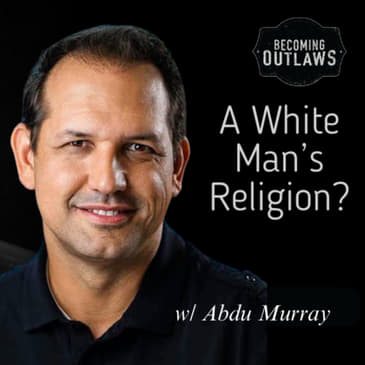
Women in the church, race, and slavery.
In this thought-provoking episode we dive deep into the perception of modern-day Christianity in the Western world. Join us as we challenge the stereotypes that paint Christianity as primarily Caucasian and often criticized for its treatment of women within the church.
Contrary to these misconceptions, we explore the historical roots of Christianity, where early Christians were far from being primarily Caucasian, and the faith was even humorously mocked as the "religion of women and children" due to its female-dominated followers.
Additionally, we tackle a critical question: Does the Bible condone slavery? Our guest, apologist Abdu Murray, author of "More Than a White Man's Religion" and president of Embrace the Truth Ministries, provides insightful perspectives that unravel the misinterpretations surrounding this controversial topic.
Women in the Church, Race, and Slavery
Join us on a journey to understand the true essence of Christianity and its rich history, challenging preconceived notions and delving into the complexities of faith, diversity, and social justice in the context of religion.
becomingoutlaws.com
embracethetruth.org
'More Than a White Man's Religion' Available on Amazon
00:00:00
Counted among the outlaws, he said.
00:00:02
Come follow me people from all walks of life sense and then
00:00:07
becoming outlaws. Do Becoming Outlaws podcast,
00:00:14
which engages celebrities, scholars, and diverse voices and
00:00:18
candid conversations about following Jesus, defying
00:00:21
societal norms. And we attempt to explore
00:00:25
profound questions of faith. Sometimes they're not so
00:00:28
profound. Those who reject the Christian
00:00:31
faith usually do on the grounds of some of the same issues, such
00:00:36
as in the Bible. God seems guilty of genocide at
00:00:40
times, or the Bible seems to condone slavery.
00:00:45
Does it belittle women and place them as a second second rate
00:00:49
citizen? Or if God is good, why is there
00:00:51
evil? Or more personally, why didn't
00:00:54
he answer my prayer? Or why does he allow suffering
00:00:59
in my life, or in the world at large?
00:01:02
Or the question of hell is a big one, an eternal torment?
00:01:06
My frustration is there are solid biblical answers to all of
00:01:11
those, and when some of the same people asking those questions
00:01:15
take the time to discover them, typically they become believers.
00:01:20
They find they find that God is just, fair and good and it all
00:01:26
does make sense. And Scripture has been
00:01:28
misrepresented in my view. In many ways, it's the
00:01:32
messengers who have got it wrong, not the message.
00:01:36
A person who explains these things or defends the biblical
00:01:40
truth and accuracy, It's called an apologist.
00:01:44
We have one today and after reading his latest book, I think
00:01:48
one of the best. We can't cover all of those.
00:01:50
Not even close. Today on the podcast we will.
00:01:53
I'm going to hit all of them, but today I'd like to hit the
00:01:56
topics regarding women and slavery in scripture.
00:02:00
Abdul Murray's latest book, More Than a White Man's Religion in
00:02:04
my view is a must read for every believer and non believer alike
00:02:09
because he goes in depth to answer in a fair and accurate
00:02:14
way those questions. Abdul has raised a Lebanese
00:02:19
Muslim and until a nine year historical, philosophical and
00:02:24
theological and scientific investigation it led him to the
00:02:28
Christian faith. He is also the founder and the
00:02:31
president of the Embrace the Truth organization.
00:02:35
So let's get into it and welcome Abdu.
00:02:39
Hey, Ken, how are you? Hey, very good.
00:02:42
I'm excited to talk about these. Oh, me too.
00:02:44
Me too. Thank you.
00:02:45
I wrote a whole book about it. I ought to be excited about it.
00:02:47
You did write a whole book about it.
00:02:49
Yeah, it's really good. And one reading is almost like a
00:02:53
lost art form. Sit down with a book.
00:02:55
And Kindle has kind of helped. You know, you can read in the
00:02:57
dark and this and that. But I do so many of these where
00:03:02
I talk to authors, I don't have time to read them all.
00:03:05
But with audio books, there's no excuse.
00:03:09
You know, it's my commute to work.
00:03:11
It's you got to go to the grocery store or whatever.
00:03:13
You just pick up. You can hear a chapter on your
00:03:15
way to Meyer's or something. It's awesome.
00:03:20
So I really did enjoy this book, and I actually will.
00:03:24
I listened to it and I will listen to it again probably a
00:03:27
few times because there's some issues that you just want to
00:03:30
know well and you did the homework.
00:03:34
That saves us a bunch of time. So let's just get right into it.
00:03:40
So if I was raised Protestant, evangelical Protestant, and
00:03:51
there has been, I've seen even in that world where I thought
00:03:57
the placement of women in the faith setting, whether it's
00:04:04
church or in the home, seemed more restrictive than actually
00:04:09
what I was reading, I would read something.
00:04:13
I'd be taught what Paul said. And then I'm reading about a
00:04:18
woman who's leading the entire nation of Israel.
00:04:21
Well, I don't hear that in church or in the New Testament.
00:04:25
You know, there's a apostle with a woman's name after it and all
00:04:30
of this. But yet I seem to have been
00:04:32
taught this real, refined little.
00:04:35
One or two sentences from Paul. How does that jive?
00:04:40
Yeah. And and I think that part of
00:04:42
that is because Scripture has a lot of complexity to it, There's
00:04:47
a lot of nuance that you have to go into.
00:04:49
In other words, sometimes there are things, there are passages
00:04:52
of the Bible that seem crystal clear about women's authority.
00:04:55
So you were referencing, for example, Deborah, who was in the
00:04:59
Old Testament appointed as a judge in the time of the Judges
00:05:01
over the entire nation of Israel.
00:05:03
So when we say that the biblical data or the biblical passages
00:05:08
don't allow for any authority for women over men, but we see
00:05:11
this whole thing where Deborah actually is an authority over
00:05:15
the entire nation, which includes women and men, then you
00:05:20
see there's prophetesses in the Old Testament.
00:05:22
They, they prophetesses actually speak and are prophetic in the
00:05:25
New Testament as well. You see leaders in the Church of
00:05:29
various stripes and various strata in the New Testament.
00:05:32
So you see this, but then you also see passages where women
00:05:38
tend to be submissive and or subverted in the Old and New
00:05:43
Testaments and it's oftentimes by God's people where you seem
00:05:46
to seem to see this. And so there's a bit of a
00:05:48
tension that arises when you see this.
00:05:50
Like for example you have the the so-called texts of terror.
00:05:53
Someone, some have called them First Corinthians chapter 14
00:05:57
verses 33 be to to 35 or First Timothy chapter 2, where it
00:06:02
suggests that women ought to be silent and can't even speak in
00:06:05
church, let alone lead anything in church.
00:06:08
And so we get these. These seemingly clear passages
00:06:11
of the scriptures would say, see, women can't have authority
00:06:14
at all. But then, when you do a careful
00:06:16
reading both of the passages that allow for and and and
00:06:20
actually support women's authority and the Scriptures, or
00:06:24
the passages that seem to limit women's authority, I think when
00:06:27
you have a careful reading of these things, you begin to see
00:06:31
that a much more nuanced picture in a more historically dependent
00:06:36
narrative approaches. Which is to say this, that there
00:06:40
are historical context in what some of these passages are
00:06:43
given. Remember, this is the Bible is a
00:06:45
book written, I believe, timelessly timely, which means
00:06:49
that it's always relevant at all times.
00:06:52
But it also has to be culturally relevant to the times in which
00:06:55
it was actually written and delivered to people.
00:06:58
So it has to apply to the ancient Near East and in the
00:07:01
cultural context of those living in the ancient Near East.
00:07:05
And sometimes the specifics are limited to or directed directly
00:07:09
at the people at that time, but its principles and maybe even
00:07:14
its details are also applicable to our time.
00:07:18
And so the question becomes, how do we make sense of these things
00:07:21
in light of its historical context but also its universal
00:07:24
applicability? So I'll give you an example of
00:07:27
what I mean in the New Testament, for example, when you
00:07:30
read it, I'm just looking at it right now.
00:07:32
First Corinthians, chapter 14, verses 33 B to 35.
00:07:36
As in all the churches of the Saints, Paul writes, the women
00:07:38
should keep silent in the churches, for they are not
00:07:41
permitted to speak, but should be, but should be in submission,
00:07:44
as the law also says. If there is anything they desire
00:07:47
to learn, let them ask their husbands at home, for it is
00:07:49
shameful for women to speak in church.
00:07:51
That sounds bad. However, when you look at the
00:07:55
context in which the Corinthian church actually is birthed, and
00:07:58
remember, Paul is writing to a church in its infancy, it's not
00:08:02
a fully formed church. He's also writing at a time when
00:08:05
women did not have an education. Most women, especially women in
00:08:10
Judea, weren't allowed any sense of a robust education.
00:08:14
In some senses, they weren't allowed any education
00:08:16
whatsoever. And so in the Christian movement
00:08:19
you have this vaunting of women elevating them to to the status
00:08:25
as equals to men. But you also have them coming
00:08:28
into church from various religious backgrounds, whether
00:08:32
it's in the Judaism of the time or it's in the Pagan, Roman,
00:08:36
Roman Pagan and Greek Pagan religions of the area where
00:08:41
women weren't allowed to teach either, but they did have
00:08:45
certain levels of spiritual insights so-called to those to
00:08:49
those areas. So what happens is these
00:08:52
churches are born, They're infants.
00:08:55
The women and the men are excited about their newfound
00:08:57
faith and their newfound personhood, their equality, all
00:09:00
these things through the Christian faith.
00:09:02
And women who aren't qualified yet, not because they're
00:09:05
inherently sort of inferior to men, but because they haven't
00:09:11
had the proper education that men typically have had the
00:09:14
opportunity to enjoy, are not yet qualified to lead the church
00:09:18
theologically. But they come in and they begin
00:09:21
to do so. And in some senses, they brought
00:09:23
in some of the Pagan cultish practices of, you know,
00:09:27
considering childbirth to be a curse or wearing certain
00:09:31
headdresses and saying certain things in certain ways to be the
00:09:34
expression, valid expression of faith.
00:09:36
So they're bringing religious ideas outside of the Christian
00:09:39
faith into the church and they're starting to usurp the
00:09:43
qualifications and the the authority given to certain men,
00:09:48
not because they're men, but because they're qualified,
00:09:51
because they've actually had the education.
00:09:53
So what Paul was warning about, both in First Corinthians 14 and
00:09:57
in First Timothy Chapter 2, is the usurpation of authority that
00:10:03
you don't have this qualification yet to speak this
00:10:06
way in church. And remember, these are not big
00:10:09
halls and churches like we see today.
00:10:12
These are actually happening in people's homes.
00:10:14
You're a large gathering or small gathering, and so chaos
00:10:17
cannot result. And so Paul, in order to keep
00:10:19
orderliness, is basically saying you don't have the
00:10:22
qualifications yet to say something and speak.
00:10:25
So you need to be careful about this, and we need to make sure
00:10:28
there's order here until you do have those qualifications.
00:10:31
Now, someone might say, but he doesn't say that in those
00:10:33
passages. No, he doesn't.
00:10:35
But the historical context helps us with this.
00:10:38
But also there's something really important.
00:10:40
In First Corinthians chapter 14, for example, Paul says don't
00:10:44
speak and all these kind of things.
00:10:45
And it's in First Timothy chapter two he suggests don't
00:10:48
speak and all that, But three chapters in First Corinthians
00:10:52
Chapter 11, three chapters before First Corinthians chapter
00:10:57
14, Paul specifically says that women are to prophecy and pray.
00:11:02
In church, those necessitate speaking.
00:11:05
You have in order to do that. So Paul can't be taking away
00:11:10
something in First Corinthians 14 that he granted in First
00:11:13
Corinthians 11. Paul's not saying don't speak.
00:11:17
Paul is talking about teaching and doctrinal authority and
00:11:21
rightly dividing the the Old Testament that time if that's
00:11:24
what they had. The Old Testament scriptures and
00:11:27
women certainly weren't qualified, not because of their
00:11:29
inability intellectually, but because of their in opportunity,
00:11:33
because men had denied them that education for quite some time.
00:11:37
So that's, I think an example, one example, and in the book I
00:11:41
give many of ways, when you read carefully texts that seem to be
00:11:46
misogynistic, actually aren't as misogynistic as we might think.
00:11:50
And there are three different views on this.
00:11:52
There are Christians who say that, you know, there's
00:11:54
complimentarians who say Christian women can't have
00:11:57
authority over men in any way, shape or form.
00:11:59
Then there's what's called a soft complimentarian, that women
00:12:01
can have certain authority but not ultimate authority.
00:12:04
And you have egalitarians who say that they read the Bible in
00:12:06
a way that also allows for this kind of authority and that kind
00:12:09
of thing. And what I want to point out is
00:12:11
that all of them value women as equals, but they're trying to
00:12:14
wrestle with, I think, honestly wrestle with what the Bible
00:12:17
actually has to say about this. So that's what that's just one
00:12:20
example, Ken. Yeah, it seems like at least in
00:12:23
the Protestant circles or evangelical circles, there's
00:12:26
been this, as far as I know, not a definite here's what it is,
00:12:30
here's what it isn't. But they will let.
00:12:33
Well, there's very prominent women teachers out there that
00:12:36
can teach in general, but they still don't have authority in
00:12:39
the church and they're not. They don't have authority over
00:12:42
men. Don't you think it's kind of
00:12:43
like a modern day compromise that's been quietly given is let
00:12:47
Beth Moore let Joyce Meyer do what they do?
00:12:50
It's really for women, and they're not pastors.
00:12:52
Yeah, and that's that's that's part of the complimentary and
00:12:55
egalitarian debate. So a complimentarian would say
00:12:58
that as they read the Bible passages, what they would say is
00:13:01
that women and men are equal, but they have complimentary
00:13:05
gifts and offices within the church.
00:13:07
So a hard complimentarian might say something like a woman can't
00:13:11
have authority but it has to be over other women and children.
00:13:15
But it can't be over men because partly because they read
00:13:20
something that you know, Paul says.
00:13:21
I don't allow a woman to have an authority over man, over a man.
00:13:25
And so they they, they apply that universally and say that's
00:13:27
a universal thing. Others would say sort of a soft
00:13:31
complimentarian is that women can have certain authorities,
00:13:36
including over men in certain offices, but not in the church.
00:13:40
Then you have another form of compromise.
00:13:41
This is why it's complex. And This is why I think I
00:13:44
actually appreciate the complexity, because it gives a
00:13:46
nuance to the situation. Because if we say it's either
00:13:49
this or that, it can't be, it can't be anything else, well,
00:13:52
then we don't have any sense of really wrestling with things
00:13:55
together. But the fact that there's a
00:13:56
spectrum, so you have hard complementarian all the way to
00:13:59
hard egalitarian. The hard egalitarian would say
00:14:03
that women and men have equal authority in every way, shape
00:14:07
and form, and there's no distinction among them
00:14:09
whatsoever. So a woman could be a head
00:14:10
pastor, Not just a pastor, but a head pastor, the executive
00:14:15
pastor, a founding pastor of a church.
00:14:17
And that's more of a hard, complimentarian, sorry,
00:14:19
egalitarian view. But then there's also a soft
00:14:22
complimentarian view which says that women can be authoritative
00:14:26
like Beth Moore, like others as well, where they can have
00:14:30
authority in some ways and men can listen to what they had to
00:14:32
teach, but they can't run the church or even have a high
00:14:35
office in the church. So the fact that there's a
00:14:37
spectrum here, I think in one sense allows us to say we're
00:14:42
trying to honestly wrestle with this issue without being bigoted
00:14:48
and how you come out. I don't try to resolve the
00:14:50
conflict in the book. What I do suggest though, is
00:14:52
that there are avenues and opportunities for us to try to
00:14:55
resolve these ourselves. And as we try to do that, I
00:14:58
think what we'll see is people are trying their best to
00:15:02
understand the Bible in its historical context, including
00:15:06
some of those limiting factors I had said before about why Paul
00:15:09
says what he says, but also apply it to our day today.
00:15:13
And it's tricky business. It's tricky business.
00:15:15
It doesn't mean it's not true. It doesn't mean it's not
00:15:17
valuable. It means that it's tricky
00:15:19
business. We do this with the Constitution
00:15:20
of the United States all the time.
00:15:22
We try to apply things people wrote 200 years ago into a
00:15:25
situation that's modern and technologically advanced.
00:15:29
Doesn't mean we should throw it out.
00:15:30
It just means we have to go about the tricky business of
00:15:34
being faithful to the document and of the spirit of what it
00:15:36
says, while understanding that there are new contexts to be
00:15:43
responsible for. Yeah, I mean, I've been studying
00:15:46
scripture my whole life, whole life, and that's one of the
00:15:48
areas I still I I'm not 100% on. I know it's been misrepresented
00:15:53
both ways and I think we've really missed some great
00:15:57
teaching and some great words from women that have been
00:16:01
silenced. And I also think there's kind of
00:16:07
a liberal movement that goes way beyond, even if it's
00:16:10
scripturally correct, I don't know, but kind of like the more
00:16:14
of a rebellion against God and his rules than what are we
00:16:18
allowed to do, you know what I'm saying?
00:16:21
Those are like the. Two that there, there's.
00:16:24
It's so funny, 'cause it's not just this area.
00:16:26
I mean, there's so many areas where human beings are given to
00:16:29
pendular swings. You know, we, we like a
00:16:31
pendulum. We we don't go in the middle.
00:16:33
We go as far as to the right as we can or far to the left as we
00:16:35
can, depending on what we're reacting to.
00:16:39
And I think that goes true, by the way, for accommodations.
00:16:43
When it comes to culture, we say that thus and such is no longer
00:16:46
really a sin. It may have been something that
00:16:48
was considered sinful back then because of these reasons.
00:16:51
But today we know better or we reinterpret Scripture to try to
00:16:56
get around some of the sticky stuff.
00:16:58
And I think that that's not really responsible either to the
00:17:00
text of the Scriptures and respectful to God.
00:17:03
Nor do I think it's respectful to each other.
00:17:06
You don't. If you don't like what the Bible
00:17:08
says, don't you? You're not.
00:17:09
You're not entitled to edit it. You are entitled to reject it.
00:17:12
If you don't like it, reject it. That's fine.
00:17:14
And I think there's going to be consequences, unfortunately, in
00:17:17
terms of your relationship with God.
00:17:19
But what you're not entitled to do, I don't think, is if this
00:17:22
book is from the transcendent source, then we trust that the
00:17:26
one who created time knows what he's doing when he gives us
00:17:29
certain edicts and certain ideas and and and gives us the brains
00:17:32
in our head and the wisdom and the Holy Spirit.
00:17:34
If you're a believer, to actually parse these things out
00:17:37
well, but we're not supposed to do is edit it.
00:17:40
We're not supposed to change what it says to make it fit what
00:17:42
we like. Rather, it's the opposite.
00:17:45
We ought to sort of think about how are my desires colouring
00:17:49
what I read, as opposed to how is what I read changing my
00:17:53
desires. Yeah, I mean the stomach turning
00:17:56
part is the, you know, the abuse of just not the full scope, just
00:18:01
taking Paul's words out of context out of what you're
00:18:05
showing is him saying the opposite a few chapters later
00:18:10
and saying, you know, women stay silent in the church and be so
00:18:14
submissive in the home that the man just kind of rules it with a
00:18:16
rod of iron. And then they're basically sort
00:18:21
of slaves in life, and who wouldn't rebel against that?
00:18:23
And since they're, it's since it's misrepresented, they rebel
00:18:27
against God, the faith, and and all of that.
00:18:30
Well, and I also think that Christians are often times as
00:18:35
guilty of perpetuating the stereotype that keep women away,
00:18:39
or anybody for that matter. You could have a man who just
00:18:42
feels that women should be, and rightfully so, because that
00:18:45
women should be men's equals and then feels like, Oh my goodness,
00:18:48
this, this religion doesn't allow for that.
00:18:51
And that's that's simply counter to history.
00:18:54
It was Michael Krueger who made this stark statement and I
00:18:58
referenced him in the book, is that in the early years of the
00:19:02
Christian movement, a women were flocking to it, women and
00:19:05
children were flocking to it. In fact, the Pagan elites of the
00:19:09
Romans and the Greeks, they were making fun of Christianity as
00:19:13
the religion of women and children because women were
00:19:16
flocking to it. They were leaving the misogyny
00:19:18
of their paganistic cultures or their errant expressions of
00:19:22
Judaism in order to find the equality and the value in the
00:19:27
Christian movement. Why?
00:19:28
Because Jesus infused them with that value.
00:19:32
And I could go into story after story and I do in the book of
00:19:35
Where When you look at these texts that you find in Paul or
00:19:39
other places in the scriptures, even the Old Testament.
00:19:41
But you look at them through the lens of Jesus's life, you begin
00:19:46
to see that which might have been a little cloudy.
00:19:48
Now you begin to see them even more clearly because of the way
00:19:51
Jesus vaunted the value of women.
00:19:53
And I can give countless some examples of how that how that
00:19:56
works out. So my point being here is that
00:20:00
often times Christians are the reason people don't necessarily
00:20:03
want to read the rest of Scripture.
00:20:06
But what I would suggest to you is if you look to Christ himself
00:20:09
and how he lived the scriptures out, maybe you'll see a better
00:20:13
perspective. Yeah, and you reference strongly
00:20:17
his conversation with the woman at the well.
00:20:20
But if he'd expound a little bit on, because it was so obscure.
00:20:23
I I enjoyed when you talked about the Mary and Martha and
00:20:28
just a Rab. We don't someone.
00:20:31
Actually, it seems like another submissive thing, some woman
00:20:33
sitting at the foot of a man learning from his words.
00:20:36
But it's not the foot of a man, it's a foot of a rabbi where
00:20:39
only men had been previously. Yeah.
00:20:42
And and it's it's even even more than that, Ken is because it's
00:20:46
not just that he's she's sitting at the in the Mary and Martha
00:20:48
story where where Mary has chosen to sit at the feet of a
00:20:52
rabbi as if he's she's like some kind of submissive that sits on
00:20:55
the floor while he sits on a cushion or a a chair.
00:20:57
No, not even every man got to sit at the foot of a rabbi.
00:21:02
To sit at the feet of a rabbi is a euphemism.
00:21:04
Doesn't necessarily mean you're sitting at someone's feet.
00:21:06
Maybe. But it also can mean simply is
00:21:09
that it's a euphemism or an idiom that means to learn from
00:21:13
someone who has authority and training.
00:21:16
So here's the context of this story and often times you know
00:21:19
Christians will read the Mary and Martha story and you know so
00:21:21
we sort we sort of have familiarity with it and we think
00:21:24
it means one specific thing And it does mean this thing.
00:21:27
You know the idea that you can't be so busy in life like like
00:21:30
Martha, that you don't stop and smell the Messiah once in a
00:21:33
while. You know that you go on with
00:21:35
life and you just don't stop and realize who Jesus actually is.
00:21:39
So you know the context, of course, for those unfamiliar, is
00:21:43
that Jesus and the boys are going to come over for dinner
00:21:46
and Mary and Martha are preparing their home to receive
00:21:51
Jesus and the disciples. And like good Middle Easterners,
00:21:53
they're going to be extremely hospitable.
00:21:55
And Martha goes about the work. And Mary, of course, Jesus
00:21:59
arrives and he's there, and she sits at Jesus's feet, learning
00:22:03
from him rather than helping out in the kitchen.
00:22:05
What's interesting here is that Martha has been so acculturated
00:22:09
by the misogyny of her day that her only place in life is either
00:22:14
in the kitchen or in front of a spindle make to make to make
00:22:17
clothes or with children. Whatever it is, she's so
00:22:20
acculturated to being put in her place.
00:22:22
When she sees a woman, even her own sister, breaking the mold
00:22:26
and getting out of her place, she gets upset.
00:22:29
So she says to to Jesus. Jesus, don't you care that my
00:22:32
sister has left me to do all the work?
00:22:34
Tell her to come help me. You'll notice something
00:22:36
immediately. She doesn't ask Jesus.
00:22:38
She doesn't say Jesus, would you come help me?
00:22:41
It never occurs to her to ask Jesus to help.
00:22:44
Jesus would never. A man, I should say, would never
00:22:47
come into the kitchen. What Jesus says to her is
00:22:50
remarkable. And he does say, you know, the
00:22:53
lesson of be of don't get so busy that you do.
00:22:56
You miss opportunities. But in the context of women who
00:22:59
were denied any kind of education whatsoever, and I
00:23:03
quote quite a bit of the rabbis of Jesus's day, both before and
00:23:06
after and during, who would say that teaching a woman the law is
00:23:11
useless and you never because women don't have the brains of a
00:23:15
man, etcetera, etcetera. Jesus says to Martha when she
00:23:18
gets mad at Mary, She said he says Martha.
00:23:21
Martha, you are worried about many things, but only one thing
00:23:24
is needful. And you'll notice this.
00:23:25
Mary has chosen what is better. She used her free will, which
00:23:30
you have. You thought you didn't have any.
00:23:32
But Mark Mary has chosen used her free will, What is better?
00:23:37
And it will not be taken from her.
00:23:39
In other words, the society has taken this from you both and now
00:23:42
you're trying to take it from her too.
00:23:44
And it won't be taken from her. Join us.
00:23:47
You can exercise your individual freedom, your free will as well.
00:23:52
You're not a slave to the kitchen.
00:23:54
You're not necessarily to be put in one place or one place only.
00:23:58
That exist is an example of how Jesus wants the value of women
00:24:02
time and time again. Yeah.
00:24:04
And even with our perspective of we take, we'll take that story.
00:24:10
But then in the back of our subconscious, we have Paul's
00:24:13
words about women in the church, and then we just read it as as
00:24:18
Martha read it was oh, that one's about, well, women should
00:24:22
be helping in the kitchen, but it's better to learn.
00:24:27
Scripture is more important than missing this whole thing about
00:24:32
Jesus being a rabbi and the privilege of learning as a
00:24:35
teacher even that a lot of men wouldn't have had.
00:24:38
Yeah, yeah. And of course, you know, even on
00:24:45
the day of Pentecost, you know what's going on here with all
00:24:48
these people speaking in other languages.
00:24:50
When the disciples, along with the women, being filled with the
00:24:54
Holy Spirit, it stated, well, this is what the prophet Joel
00:24:58
said, that your sons and your daughters will prophecy.
00:25:01
And like you said, prophecy is the Holy Spirit speaking things
00:25:06
through you. And it's the women equally, but
00:25:10
yet the God's going to speak through them, but the church is
00:25:13
going to shut them up. It just doesn't.
00:25:15
Well, it's it's so you say this. You say this, Ken, because I I
00:25:18
just remembered, you know when in First Corinthians 14 that
00:25:21
that's the the passage that suggests women should remain
00:25:23
silent. Of course, in First Corinthians
00:25:25
11, as I pointed out, women can pray and prophecy in church and
00:25:29
those are obviously necessarily speaking involved activities and
00:25:33
in fact prophecy in First Corinthians chapter 12, verse 28
00:25:36
is ranked as a higher order gift than speaking than teaching.
00:25:41
So everyone gets to prophecy, including women, in this
00:25:45
wonderful gift that is ranked as a higher gift in some sense than
00:25:50
teaching itself in the in the early church.
00:25:53
So I think you're quite right and Pentecost is is an example
00:25:56
of a lot of things, one of which I think is the the expression of
00:26:01
God's gift equally, equally, offering out and parsing out
00:26:04
gifts to both men and women. Yeah, well, there's a lot more
00:26:09
on this. We could go for hours.
00:26:11
But I just know people listening that if you're a man you should
00:26:15
read this book. If you're not a man, you should
00:26:18
get this book and use it in your ladies Bible studies and in your
00:26:22
group, you know at least this part of it and go through all
00:26:26
the examples because because I'll do really goes in depth,
00:26:29
but I I didn't want to use up all the time without talking
00:26:31
about. So what's this deal with looking
00:26:35
like the Bible condones slavery. We had a whole half of America
00:26:39
at one time. Yeah.
00:26:41
Whether they believed it or not, they said they believed it.
00:26:44
I know it's more economic, but their economics were based on
00:26:48
Christian people claiming scripture taught that slavery
00:26:52
was OK and they were doing the right thing.
00:26:55
And what's going on there? So when So the Bible does
00:27:00
reference slavery. The references slavery in in two
00:27:03
sort of contexts. It references it descriptively
00:27:06
and prescriptively, and descriptive is when you just
00:27:10
describe the way something is. So you describe some horrible
00:27:13
evil and you just describe that it's happening.
00:27:16
You're not condoning it, you're just describing that it's
00:27:18
happening. A prescription would be that you
00:27:21
not only describe it, but you condone it and you actually
00:27:23
prescribe that you should do this.
00:27:26
So the question becomes, what is the word slavery mean in the
00:27:28
Bible? And sometimes the context, of
00:27:30
course, is king. When you look at the word slave,
00:27:34
for example in the Bible, it has multiple meanings.
00:27:38
Sometimes it can mean someone who is owned as property of
00:27:41
another person, and that's usually in the descriptive
00:27:44
sense. In other words, when God is
00:27:46
through the Bible describing the evils of humanity.
00:27:50
Other times when the word slave is used, it can be retranslated
00:27:54
as bondservant. It doesn't always necessarily
00:27:56
have to mean someone who is owned as property.
00:27:59
So it's sort of what's called chattel slavery and often times
00:28:02
when the Bible gives a lot of commands and a lot of
00:28:05
regulations on so-called slavery, it's not describing
00:28:10
chattel slavery owning people as property and it's certainly not
00:28:13
describing race based travel chattel slavery.
00:28:17
It's describing bond servitude. It's more of a financial thing
00:28:21
than it is a thing where someone actually is owned, kidnapped,
00:28:25
forced in the out of their own free will into his or born into
00:28:29
slavery and all these things. That's not what the Bible
00:28:31
condones. So often times when people think
00:28:33
of, when they think of slavery the first thing, especially here
00:28:35
in America, we think of when we or in the West, we think
00:28:38
slavery. We equate anything with the word
00:28:41
slave is involved to antebellum Southern slave trade or
00:28:45
antebellum Southern slavery institutions.
00:28:48
And that's natural. I get why people do that,
00:28:49
because it's the most recent iteration of institutional
00:28:52
slavery we have in our in our memory.
00:28:57
Of course, slavery still exists to this day in the form of
00:29:00
child, child and women, sex trafficking and even males.
00:29:04
So we haven't abolished it yet. We've tried, but we naturally
00:29:08
equate when the Bible says slave with that.
00:29:10
The reason why that's dangerous with regard to understanding the
00:29:13
Bible is the word slave can mean different things most like the
00:29:16
word foot can mean two different things.
00:29:17
If I say foot, no one knows if I mean without context, whether I
00:29:22
mean a 12 inch span of space or if I mean the things at the end
00:29:26
of my legs. Now if I say, well my foot
00:29:28
hurts. Now you know what I mean because
00:29:30
context is important, but the word slave is like that.
00:29:33
So slave can be a description of someone owned his property, or
00:29:37
it can mean someone who is voluntarily engaged in some kind
00:29:40
of servitude or even change themselves to A cause greater
00:29:44
than themselves. So for example, my name, Abdu,
00:29:47
my name is an Arabic name. And now Arabic and Hebrew are
00:29:51
Semitic languages. They share the same Semitic
00:29:53
root. So the.
00:29:54
So the word for slave in Arabic is Abed.
00:29:58
The word for slave in in Hebrew is obed.
00:30:01
They're very, very similar. My name is not an insult.
00:30:05
I'm not called slave Abdu, You know, it means literally God's
00:30:09
servant or God's slave. But in a way that's honorific.
00:30:13
We see this in the Old Testament as well, people's names.
00:30:16
Obed is one of the is a leader in the in in the people of
00:30:19
Israel. Obadiah is the name of a Bible,
00:30:24
the the the book of the Bible and the word slave is right in
00:30:28
there. It's in his name.
00:30:29
So this is not always an insult and it's not always a pejorative
00:30:33
description of something. It can mean something very
00:30:35
valuable. Does it kind of mean?
00:30:37
I hate to interrupt? Does it kind of mean in a
00:30:40
positive way like Sona's great work ethic?
00:30:43
Because if the new, if the Old Testament would have changed
00:30:45
some of the words slavery to employment or employment
00:30:49
contracts, we would have a totally different viewpoint.
00:30:54
And do some of these names kind of refer the honor in self
00:30:58
sacrifice, in the labor, in the hard working person This is yeah
00:31:02
and not and not chained to slavery.
00:31:05
Yeah, they've they've essentially chained themselves
00:31:07
because they devoted themselves to someone.
00:31:09
They devoted themselves to something.
00:31:11
So it's work ethic is a great way to put it.
00:31:13
But I also think it's a matter of an emotional that work ethic
00:31:16
is an expression of someone's devotion and voluntary devotion
00:31:20
to another person. We become bond servants of
00:31:22
Christ, as it were, or slaves to God.
00:31:25
We do that on purpose, and we consider that a badge of honor.
00:31:30
When someone says you act like a slave to this, to to this God,
00:31:33
yes, in fact I do. I hope you noticed that, you
00:31:36
know, kind of a thing now in the regular.
00:31:39
The issue though, that the society has is not just with the
00:31:41
word itself, but with the Bible seems to regulate slavery as if
00:31:45
it condones it. So this is the important thing.
00:31:48
The first thing is this. This is not the same thing as
00:31:49
Southern antebellum slavery in in the South or in the North
00:31:53
Atlantic slave trade. You had people kidnapping people
00:31:56
based on their race and making them into servants based on
00:32:02
their race. And you could own them, buy them
00:32:04
and sell them, and you could beat them and you could even
00:32:09
kill them because they were property, not people.
00:32:11
You see nothing like this in the Old Testament.
00:32:13
You don't see that. What you see is the regulation
00:32:16
of what's called indentured servitude.
00:32:18
So someone has a debt that they can't pay off to someone or
00:32:21
someone else. They will sell their services
00:32:23
in, in essence, in essence sell themselves.
00:32:27
Much like you know, how you know the the the Chicago Bulls
00:32:32
acquired Dennis Rodman from you know what they they they they
00:32:36
they didn't acquire him. They acquired his talents and
00:32:38
his services under contract and that contract is legally
00:32:42
binding. By the way.
00:32:43
He can't just stop without penalty.
00:32:46
That's not slavery. That's not the same thing.
00:32:48
So in the Old Testament, it's. Volunteer servitude.
00:32:52
Exactly. That has consequences if you
00:32:54
leave that servitude, but you'll notice something.
00:32:57
In the Old Testament, when someone voluntarily enters into
00:33:00
a servitude, rather than be thrown into a debtor's prison,
00:33:03
they enter into servitude. One they can actually pay the
00:33:06
debt off. And if they pay the debt off
00:33:08
through their work, and they're also allowed not only the job,
00:33:11
they're working for the master for the so-called master, but
00:33:14
they're also entitled to actually do other jobs and make
00:33:17
more money doing other things. That felt like the slavery S is
00:33:20
at all. So not only do you have no
00:33:22
kidnapping, in fact the Bible would impose the death penalty
00:33:27
on anyone who kidnaps someone and involuntarily drags them
00:33:31
into slavery. It it requires your death for
00:33:34
you doing that. So clearly that's not allowed.
00:33:37
But the person gets to pay off the debt and go free at some
00:33:39
point, and even through their own gainful employment outside
00:33:42
of their service to the master every seven years the the
00:33:47
so-called slave or the servant is a set free.
00:33:50
Even if their debt is not paid, they're set free.
00:33:53
We should have years of Jubilee. Wouldn't that be great?
00:33:56
Yeah. Well, yeah, exactly.
00:33:58
Yeah. We should do that with the tax
00:33:59
code. Yeah.
00:34:01
By the way, that's where we get our Bankruptcy Code of seven
00:34:03
years. That's where we get that from.
00:34:04
All right. Yeah.
00:34:06
It's a precedent behind all this.
00:34:09
Then every fifth of the year of Jubilee, you just mentioned it,
00:34:11
Ken. And the Year of Jubilee, if the
00:34:13
seven years haven't come and it happens to be a year of Jubilee
00:34:16
and you've been in debt in in debt and in indentured servitude
00:34:19
for all of seven days or 7 minutes and the year of Jubilee
00:34:23
comes, you are to be set free of your debt.
00:34:25
It's to be 5th. 50th year. Yeah, every 50th year, right,
00:34:29
So. Go in like, I love doing this.
00:34:33
So 50 days or really Pentecost spiritually was a Jubilee,
00:34:37
right, 'cause we're set free from sin, which I know what you
00:34:42
meant when you said there wasn't slavery in the Old Testament as
00:34:46
far as condoning it, but the Hebrews with the Egyptians would
00:34:48
be slavery. The bad slavery.
00:34:52
Right, exactly 'cause. There was 40 that.
00:34:55
Oh, OK. Sorry, I'm.
00:34:56
I'm jumping ahead of you. Yeah.
00:34:57
No, no. But you're right.
00:35:00
And that is seen you mentioned a death penalty where actually all
00:35:03
the Egyptian army died for a penalty for actually having that
00:35:08
kind of slavery that wasn't voluntary.
00:35:11
Yeah, absolutely. And you see throughout the
00:35:14
scriptures in the Hebrew for the to the Hebrews, where God
00:35:19
repeatedly says to them, even for the foreigner who's not an
00:35:22
Israelite, that you were to treat them as you treat
00:35:24
yourself. Because remember, you were once
00:35:27
foreigners in the land of Egypt, You were once slaves.
00:35:31
Remember how I delivered you from that?
00:35:33
You should act like me. And I think that's really
00:35:38
important. Is that what seems to be laws
00:35:41
that regulate indentured servitude only for Israelites
00:35:44
owning Israelites? And what about the foreigners
00:35:46
and all that? Well, the Bible says you were to
00:35:48
treat foreigners just like you treat each other because you
00:35:51
were once foreigners. And so I think that parallel
00:35:53
you're drawing is such a good one.
00:35:55
Ken, because it helps us to put the full context here, is that
00:35:59
God is not interested in favouring people because of
00:36:02
their ethnicities. He's interested in the
00:36:05
well-being of people because they're made in his image.
00:36:07
How do I know it's not an ethnically driven thing?
00:36:11
How do I know that? Well, here's how I know it.
00:36:13
Whenever God uses Israel as an instrument of judging the
00:36:17
Canaanites and the Amalekites and the Anakites and the
00:36:20
Jebusites and the other Ites that are in the Bible, whenever
00:36:22
he does that, it's because of their actions, not because of
00:36:26
their ethnicity. He doesn't do it because he
00:36:28
does. Because of their Pagan temple
00:36:30
worship, because of their child sacrifice, because of their
00:36:32
temple prostitution, because of the the ways in which they
00:36:36
maraud and steal and kill and do all these things.
00:36:38
And so he judges them for those actions, using Israel as the
00:36:41
instrument of that judgement. But here's the interesting
00:36:44
thing. Whenever Israel does those
00:36:46
things, whenever the people of Israel do the exact same things,
00:36:50
God uses those other nations as instruments to judge Israel.
00:36:55
So he's not favouring one over the other because of ethnicity.
00:36:58
And this ought to sound really familiar.
00:37:00
God is not judging people by the colour of their skin, but by the
00:37:04
content of their character. And that sounds remarkably
00:37:07
similar to Martin Luther King. King did not pull that out of
00:37:11
the sky. Well, I guess in one sense he
00:37:13
did, because he pulled that out of the Bible.
00:37:14
But that ethic is that ethic is in Scripture.
00:37:18
Yeah, so. So what's your response then to
00:37:23
New Testament saying we should be slaves of Christ?
00:37:28
Yeah. Well, I think that that, that,
00:37:30
that, that, that goes right to what we were talking about
00:37:32
before in terms of that's a voluntary thing.
00:37:35
Is that you? Are you?
00:37:37
You hold yourself to Christ in gratitude for the debt he has
00:37:41
paid for you, is that there is a relationship now you have
00:37:45
dedicated yourself and you are to work out, as Paul says, your
00:37:48
salvation with fear and trembling because you are
00:37:53
working out what has happened to you.
00:37:55
Your salvation has happened. Now you're working out what it
00:37:57
means. And what it means is to obey
00:37:59
Christ and to listen to his commands and to follow his
00:38:01
words. And it will go well for us.
00:38:04
And so we devote ourselves to a, to a life that, you know, Jesus
00:38:07
says, my yoke is easy, my burden is light.
00:38:09
And he's right. But also in one sense, he also
00:38:12
says, but in this world you will have trouble for my name's sake.
00:38:16
So we are to be identified with him in such a way that people
00:38:21
can't help but smell the aroma of Christ on us.
00:38:25
And the best way you do that is to chain yourself to him.
00:38:28
It's a symbolic thing. And the reason I know that it
00:38:31
doesn't mean necessarily a slavery, that is the kind of
00:38:34
thing where we would be appalled by is that Paul specifically
00:38:39
condemns slave trading as a sin. He specifically condemns it as
00:38:44
slave trading. In first Timothy chapter one,
00:38:47
verses 9 to 10, for example, he'll say, well, where does Paul
00:38:51
say that you know slavery is wrong?
00:38:52
Well, that's one part. There's one spot, the entire
00:38:56
book of Philemon. You know, it's funny, I always
00:38:58
read that when I was reading this book before, when I became
00:39:01
a new Christian. I'm reading this book and I'm
00:39:03
wondering, why is this little book?
00:39:05
Why does this swell the pages of scripture?
00:39:07
Why is this in there? It seems to be Paul's mediating
00:39:11
A dispute between people. But in that book, Paul is muted,
00:39:15
mediating the dispute between Philemon and Onessimus.
00:39:19
Onessimus is a freed slave. He's a runaway slave of
00:39:22
Philemon. Philemon and Onessimus are
00:39:24
believers and he's Paul is basically saying, I know you
00:39:28
have this, this, this arrangement with him under the
00:39:31
Roman system where you can own this man, but you ought not to
00:39:34
do this because he's a Christian brother, because he's made in
00:39:36
God's image. And by the way, whatever debt he
00:39:39
owes you charge to my account, I'll pay it off.
00:39:42
I'll redeem him like I was redeemed by Christ.
00:39:46
And then later, I love this. In Colossians chapter 4, verses
00:39:50
7 to 9, Paul tells the Colossians to receive Titicus, a
00:39:55
dear brother who is coming with Onessimus, the freed slave who
00:39:59
is our faithful, and dear brother who is one of you.
00:40:03
He is one of your equals. So he's not returning as a
00:40:06
slave, he's returning as an equal.
00:40:08
And the book of Philemon, I think is AI.
00:40:11
See it now? You see the beauty of it.
00:40:13
It's there to show us the way towards seeing people as equals,
00:40:17
not as. You know people who owe me or
00:40:20
who I own. There's no such thing in the
00:40:22
biblical passage. Yeah, Scriptures, it's been made
00:40:27
to be misogynist and racist and all this.
00:40:31
And it's so not. I mean you can pick out things
00:40:35
Paul said, like you said, out of context, out of culture and and
00:40:39
then he's been accused of that. But New Testament also says, you
00:40:42
know, in Christ there's no longer male or female or Greek
00:40:46
or Jew or just. We're all one in Christ.
00:40:50
And for especially believers to have any sort of misogyny or
00:40:56
racism, it's just not acceptable.
00:40:59
And it's. It really.
00:41:00
It's Kingdom. Absolutely.
00:41:02
It really isn't. And it doesn't matter whether
00:41:04
it's black and white or other systems of different ethnicities
00:41:08
or between men and women. So you mentioned the woman at
00:41:11
the Well story. And when you find that the woman
00:41:13
at the well story is something so amazing, you know, Ken, I
00:41:16
think that that that story, if I'm not mistaken, has made its
00:41:19
way into every book I've ever written because of that.
00:41:22
That story is so rich and deep. I love the fact.
00:41:26
It's ironic to me that when she comes up to the well and Jesus
00:41:30
says, can I have a drink? And she says, why are you, a
00:41:33
Jewish man asking a drink from me, a Samaritan woman?
00:41:38
So not only should men not be talking to women like this right
00:41:41
now because I'm below your station, but you're a Jew and
00:41:45
I'm a Samaritan. We hate each other.
00:41:46
What's going on here? And then he says, if you knew
00:41:49
the gift of God and who was speaking to you, you would have
00:41:51
asked him for a drink. And I would have given, he would
00:41:53
have given you living water. And she says, how are you
00:41:59
possibly draw this water? For the well is deep.
00:42:04
I love that phrase because I don't think she realized just
00:42:06
how profound of a thing she said.
00:42:09
She's talking to the deepest of Wells and she's talking at
00:42:15
Jacob's well. And what's interesting is that
00:42:17
whenever God meets you see this. Not whenever, but often times
00:42:21
when God meets, like Hagar, for example, the non Jewish woman,
00:42:25
the non Hebrew woman in her time of travail, he meets her at a
00:42:29
well. And this foreigner, the
00:42:30
Samaritan, he meets her at a well.
00:42:33
And so you keep on seeing that the well in fact is deep.
00:42:36
And what does he do? He so speaks to her heart and to
00:42:41
her, her mind that she runs back to her village, her Samaritan
00:42:45
village, and says, come spend time with this Jewish band.
00:42:48
This is the saviour of the world.
00:42:50
And for whatever reason, they believed her and they spent time
00:42:53
with him and they came to see him as the saviour of the world.
00:42:57
Jesus empowered a woman to bring ethnic unity between people who
00:43:02
hate each other. But wait a minute.
00:43:04
A whole village came to Christ. But she was talking.
00:43:08
Yeah, yeah, that's right. She wasn't allowed to talk and
00:43:12
talk about Christ. She taught them the Messiah.
00:43:15
She she preached the gospel to that whole town.
00:43:18
Indeed. There you have it.
00:43:19
I'm glad that you put it that way.
00:43:20
I didn't put it so bluntly or so straightforward.
00:43:22
I love that you just did that, because you're right.
00:43:24
Exactly. If she had been, you know, in
00:43:26
fact it's funny when you look at the the scripture as she's
00:43:30
leaving, the disciples are amazed.
00:43:31
He's talking to a woman alone and the Bible says that
00:43:35
specifically no one asks her what do you seek?
00:43:38
Like what are you doing here? Or no one asks Jesus, what are
00:43:41
you talking about? This is very uncomfortable.
00:43:42
Weird, like what just happened. He empowered a woman to be the
00:43:46
first cross cultural missionary, which requires speaking.
00:43:49
The same at the tomb. I mean, it's and so many I I've
00:43:53
never added them up. But you start like you're just,
00:43:57
you know, telling stories about Christ's interactions and
00:44:00
conversations with people. It's a woman, another woman,
00:44:03
another woman that has taught us all these men through all these
00:44:07
centuries, the faith, whether it's by their speech or the
00:44:13
stories and the interactions he had with them.
00:44:15
And you can't just take not that a line or two from Paul isn't
00:44:19
scripture, but like you said, it's scripture out of context
00:44:22
and out of culture. Yeah, you've got to apply it to
00:44:24
everything. Paul himself, whenever he talks
00:44:27
about two of his favorite people, Priscilla and Aquila, he
00:44:30
loves these two people this this husband and wife.
00:44:33
And in the ancient times, in the ancient near East, whenever you
00:44:37
would list the husband and wife together, you would list the
00:44:39
husband first because he is the authority and a woman second
00:44:43
because she's secondary. But what Paul does on several
00:44:46
occasions is when he mentions these two, he mentions Priscilla
00:44:50
and Aquila in that order. That's not a not so subtle
00:44:54
statement because Priscilla was so sold out for the sake of the
00:44:58
gospel and women like her were credited with being the teachers
00:45:03
of not only Timothy and Titus, but also Apollos, who is
00:45:09
considered a spiritual heavyweight as well.
00:45:11
So yeah, read the whole cut and read the Bible carefully.
00:45:14
I think it really helps us. Not only do we the surrounding
00:45:17
context outside of the Bible, but to read the words of the
00:45:19
Bible carefully. Yeah, read it carefully.
00:45:22
We need to read your book carefully because you've read
00:45:24
the Bible carefully and you know, and just to close on this,
00:45:31
it, it's interesting. And I think it's another layer
00:45:34
of proof that scripture isn't always talking about the slavery
00:45:37
that we just Americans assume, because that's what we learned.
00:45:40
That's the first time we learned the word.
00:45:41
Slavery was the worst use of it possible.
00:45:46
Not employment, not contracts or servitude or whatever, but yet I
00:45:55
feel well, I've committed my life to Christ, but in no way do
00:45:58
I feel a slave. But yet it says were to be
00:46:01
slaves of Christ and we were bought with a price.
00:46:05
So it's all these slavery terms when it comes to our salvation.
00:46:09
But it obviously I'm not being whipped and I came into this
00:46:12
voluntarily. This is a voluntary exchange
00:46:16
that's only for my benefit. Yeah, And I get the most.
00:46:20
I'm the only one that gets anything out of the deal.
00:46:23
Isn't what we call slavery and what Scripture says obey your
00:46:28
master. Well, there's there's the South,
00:46:32
there's the Confederacy saying, you know, they would hold church
00:46:35
services for them and say, look, these are the Scriptures.
00:46:39
They would show them right here. Obey your master, and I'm your
00:46:42
master. I've I've just.
00:46:45
Got to be over. Well, it's funny you say this
00:46:47
this thing too, because I think this is what worth worth
00:46:49
bringing to a close or bringing up in the part of this closing
00:46:54
comments here. First of all, when you read
00:46:57
scripture again carefully in First Corinthians Chapter 7,
00:47:00
verses 21 to 23, when Paul sort of brings up this issue, when
00:47:05
Paul says were you a slave when you were called, don't let it
00:47:08
trouble you. And then someone says for the
00:47:10
one who was a slave when called to faith in the Lord is the
00:47:12
Lord's freed person. Similarly, the one who was freed
00:47:15
when called it is Christ's slave.
00:47:16
You were bought at a price. Do not be.
00:47:18
But it's funny because people often think that Paul was OK
00:47:21
with slavery. Live with it.
00:47:22
Read the whole thing it says. Don't let it.
00:47:25
If you were, you call when you were a slave, Don't let it
00:47:27
trouble you. Although if you can gain
00:47:28
freedom, do so. Then later on he says you were
00:47:32
bought at a price. Do not become a slave of human
00:47:36
beings. So Paul is specifically saying
00:47:39
the Roman system is wrong, and we need to, as brothers and
00:47:44
sisters in Christ, start to free each other from these things
00:47:47
we've been so accustomed to. And it's those kind of comments
00:47:50
is why they took his head off. Yeah, yeah, indeed.
00:47:54
He was an upstart. And it wasn't because he was
00:47:56
telling the Romans you're doing everything right.
00:47:59
Right. Exactly.
00:48:01
All right. He's an outlaw.
00:48:02
He was an outlaw. He was Exactly.
00:48:05
So are you. Thank you, Abdul.
00:48:07
Thank you. Bye, bye.
00:48:08
Counted among the outlaws, he said.
00:48:10
Come follow me. People from all walks of life
00:48:13
since have been becoming alloys.