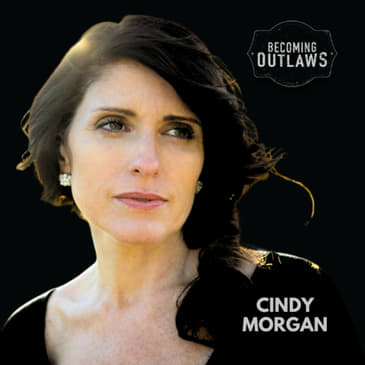
Cindy discusses her new novel, 'The Year of Jubilee,' and candidly speaks of the heartaches that have wrought some of the most precious lyrics put to pen and music.
Nashville singer/songwriter Cindy Morgan is a two-time GRAMMY® nominee, a thirteen-time Dove winner, and a recipient of the prestigious Songwriter of the Year trophy. Morgan has 21 number-one radio hits to her credit. The Year of Jubilee is Cindy's fourth book and her first novel.
00:00:55
I clicked on your the day, Elvis died song and I'd love it.
00:01:00
It's not what I expected every time I think of us Elvis song.
00:01:03
I think. Well someone's going to do
00:01:04
something. I don't know kind of cheeky or
00:01:06
whatever and but it was your your head your signature sound
00:01:11
kind of like the feeling and the thoughtfulness behind it.
00:01:14
Thank you. You know for me that the
00:01:18
Nostalgia is that Time and that era and just there's a, there's
00:01:26
a real. I think there's a, such an 82,
00:01:30
the story of Elvis and even though he became kind of a
00:01:34
parody of himself toward the end of his life.
00:01:38
But as we've seen with the elbe Smoothie, there was so much
00:01:42
behind what was really going on in his life.
00:01:46
And so I think I just You know that Fascination, why does some
00:01:52
people just connect? And there's something so
00:01:56
intriguing about that but yeah, that just represents a part of
00:02:00
History that's very nostalgic and has a lot of longing.
00:02:05
Yeah. A rebel with a gospel soul.
00:02:09
Yeah, Rebel Heart gospel. So yeah, that's right.
00:02:15
Tears the Year of Jubilee.
00:03:30
So I opened the book and the first thing you see is dedicated
00:03:34
to Samuel Morgan. November 7, the 1966 October
00:03:39
31st 1971. Those are those years are too
00:03:43
close together. Yeah, they are.
00:03:49
Who Samuel Morgan then. Why is he up front in your book?
00:03:52
Yeah. So so here is, you can see it.
00:03:56
This is a, this is that photograph, okay?
00:04:01
Samuel is my brother. And so, then he is holding, he's
00:04:06
holding his little pet, rooster, Rojo, and then, so Samuel was a
00:04:13
week away from his fifth birthday when he died.
00:04:16
I was about three and a half. Years old.
00:04:20
And I mean, obviously those because we were both young and
00:04:25
and around the same age, We played together all the time,
00:04:30
you know, we were Playmates but I don't have any memories of us
00:04:34
playing together even though they're all these photographs
00:04:38
and there's playing, but it's my first memory of him.
00:04:42
And the only memory that I really had is, what is now the
00:04:46
prologue of the novel, which is me holding up well, oh, well,
00:04:52
he's the window of his hospital room so he could see him one
00:04:56
last time before he died. And so that's my first memory.
00:05:01
And I think it's just a memory that would never let me go, you
00:05:07
know, in my life as I grew up and So I wrote down that memory
00:05:16
and, and realize that I felt like there was a lot of process
00:05:20
in that and in the story of his death and how it impacted my
00:05:24
family. But I wanted to explore that and
00:05:30
a fiction setting to where I couldn't build a world, build a
00:05:34
family, that was not my family, but was in some ways inspired my
00:05:38
family by my family. But then, in other ways, not at
00:05:41
all, and And so that that's that's why that picture is
00:05:45
there. When you experience death at
00:05:47
such a young age and somebody close to you, even if it was
00:05:51
almost the pre memory years, those are still the
00:05:54
developmental years. So that becomes the person and
00:05:59
the loss becomes a part of who you are.
00:06:01
And so it's coming out and a fiction book but has it been
00:06:08
part of your life story, you're writing throughout the years
00:06:12
because to me, I'm not a Cindy more got the expert, but I
00:06:15
always felt your music was actually a little similar in the
00:06:20
feeling is too like the Amy Grant music where it's almost a
00:06:23
little sad, but full of hope it's not well, - the baby baby
00:06:28
and stuff, but the the melodic Melodies are very thoughtful and
00:06:34
heartfelt and a lot of times I find that comes from somebody
00:06:38
who But one's willing to be vulnerable but maybe has
00:06:43
something whether it's in the back of their mind or who they
00:06:46
are, whether they're talking about it or not, but something
00:06:49
that they're dealing with or is well, that's real art, right?
00:06:54
It comes out in what you do. Yeah, I think I mean, I agree
00:06:59
with you and Dad. I think those early memories and
00:07:04
those early experiences. And if there are traumatic
00:07:06
experiences, I sank, or trauma, on top of trauma.
00:07:10
For a lot of people that, I mean, that that is going to
00:07:16
steer your life and a certain way, or the way you express
00:07:20
things, and I don't think that was certainly the story for me.
00:07:28
I growing up under the umbrella of the death of my brother.
00:07:33
And it impacted the way my parents moved in the world.
00:07:37
The way they interacted with us, my down became very like
00:07:43
protective in our. He just he just wanted to
00:07:47
protect us because he was so afraid that something bad would
00:07:52
happen again. And it is that waiting for the
00:07:54
other shoe to drop. I think I definitely spent my
00:07:57
whole life waiting for the other shoe to drop because I felt that
00:08:02
my whole life. Life with my family.
00:08:04
And my parents are both songwriters and both musicians
00:08:10
and my dad actually wrote two novels before he died in 1999.
00:08:16
So that he's never part that we're never published, and that
00:08:20
I would love to publish playing one bowl.
00:08:21
But, yeah. So I think for me, the
00:08:25
combination of already having that that being bent in that
00:08:30
direction, musically because my parents both were and then the
00:08:36
impact of the death of the child, death of a sibling and
00:08:43
really what you witnessed, your parents goes.
00:08:46
Because even though, I mean, my oldest brother of mine, he
00:08:51
remembers everything because he was on a teenager but I don't
00:08:55
know, but and he was eight years older than singing.
00:08:58
So he remembered it all, but I don't and Mom and so, but I'm
00:09:03
really that, but I think I just remember my dad being in my mom,
00:09:10
definitely tried to bring in some Faith.
00:09:12
Healers to heal Samuel which didn't work.
00:09:16
Work and that left her feeling like she had failed in some way.
00:09:22
And then how does that impact your safe?
00:09:25
And so I really wanted to unpack all of those things that my
00:09:30
family is really live through banana section setting.
00:09:35
Yeah. But the Year of Jubilee
00:09:39
fictional but autobiography biographical
00:09:42
semi-autobiographical. That's right.
00:09:44
Yeah. So in that setting, do you think
00:09:48
that this would be, is it been kind of therapeutic for you to
00:09:53
actually fit and go through the memories and kind of recreate
00:09:58
them in another world hundred percent?
00:10:02
And, you know, can I've worked on this book for so long.
00:10:06
Like, I've been, I wrote The prologue 17 years ago.
00:10:10
Oh, and that's changed almost. I'm have polish it up a little
00:10:13
bit. It is almost not changed.
00:10:15
At all but we're not bad really worked on the novel for 10 years
00:10:21
21 drafts of rewriting it and rewriting it and overwriting it
00:10:26
and you know I wanted to create I have wanted to have plot
00:10:29
points. I wanted to I mean it is a work
00:10:32
of fiction that there are Tons of things in the book that are
00:10:37
not. Then never happened in my life,
00:10:39
you know, or my feeling is less, but but it's inspired by some
00:10:42
real characters. There are even some names that I
00:10:46
camped as an honor of people who passed away.
00:10:49
And as an honor people that I loved, you know, like Miss Adams
00:10:54
who is a teacher in the story. Sound is based on my 7th grade
00:11:01
literature teacher, but I borrowed the name from a
00:11:04
teacher, that was a teacher for my girls that they loved and so
00:11:09
this, you know, it's kind of fun to do that and then but back to
00:11:13
your your point about there, being it being therapeutic.
00:11:18
I really think the reason it took me so long To write it.
00:11:22
And so, I don't think I had the tools that I needed, I did not
00:11:27
have enough empathy in my heart for certain parts of the story,
00:11:32
certain people in the story, I didn't have enough empathy to
00:11:39
write those characters and the way that they needed to be
00:11:43
written so that they would have complexity.
00:11:47
You know, cuz I you know there's nothing worse than you know a
00:11:51
paper-thin character. It just feels like a stereotype.
00:11:55
It feels like they're not they don't know come alive.
00:11:58
So I think it took me a long time to learn to do that and to
00:12:02
feel it, you know, I had to I think, you know, I had to love I
00:12:09
had to have some love for my least favorite characters.
00:12:13
I had to I had to love the ones that were easy to lie.
00:12:19
Mom's back of humanity in them, but probably you do place that
00:12:23
you felt like you had enough empathy.
00:12:28
I think a lot of losses and I think I went a losing my dad,
00:12:35
you know, he was my hero of money.
00:12:37
My dad was my dad was just his long as well and that John
00:12:43
Mockingbird is definitely based on my dad.
00:12:46
There's no question. My dad was a Volkswagen.
00:12:48
We can Excel is John Mockingbird but those are my dad suddenly
00:12:53
without any warning and Really learning.
00:13:03
Learning how to really have empathy for more empathy for my
00:13:07
mom. And I always had a tumultuous
00:13:09
relationship with she and I had a relationship.
00:13:12
That wasn't always easy, and my dad is easy.
00:13:15
So, when my, when we lost dad, I was like, I had to learn to see
00:13:20
my mom with new eyes and I had to have empathy for her that I
00:13:24
maybe would never have gained if my dad had not passed away.
00:13:28
And now, I have a great relationship with my mom and I
00:13:31
saw her. Person.
00:13:34
Yeah, aside from being my martyr, I saw her as a person
00:13:39
and I think that was an important part of the journey
00:13:43
for me. I got divorced that was tough
00:13:48
and and I think we'll that he's gone through a difficult divorce
00:13:54
and what divorce isn't available?
00:13:56
So they're all difficult and even if you're if even if you're
00:13:59
decent to each other it's still something.
00:14:03
Yeah. That's a death.
00:14:04
And I think you know the more difficult things you walk
00:14:09
through them live, it just gives you You more compassion for
00:14:12
people that you and your understanding to go.
00:14:15
Oh oh wow. Yeah my eyes are open now.
00:14:18
I get it and I think I guess I didn't have enough life
00:14:22
experience before. Life experience adds a lot if
00:14:28
you learn from some of the most right things are so true.
00:14:31
You know, you get bitter or better hurt, people hurt people,
00:14:35
you know. And once you've been hurt, you
00:14:37
realize, maybe they weren't so grumpy.
00:14:39
Maybe they just had a lot going on that I hadn't yet that no
00:14:44
percentile. That's right.
00:14:46
Yeah, that's right. Why the older wise, right?
00:14:52
We're not all that. Well, what is that?
00:14:54
What is that saying as tool to sing old too late?
00:14:58
What, what is it saying? You know.
00:15:00
Oh I don't know too soon. All too soon or too late wives
00:15:06
of the like that. Yeah, I appreciate I recently.
00:15:10
read, how could I ask for more just to get a feel of you and
00:15:17
But I've felt a camaraderie and little bits like I would that
00:15:21
sounds a little morbid but it's not, I would do stuff like that.
00:15:23
You talked about spending an hour for a devotion reading, the
00:15:29
obituaries But explain why you would do that, I totally get it.
00:15:35
I mean, I think that I just there's something about when
00:15:40
someone Is has gone and you see what's left behind what kind of
00:15:47
Trail they left behind. It's just, it's so boring.
00:15:51
I think I did it because I've always been so afraid of death
00:15:55
so there was something about reading an obituary and facing
00:15:59
it. You know, they say that the only
00:16:00
way to kind of overcome fears to base it.
00:16:04
And so you make peace with death, you make peace with the
00:16:07
fact that you are going to die. And I think reading the
00:16:12
obituaries and seeing these people who live these like small
00:16:15
lives and what, what what and that people who were mourning
00:16:19
these people. I don't know this person.
00:16:21
I don't know why. But you get the truth about
00:16:24
someone, it can kind of see the person of the nutshell of a
00:16:28
person's life and we'll get you are and it's just kind of sad,
00:16:32
you know, Especially like in the in that book.
00:16:37
I was talking one of the the chorizos about Hollis, who was
00:16:42
the cross dresser that lived in a small town that I grew up in
00:16:49
small, southern town and Kentucky.
00:16:52
And when I read his obituary, I thought oh that's not enough.
00:16:58
That is not enough, there's so much more to his story and cuz
00:17:03
he my dad He would be pushing his little bike, along the side
00:17:07
of the road and this row that had no shoulder and the see, you
00:17:12
know, like super dangerous will secondary Highway and my dad
00:17:16
would pull over and say, oh Hollis, you're going to get
00:17:18
killed, put your bike in the back of the car, he would get Ed
00:17:21
needs to be having a dress on over his jeans makeup.
00:17:25
And and I would sit there and the truck's bed looking at
00:17:28
Hollis and his like eye shadow on his eyeliner.
00:17:31
And I thought I love that. My dad picked this guy.
00:17:34
Yup. You know, and he was a
00:17:36
sweetheart and we and everybody in town knew it and I knew his
00:17:40
story new he struggled. And and so, when I found out
00:17:45
that he had died and I found that obituary, I thought that is
00:17:49
so not know, that's not enough. It was a lot of partying.
00:17:53
Well, other people try to sum up who you are the nice way and a
00:17:58
nutshell. But, you know, she had the
00:18:00
chance to write your own. What would that say?
00:18:04
I don't want to I don't forget. I guess we're get the little of
00:18:07
back here. It's okay.
00:18:08
It's all right. But yeah.
00:18:09
So I think about the time, you started your career and you look
00:18:12
back at about that time, your first album in your Ambitions
00:18:16
and your goals in life. If career, it's Ministry, it's
00:18:20
all these things. Not that we're sitting at the
00:18:23
end of our lives. But having lived careers, if you
00:18:27
could write down, what was my life worth?
00:18:31
Why was I here or, or think, maybe even when people feel like
00:18:35
they had a calling or mission to do in life?
00:18:37
And then you're looking in retrospect, and you're there and
00:18:40
you like it. Did I do it or 11?
00:18:44
That mission? Because sometimes you look back
00:18:46
and it wasn't what you thought it was.
00:18:47
You did have a mansion but not what you thought it was when
00:18:50
you're 20. Oh yeah. 100% well I love that
00:18:55
question. That's an amazing question.
00:19:01
You know, I think about my dad, he lived a very small lie.
00:19:07
He was the small life and he kind of gave up a shot at being
00:19:11
a recording artist and and it could have been and but he gave
00:19:16
it up to be a stable parent and I think first of all, my goals
00:19:24
and my girls, they love Jesus. Okay.
00:19:30
Yes, that was a big, big thing for me and that if my kids love
00:19:36
God, you know, I just want them to have a relationship with
00:19:40
Jesus and to know him and they do.
00:19:44
Do you know, G. gives.
00:21:12
Man, you know I was watching. Now, do you watch The Chosen?
00:21:18
I love it. I think it's incredible.
00:21:20
I think the writing was incredible.
00:21:22
My dad, my daughter. Olivia who is a screenwriter
00:21:25
actually worked at the studio that does all the
00:21:27
post-production for the Chosen and and so anyway, it's just
00:21:33
that it's such good, it's such good writing and just a
00:21:37
beautiful thing but I was watching and season 3, when
00:21:42
Jesus is I think like eight or nine and he's talking to Joseph,
00:21:47
his Earthly father And because he's passing something on to him
00:21:53
and he said you know, I know I'm not use real father but I just
00:21:59
want you to know that there's been.
00:22:01
Well, granted on I'm like, stewarding your life.
00:22:05
These last few years because he died young right?
00:22:08
Like as amended in those days and I just was sitting there
00:22:12
crying because I thought, oh my goodness!
00:22:15
Just just been beauty of Do you like there was something about
00:22:23
that moment with him saying that to Jesus and how when we love
00:22:31
just loving people, well, in whatever capacity you're called
00:22:38
to do that. Then that is the work of the
00:22:42
Kingdom. That is the work of the kingdom
00:22:44
of how we love people and and sometimes it's hard to love.
00:22:50
Of people. And so I think I hope that I'm
00:22:57
learning to love people because I think that's the greatest way
00:23:01
we can serve. The kingdom, is to love people.
00:23:06
Wherever they are. And yeah, I think that's what I
00:23:11
hope. What do you hope people get
00:23:14
well, whether through reading the Year of Jubilee?
00:23:18
Yeah, I mean, obviously, you know, the work that I feel that
00:23:23
I shall call this a writer, I suppose that God put that
00:23:25
calling on my life. And so I take it very seriously
00:23:29
and And I think I hope this is connected to what I just said,
00:23:36
but I really I feel like Art of Loving people is having
00:23:41
compassion for people who don't look like, you don't believe
00:23:47
what you believe, don't that are new.
00:23:50
I love your becoming Outlaws. It's like, you know, like people
00:23:54
who are like coming at life from a different perspective than you
00:23:58
are. I hope that the one people read
00:24:03
this novel. They can see people around.
00:24:06
It was eyes. That that they extend Compassion
00:24:12
or one that I met and extend empathy for other people.
00:24:17
And less judgment and that they can, I don't know, just make
00:24:26
room for more people in their heart and what's in their heart
00:24:28
right now. And I think Like because this
00:24:33
book is about a death. I think it's important for us
00:24:39
to, to reconcile things to make things, right?
00:24:45
With with people who, you know, forgiveness doesn't have to be a
00:24:52
two-way street. Right.
00:24:54
Corrie Ten. Boom said that forgiveness is
00:24:58
opening a cell door and realizing you were the person
00:25:00
behind the bars. You're the person who's freed by
00:25:05
forgiveness, for those who aren't familiar Old Testament
00:25:10
references where Year of Jubilee comes from the correct?
00:25:13
That's right. What did that mean?
00:25:16
Spectrally and then it apply to your book.
00:25:20
Yes, so Mom is a Messianic June. And so she attended a Messianic
00:25:25
congregation for years. And so she's always talked about
00:25:28
New Year jibbery, and the town that the story occurs in is
00:25:36
called Jubilee. It's jibbery, Kentucky.
00:25:39
It's a small southern town at the base of the hills of Eastern
00:25:43
Kentucky. Coal.
00:25:44
Mining town I'm in and that's definitely inspired by the small
00:25:49
coal mining towns that my parents used to drive me through
00:25:52
when we would visit my grandparents in Kentucky, which
00:25:55
is one of my parents are both from So the Year of Jubilee, on
00:26:00
the Hebrew calendar Jewish calendar is the year when slaves
00:26:08
are freed and debts are forgetting.
00:26:12
It's kind of like a clean slate year and as I thought about the
00:26:17
book and about just this because forgiveness is and forgiveness
00:26:24
is a huge part of the theme of the book and also about a no
00:26:27
freedom and Grace Mockingbird, who's 13 about to be 14, she is
00:26:36
living through a family trauma, and she's trying to process that
00:26:40
alongside of it being 1963, which is the height of the civil
00:26:47
rights movement and watching the possibility of integration
00:26:51
happening in her small town, which is a witch is a big deal.
00:26:57
And I'm so and she has has relationships with people and
00:27:01
the town and that that, of course, are that are the black.
00:27:08
We're black community in Jubilee, who, of course, is very
00:27:12
much fighting for integration and we see that tension, and you
00:27:17
see how through Grace Mockingbirds eyes?
00:27:21
She kind of comes awake. To, you know what, this could
00:27:28
mean for these people, who she's built this relationship with.
00:27:31
And there's an important scene toward the end of the book about
00:27:37
like being here to burry, you know, what does that mean?
00:27:40
So lots going Americans in Jubilee.
00:27:42
In 1963. That men equalised for grace and
00:27:47
then something different for me, the reader.
00:27:50
It means something different for the town, and it's something
00:27:53
different. And so It seemed like that that
00:27:59
was a thing that kind of penetrated a lot of different
00:28:01
layers. I kind of wish we all went to
00:28:04
Messianic Jewish this think of the depth of understanding your
00:28:11
average Christian would have if we had, you know, that kind of
00:28:15
uh Anna lacking today. But that would be wonderful.
00:28:18
Yeah, and also, just just a little extra so recorded books,
00:28:23
who's doing the audio book. Has selected it for an enhanced
00:28:27
audio book. So I have written a soundtrack.
00:28:32
This sounds of jiggly, but some of my musical Heroes and we've
00:28:36
written songs from the perspective of different
00:28:38
characters in the book. So there's a lot of different
00:28:40
singers, a lot of what different voices on the record.
00:28:45
And so we took pieces of music from the soundtrack and that's
00:28:50
all endless in the dialogue here.
00:28:54
And they're just kind of Did throughout the book and then
00:28:58
there's two bonus songs at the end of the audible book, as well
00:29:02
as a short interview with Sandra McCracken, who does a podcast
00:29:07
called the slow work. So anyway, so the enhanced Auto
00:29:11
audiobook will will hopefully be a little something extra and
00:29:16
then the soundtrack as well. Are you able to reveal some
00:29:19
names? Yes, yeah.
00:29:22
So, Tom Douglas, if you know who that is, he's like You know,
00:29:26
probably our finest songwriter here in Nashville.
00:29:31
He and I wrote a song together for, and he appears as a guest
00:29:35
vocalist on it. And then and he wrote me and I
00:29:39
wrote a song that's just oh boy. It's it made me cry.
00:29:45
So, but anyway, Tommy sins and I ra the spiritual for it and he
00:29:50
is the voice of has a cat Pat. Reverend Hezekiah, Wayne
00:29:54
Kirkpatrick is one of My mentors and heroes.
00:29:57
He and I wrote a song together and do a duet and Jonathan
00:30:04
kingdom whose a really great Americana artist who's been
00:30:07
touring the tub, let sprocket for years and then really good
00:30:11
friend of mine and he has a guest appearance on their energy
00:30:15
and a few others Phil Madeira as well.
00:30:18
Well, dear friend. So yeah, some of my dearest
00:30:22
friends and musical Heroes one. Time.
00:30:25
I got to watch. Tommy Sims, work.
00:30:27
We mentioned. Eric Champion has are Buzzard is
00:30:31
recording, one of his albums, once and Tommy Sims was mixing
00:30:33
it. Like, that's a cool dude.
00:30:36
He is the coolest dude in the world.
00:30:38
I'm so excited. You know what?
00:30:40
I'll send you. I'll send you a link early link
00:30:44
to to the song that we did together.
00:30:46
Oh my goodness! It's just, it makes me so happy
00:30:50
makes me so happy. Once again, thank you.
00:30:53
I'm sure the book is going to do phenomenal here.
00:30:55
An amazing writer and and it's got heart, you know, I'm kind of
00:31:00
a nonfiction for the most part reader, you know, a nerdy
00:31:05
documentary, kind of Watcher on television, me too.
00:31:08
But, but I go tour dates, the worries that, you know, have
00:31:13
meaning behind them and are well done there, it's on film, or,
00:31:18
and fiction. So, Great book.
00:31:21
Thank you, great. Thank you.
00:31:23
Thank you you too. Thank you so much.
00:31:25
Karen Great interview, great
00:32:09
interview, he has faced questions, knoweth Us in 30
00:32:15
years. No one has asked me what my
00:32:17
obituary would like.